How Long Does It Take to Pass Each HSK Level? (2026 Empirical Data)
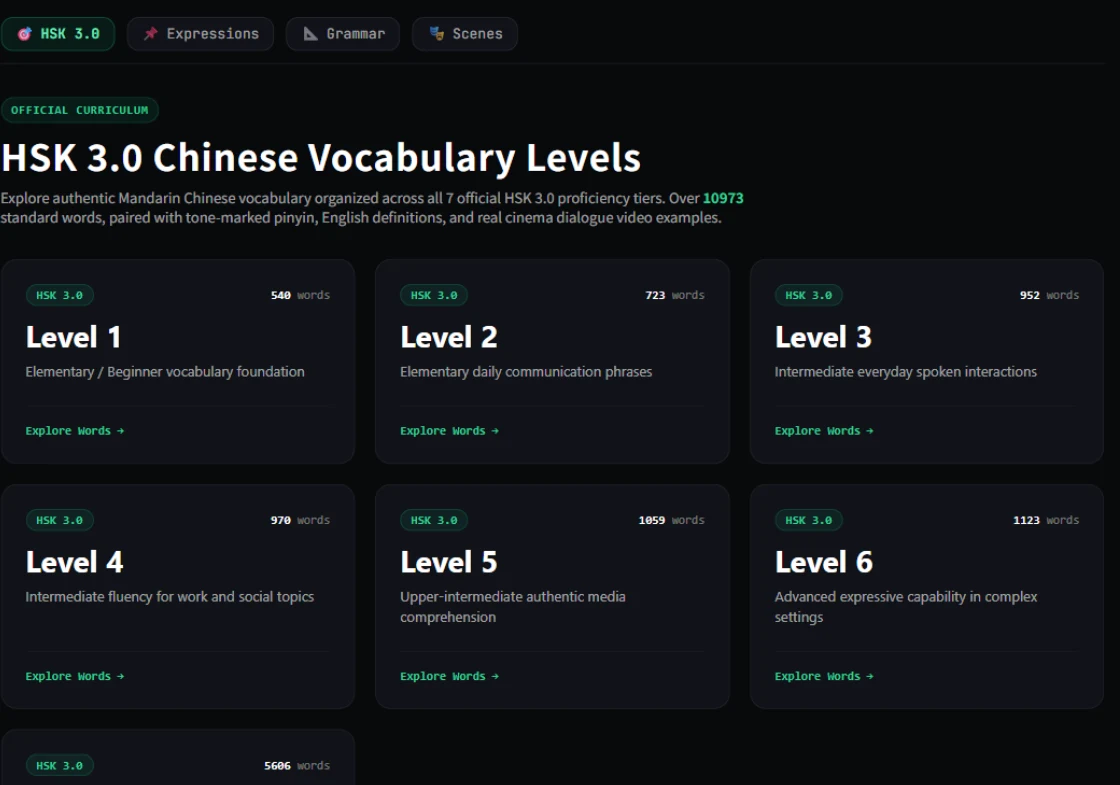
How many active hours does it realistically take to pass each level under the HSK 3.0 framework? Based on data synthesized from the US Foreign Service Institute (FSI), official Hanban guidelines, and tracking data from hundreds of independent language immersion learners, here are the empirical benchmarks. The Realistic Study Hours Matrix HSK Level Active Hours (Textbook Only) Active Hours (With Media Immersion) CEFR Equivalent Functional Spoken Fluency HSK 1 100 – 150 hours 60 – 100 hours Pre-A1 Survival greetings, numbers, taxi directions. HSK 2 250 – 350 hours 150 – 220 hours A1 Simple dining, scheduling, basic shopping. HSK 3 450 – 600 hours 300 – 420 hours A2 Independent travel, expressing simple feelings. HSK 4 800 – 1,200 hours 550 – 800 hours B1 Following modern C-dramas with Chinese subs. HSK 5 1,500 – 2,200 hours 1,000 – 1,500 hours B2 Complex workplace discussions, adult relationships. HSK 6 2,500 – 3,500 hours 1,800 – 2,500 hours C1 Full professional and public debate autonomy. HSK 7–9 4,000 – 6,000+ hours 3,000 – 4,500 hours C2 Native-equivalent literary and academic fluency. The full HSK 3.0 ladder on MandarinClips: seven tiers from Level 1 (540 words) to the combined 7-9 band (5,606 words), every entry corpus-ranked. Why Media Immersion Cuts Study Hours by 35% Learners relying purely on grammar exercises and textbook drills hit a severe plateau between HSK 3 and HSK 4. They know grammar rules intellectually, but their brains cannot decode fast spoken Mandarin in real time. ...