别别别 别这样啊
“Officer Zhu, please don't be like that.”
THE DIALOGUE REEL
朱警官
“Officer Zhu, please don't be like that.”
别别别 别这样啊
“Officer Zhu, please don't be like that.”
“We finally managed to have a meal with you.”
“Come on, don't be like that—let's keep things friendly and just enjoy the meal.”
In Chinese social interaction, sharing a meal ('chi dun fan') is extremely common for building rapport, asking for favors, or easing tension; when the other party acts distant or declines, the host often says 'bie zhe yang' ('don't be like this') to defuse awkwardness and save face.
LEARNING CHUNKS & PARTICLES
Used to urgently stop someone, politely decline, or dissuade an action
Rapidly repeating 'bie' in spoken Chinese expresses strong dissuasion or polite refusal, often used to decline excessive courtesy or stop someone from leaving in anger.
Please don't do this / don't be like this; carries an entreating or comforting tone
Commonly used to urge someone not to be upset, not to act like a stranger, or to refrain from rash actions.
Placed at the end of an imperative sentence to soften the dissuasive tone, adding an entreating or gentle reminding nuance.
VOCABULARY & EXPRESSIONS
Parallel Spoken Cinema Scenes (语义近邻切片)

“No, no.”

“D-D-Don't. We're colleagues. There's no need for this.”

“Oh, please don't! We can work something out.”
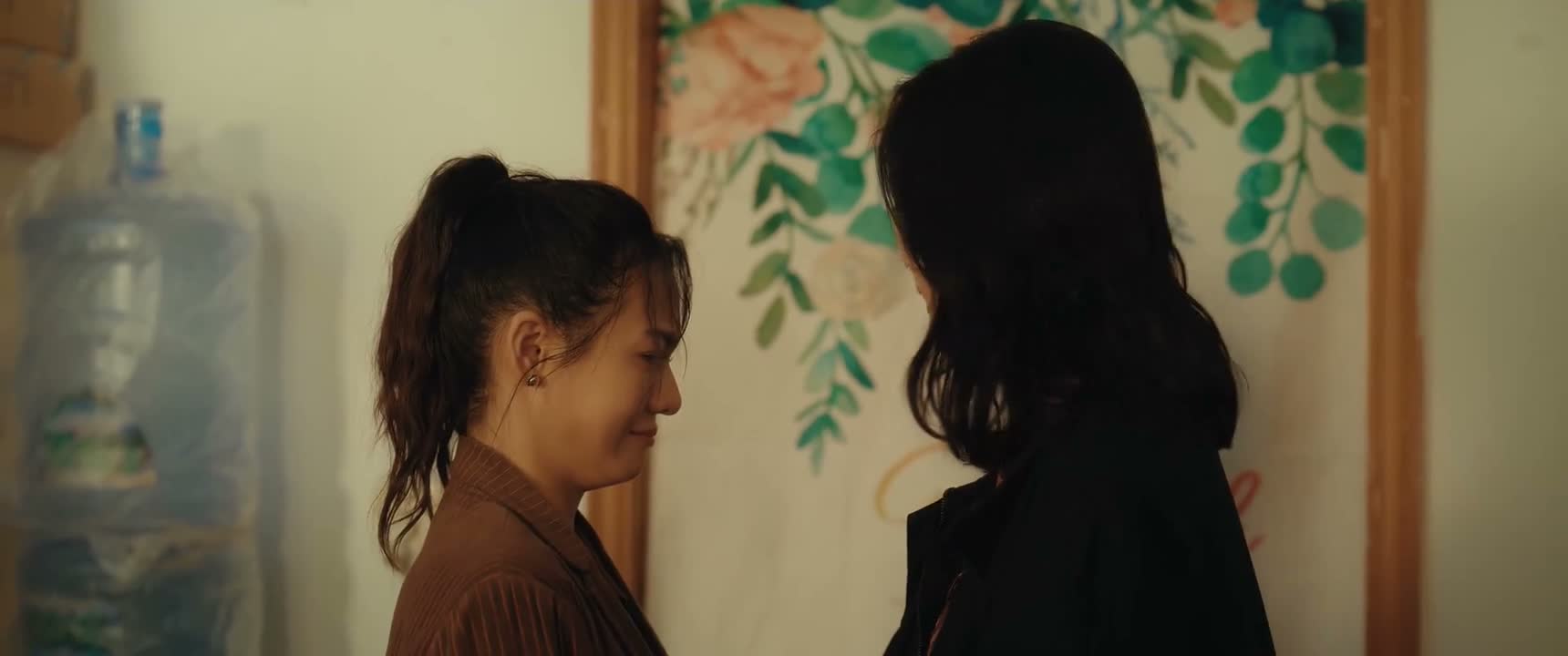
“Don't do this. Come on.”

“You... Stop that.”
“No, no, no. Don't move! Don't! This is my first time here. I don't know anything!”