In Chinese culture, politeness is not a static word—it is an interactive ritual known as 客气 (kèqi).
Literally meaning “guest air / guest demeanor”, 客气 governs how hosts treat guests, how diners fight over restaurant bills, and how compliments must be ritually deflected.
Understanding 客气 is the dividing line between an outsider and someone who truly understands Chinese social psychology.
The 3 Pillars of 客气
1. Deflecting Compliments (Modesty)
When someone compliments your Chinese (“你中文说得太好了!”), never say “谢谢”. That sounds arrogant.
- Always deflect: “没有没有,差得远呢!” (No no, I still have a long way to go!)
2. The Hospitality Struggle (Fighting for the Check)
When the bill arrives at a dinner, guests and hosts engage in a performative physical battle over the check. Yielding immediately on the first attempt signals cold indifference.
3. “Don’t Be Polite” (别客气 / 自家人)
When a close friend acts too formal, tell them: “跟我还客气什么?太见外了!” (Why are you being polite with me? You’re treating me like an outsider!)
👉 **[Watch real social etiquette interactions
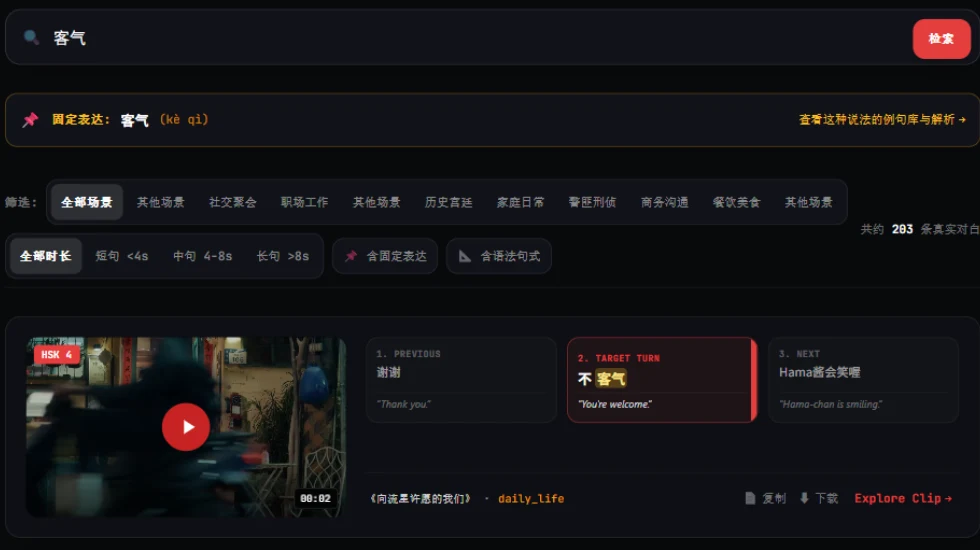
👉 Watch real social etiquette interactions on MandarinClips → on MandarinClips →](https://www.mandarinclips.com/)**