MC
MandarinClips Cinema Corpus
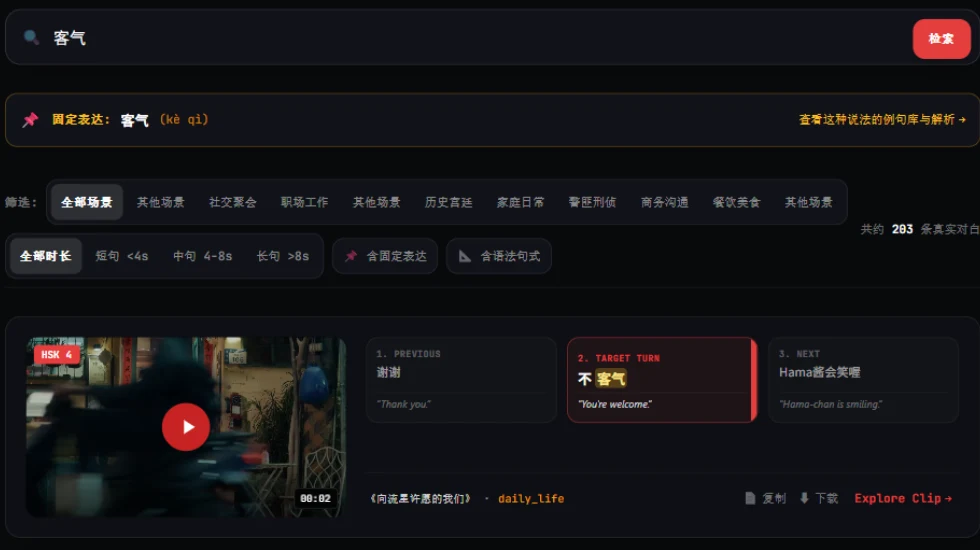
The Psychology of 客气 (Kèqi): Chinese Politeness and Social Modesty

The Psychology of 客气 (Kèqi): Chinese Politeness and Social Modesty

In Chinese culture, politeness is not a static word—it is an interactive ritual known as 客气 (kèqi). Literally meaning “guest air / guest demeanor”, 客气 governs how hosts treat guests, how diners fight over restaurant bills, and how compliments must be ritually deflected. Understanding 客气 is the dividing line between an outsider and someone who truly understands Chinese social psychology. The 3 Pillars of 客气 1. Deflecting Compliments (Modesty) When someone compliments your Chinese (“你中文说得太好了!”), never say “谢谢”. That sounds arrogant. ...
November 3, 2026 · 1 min · MandarinClips Team
How to Use 至于吗 (Zhìyú ma) and 哪跟哪啊: Master Native Chinese Reactions

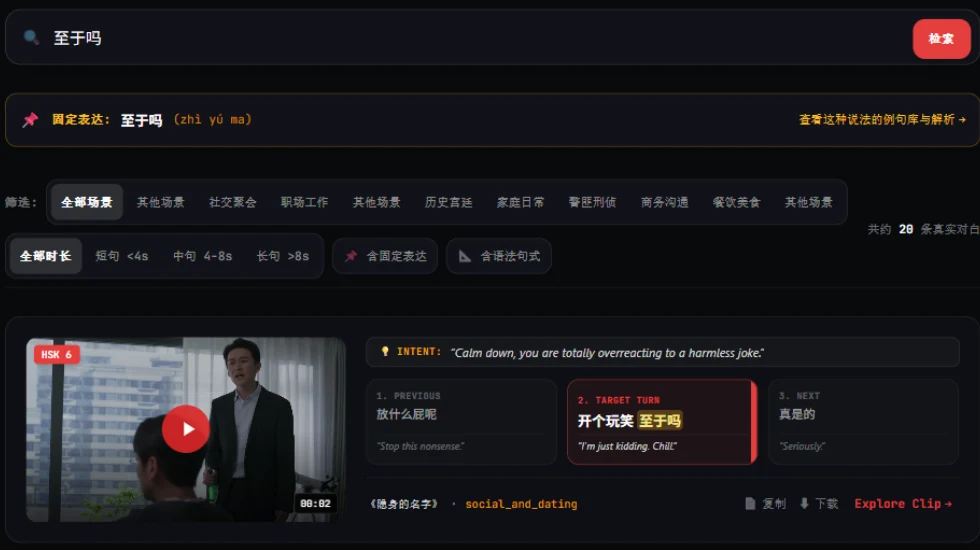
How to Use 至于吗 (Zhìyú ma) and 哪跟哪啊: Master Native Chinese Reactions

In spoken Chinese, native speakers love quick, punchy rhetorical deflators. Two of the most common are 至于吗 (zhìyú ma) and 哪跟哪啊 (nǎ gēn nǎ a). If you only rely on dictionary definitions, you miss their emotional velocity: 至于 (zhìyú): As for; to go so far as to. 哪 (nǎ): Where / which. In living dialogue, however, they represent two of the most natural conversational shields in modern Mandarin. 1. 至于吗 (zhìyú ma): “Are You Seriously Overreacting That Much?” Use “至于吗” when someone makes a catastrophic scene over a minor inconvenience. ...

November 3, 2026 · 2 min · MandarinClips Team
Chinese Sarcasm and Irony: How Native Speakers Deliver Cold Humor in Cinema

Chinese Sarcasm and Irony: How Native Speakers Deliver Cold Humor in Cinema

A common myth among beginner Mandarin students is that Chinese culture is too earnest, hierarchical, or formal for sarcasm and dry irony (反讽 / fǎnfèng). Spend ten minutes watching modern Chinese cinema, and that misconception evaporates. From Beijing dark comedies to sharp urban workplace dramas, native Mandarin speakers are masters of deadpan sarcasm. The challenge for learners is that Chinese irony rarely relies on exaggerated vocal changes. Instead, it is delivered with a flat tone, a slight smirk, or a polite smile—using praise to deliver a verbal punch. ...

November 3, 2026 · 3 min · MandarinClips Team
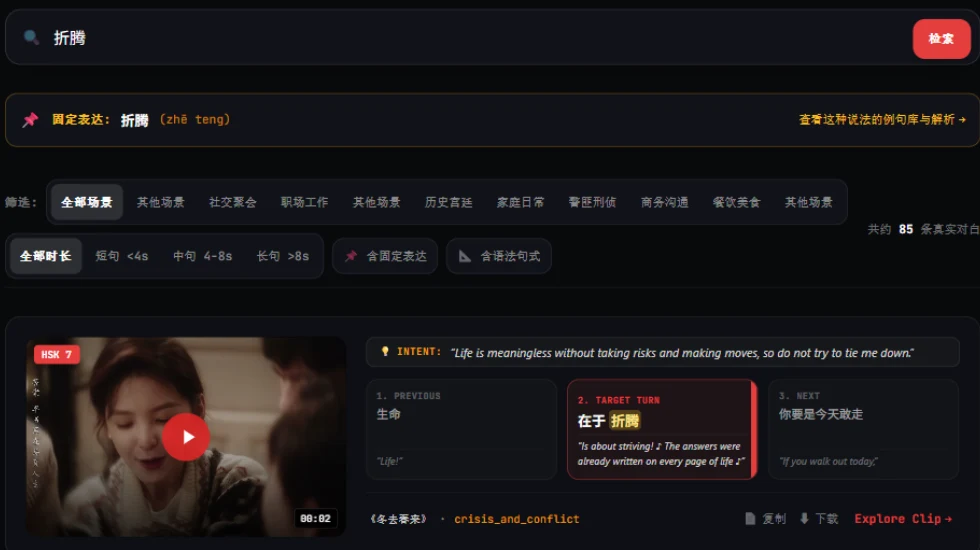
The Many Meanings of 折腾 (Zhēteng): How Native Speakers Actually Use It (With Movie Clips)

The Many Meanings of 折腾 (Zhēteng): How Native Speakers Actually Use It (With Movie Clips)

In late 2008, Chinese political speechwriters presented the world’s diplomatic translators with an impossible riddle. During an official keynote addressing the nation’s modernization, the government announced the core principle of “不折腾” (bù zhēteng). Major international news outlets panicked. The New York Times, BBC, and international linguists spent weeks debating how to translate it: “Do not get sidetracked?” “Avoid self-inflicted chaos?” “Don’t flip-flop or cause unnecessary agitation?” Eventually, many official Chinese diplomatic releases gave up and simply transliterated it as “Buzheteng”. ...

November 2, 2026 · 5 min · MandarinClips Team
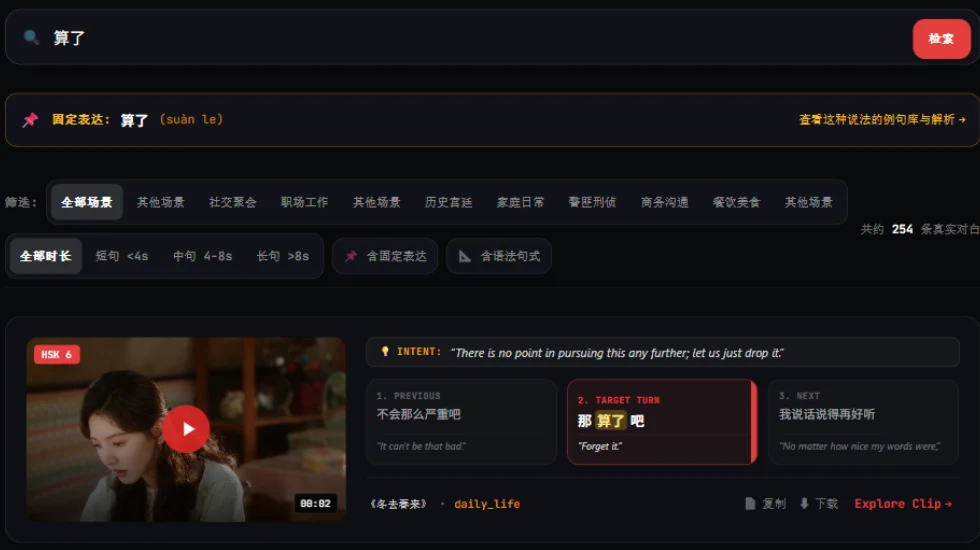
How to Say Never Mind in Chinese: 算了 vs 没关系 vs 不用了 (With Real Movie Clips)

How to Say "Never Mind" in Chinese: 算了 vs 没关系 vs 不用了 (With Real Movie Clips)

In English, the phrase “never mind” is a universal multi-tool. You can use it to: Forgive someone who accidentally bumps your elbow (“Never mind, it’s fine”). Drop a point when someone can’t hear you over loud music (“Never mind, I’ll tell you later”). Politely decline a second cup of coffee (“Never mind, I’m good”). Show sharp annoyance when an argument goes nowhere (“Never mind! Forget I even brought it up!”). If you try to translate all of these with a single Chinese phrase, you will run into awkward cultural misunderstandings. ...

November 2, 2026 · 5 min · MandarinClips Team
Top 50 Chinese Colloquial Phrases You'll Never Learn in Textbooks (With Cinema Context)

Top 50 Chinese Colloquial Phrases You'll Never Learn in Textbooks (With Cinema Context)

If you have ever arrived in China or tuned into a modern C-drama after years of studying HSK textbooks, you’ve likely experienced the classic “Textbook Mandarin Disconnect”: You expect someone to say “你好吗?我很好,谢谢你。” Instead, they say “吃了吗?” or a casual “干嘛呢?” When someone wants to de-escalate an awkward dispute, they don’t say “请不要介意”—they snap a sharp “算了” (suàn le). When someone is completely overwhelmed by exhausting complications, you won’t find the feeling in standard vocabulary lists—you will hear native speakers sigh “折腾” (zhēteng). Standard textbooks teach you prescriptive grammar designed for academic essays and formal business meetings. They systematically ignore pragmatics (语用学): the unwritten conversational rules, ironic undertones, facial expressions, and colloquial shortcuts that native speakers rely on every single day. ...

November 2, 2026 · 9 min · MandarinClips Team