MC
MandarinClips Cinema Corpus
How to Say No in Chinese: The Art of Face (面子) and Polite Refusals

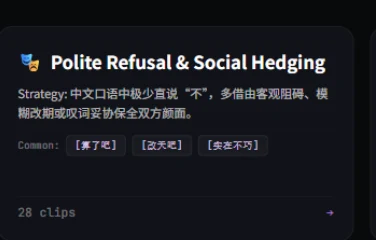
How to Say "No" in Chinese: The Art of Face (面子) and Polite Refusals

In Western business and social communication, directness is valued: “No, I cannot attend,” or “I disagree with that proposal.” In Mandarin Chinese, however, delivering a blunt, naked “不” (bù) to an invitation or business request is the conversational equivalent of slamming a door in someone’s face. It violates the core pillar of Chinese interpersonal pragmatics: Saving Face (面子 / miànzi). When you deliver a flat rejection, you do not just decline a request—you publicly strip the requester of their social dignity, leaving both parties embarrassed (难堪). ...
November 3, 2026 · 3 min · MandarinClips Team
The Many Meanings of 折腾 (Zhēteng): How Native Speakers Actually Use It (With Movie Clips)

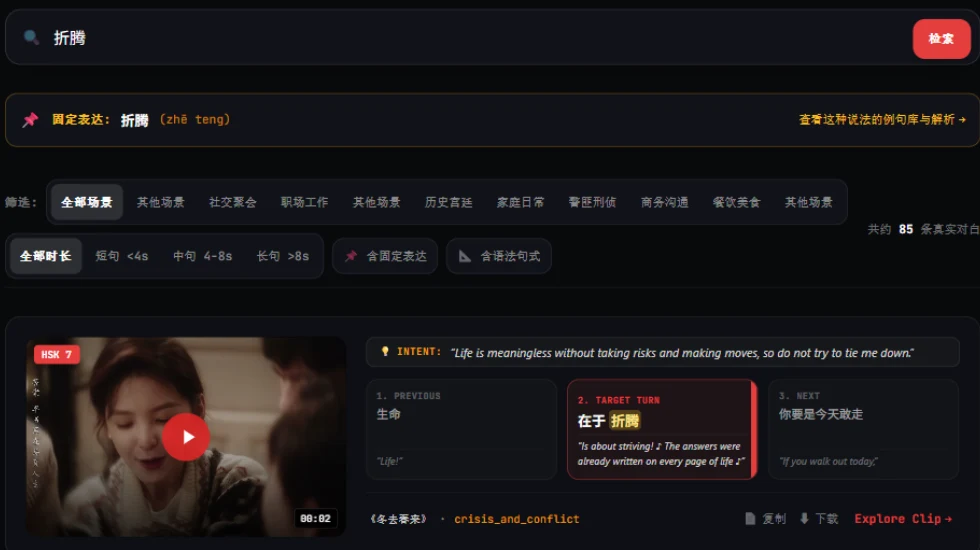
The Many Meanings of 折腾 (Zhēteng): How Native Speakers Actually Use It (With Movie Clips)

In late 2008, Chinese political speechwriters presented the world’s diplomatic translators with an impossible riddle. During an official keynote addressing the nation’s modernization, the government announced the core principle of “不折腾” (bù zhēteng). Major international news outlets panicked. The New York Times, BBC, and international linguists spent weeks debating how to translate it: “Do not get sidetracked?” “Avoid self-inflicted chaos?” “Don’t flip-flop or cause unnecessary agitation?” Eventually, many official Chinese diplomatic releases gave up and simply transliterated it as “Buzheteng”. ...

November 2, 2026 · 5 min · MandarinClips Team