什么点了 你还浇水
“What are you watering it at this hour?”
THE DIALOGUE REEL
十五皎洁月儿 升起东山顶上
“The bright full moon of the 15th day rises above the eastern hill.”
什么点了 你 还浇水
“What are you watering it at this hour?”
“If you kill the only tree in our county,”
“It's way too late to be doing this, why are you still fussing over that tree?”
Asking rhetorical questions about time ('What time do you think it is?') is a standard, affectionate way among close acquaintances to show concern masked as mild annoyance.
LEARNING CHUNKS & PARTICLES
what time is it / look at the time
A colloquial rhetorical question used to criticize or tease someone for doing something too late.
still / surprisingly continuing
Placed before a verb to emphasize that an action persists against expectations or reasonable limits.
Signifies that the lateness of the hour has already arrived at an unacceptable or surprising threshold.
VOCABULARY & EXPRESSIONS
Parallel Spoken Cinema Scenes (语义近邻切片)

“These two spots now are just small potatoes.”

“Go get some water. We're out. I'm washing veg.”
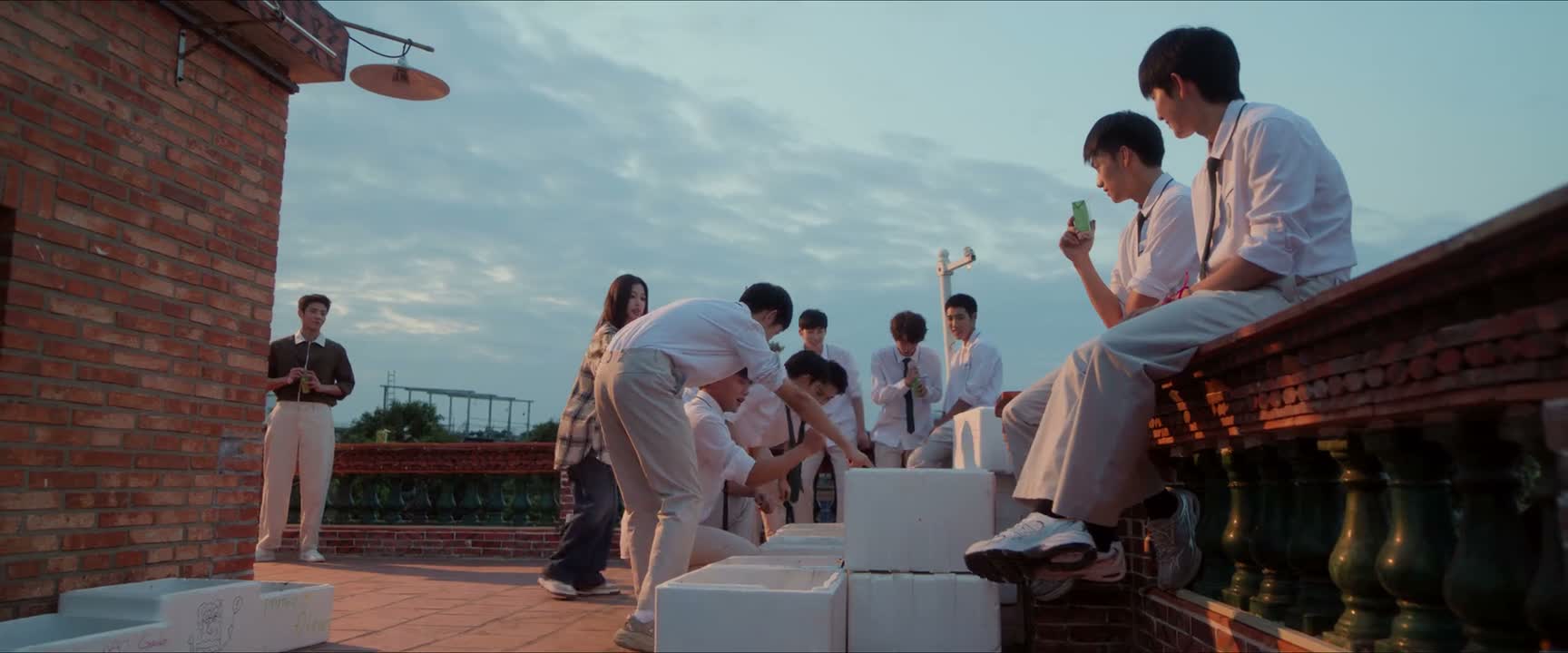
“Come on! The watering begins!”

“I haven't had so much fun for a long time. Look at that splash.”

“You've never watered my flowers.”

“Go check it out! Is there a fire?”