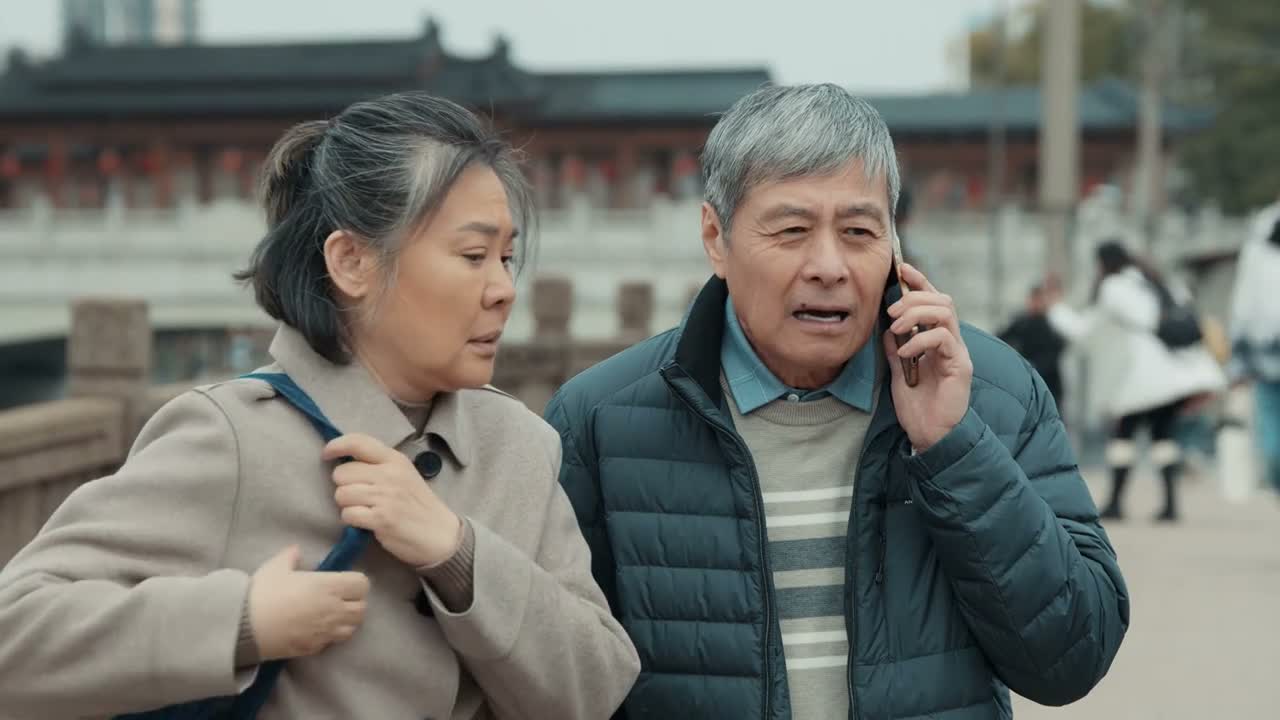
你终于接电话了你
“You finally picked up.”
THE DIALOGUE REEL
喂 晶晶
“Hello, Jingjing?”
你 终于接电话 了你
“You finally picked up.”
我下午做蛋糕来着 没听见 一忙都忙到晚上了
“I was baking this afternoon. I didn't hear my phone. I've been busy all the way until tonight.”
“You finally answered! Where have you been? I was worried.”
In modern colloquial Chinese, appending the pronoun 'ni' (you) at the very end of a sentence (e.g., 'ji si wo le ni' [you worried me to death], 'jie dian hua le ni' [you finally answered the phone]) is commonly used among close friends or family. It conveys affectionate blame, concern, or teasing, but sounds rude if used with strangers.
LEARNING CHUNKS & PARTICLES
indicates that a certain outcome has occurred after a long wait; finally
Commonly used in spoken Chinese to express relief, exclamation, or mild complaint after waiting for a long time.
sentence-final subject inversion or postposed subject
A very frequent colloquial inversion used to emphasize the person addressed and intensify emotional expression, such as intimacy, playful blame, or criticism.
Indicates a change of state or realization of an action, carrying an exclamatory and emotional tone here.