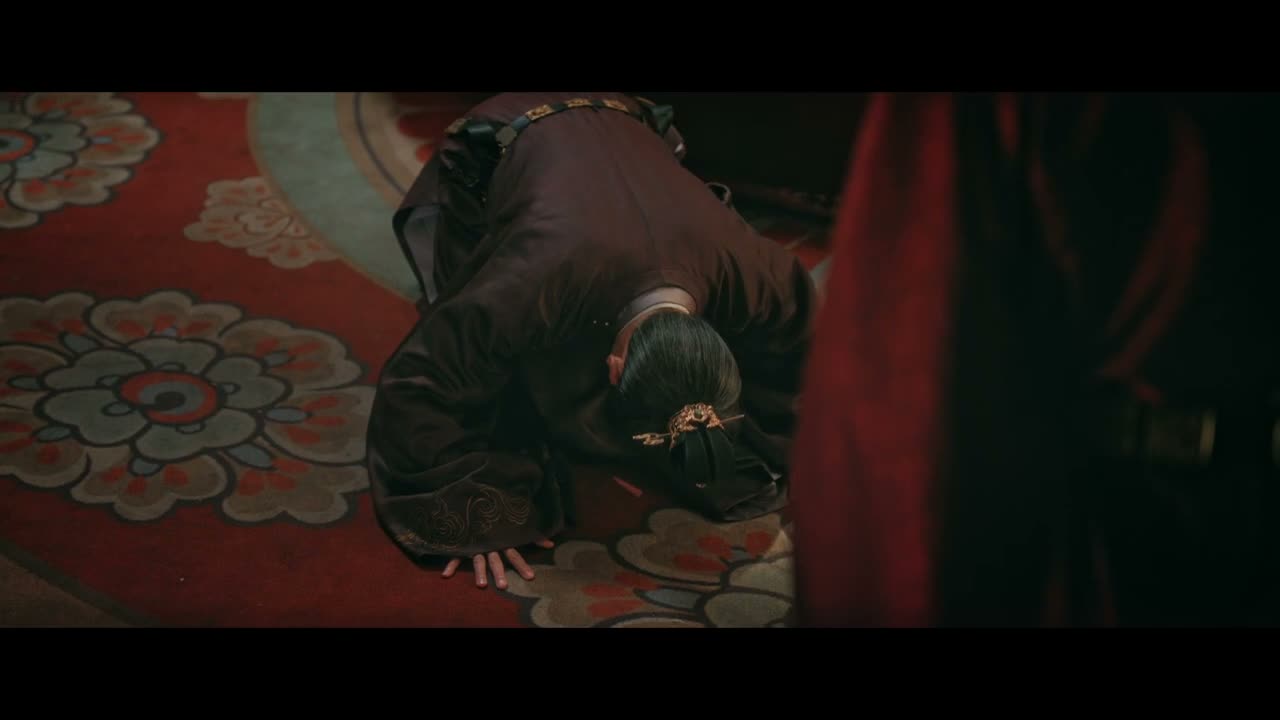
臣等谨遵圣谕
“- We obey the edict. - We obey the edict.”
THE DIALOGUE REEL
符到奉行
“Execute upon receipt.”
臣等 谨遵圣谕
“- We obey the edict. - We obey the edict.”
这江山
“(The nation,)”
Direct spoken expression in this communicative setting.
A humble plural self-referential pronoun used by court officials when speaking to the emperor in ancient China, meaning 'we, your ministers,' reflecting the strict hierarchical relationship between ruler and subject.
Specifically refers to an edict or directive issued by the emperor. The word 'sheng' (sacred/holy) reflects the divine and supreme nature of imperial power in ancient China.
LEARNING CHUNKS & PARTICLES
to respectfully obey the imperial decree
A standard formulaic response used by court officials when receiving an emperor's orders in costume dramas; in modern speech, it is only used jokingly or facetiously when agreeing to follow someone's instructions.
VOCABULARY & EXPRESSIONS
Parallel Spoken Cinema Scenes (语义近邻切片)
“I obeyed your command,”

“Yes, Your Highness.”

“- We shall give our last breath - We shall give our last breath”