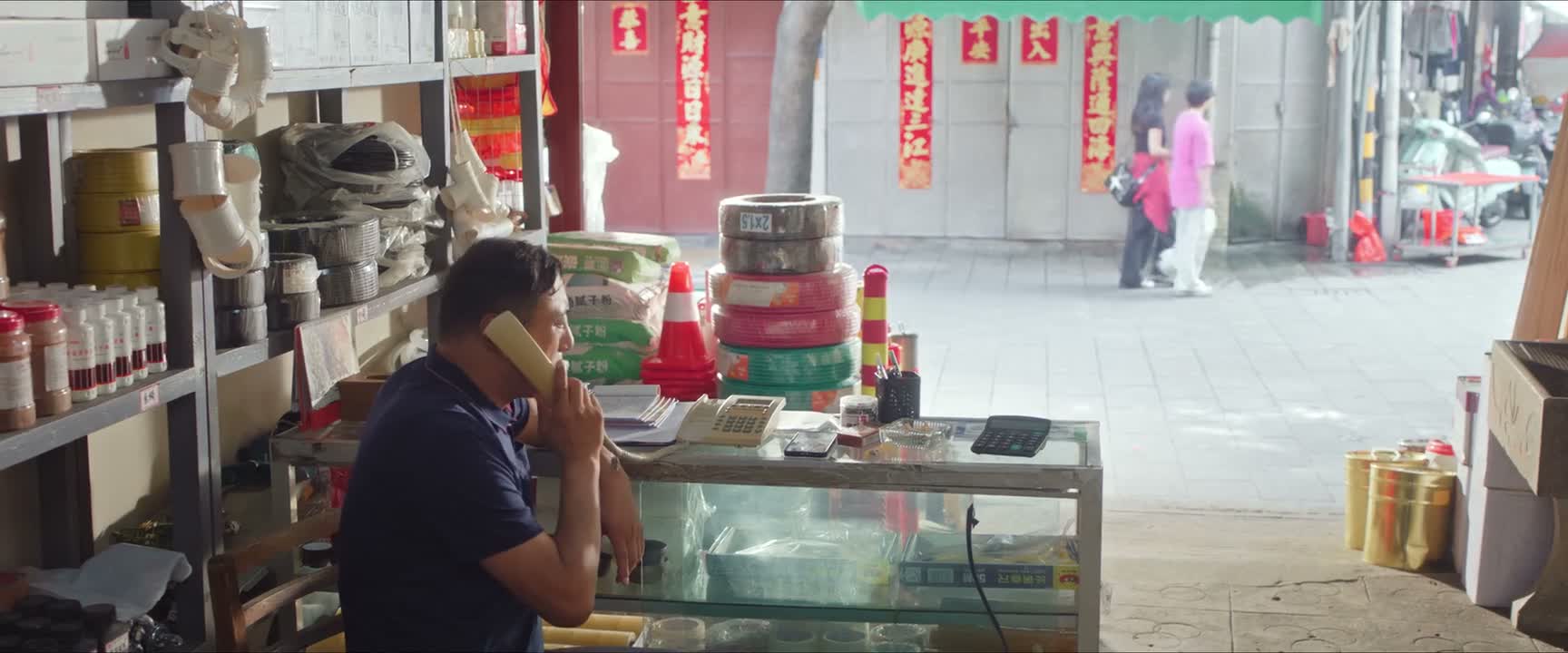
这小子不知道跑哪去了
“Who knows where he ran off to?”
THE DIALOGUE REEL
什么
“What?”
这小子 不知道 跑哪去了
“Who knows where he ran off to?”
不好意思
“I'm sorry”
Direct spoken expression in this communicative setting.
Calling a younger male '小子' is a marker of close familiarity and senior status rather than literal disrespect.
LEARNING CHUNKS & PARTICLES
this kid; this fellow
An informal and mildly affectionate or colloquial way to refer to a younger male.
where did [someone] run off to
A colloquial question structure used when someone has stepped away unexpectedly.
Indicates a completed change of state, marking that the person has already departed.
VOCABULARY & EXPRESSIONS
Parallel Spoken Cinema Scenes (语义近邻切片)

“Where on earth did Mr. Zhang go?”

“and then disappeared himself.”

“Who knows where he is.”

“I don't know. He ran away.”

“Where did this brat go? Never mind.”

“Ran off? Where to?”
“That brat still isn't back.”