四个字很有名的 东施效颦
“Two words. It's very famous. [Mona Lisa] "Terrible imitation"!”
THE DIALOGUE REEL
一幅画
“A painting?”
四个字 很有名 的 东施效颦
“Two words. It's very famous. [Mona Lisa] "Terrible imitation"!”
法国 巴黎 五 卢浮宫 四 三 二
“It's in Paris, -France. -Five. [Mona Lisa] -It's kept in the Louvre! -Four. Three, two,”
Direct spoken expression in this communicative setting.
Derived from Zhuangzi, the legend tells of an ugly woman (Dongshi) who mimicked the painful grimace of the legendary beauty Xishi, only to make herself look hideous; it symbolizes blind imitation.
LEARNING CHUNKS & PARTICLES
four characters
The standard clue phrasing when referencing a traditional Chinese four-character idiom (chengyu) in word games.
Dongshi imitates Xishi's frown (blind imitation with ludicrous results)
A classic idiom used to warn against or ridicule foolish imitation that makes one look ridiculous.
VOCABULARY & EXPRESSIONS
Parallel Spoken Cinema Scenes (语义近邻切片)

“100 yuan per piece, regardless of word count. Even if it's only three words, you come out ahead.”

“on your resume is a joke in the talent market. Isn't that a failure?”
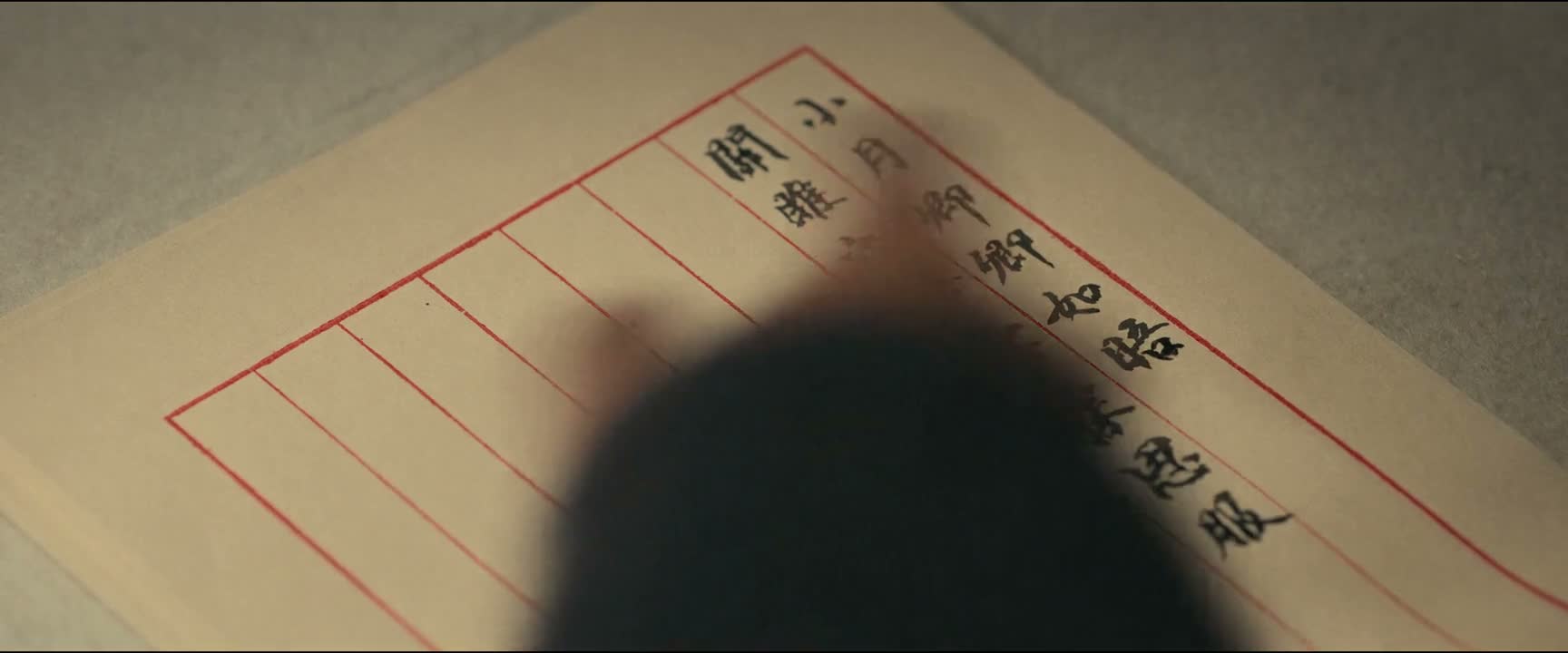
“[Xiaoyue, when you read this, it's as if I am right beside you. I can't stop thinking about you day and night.] only write eight words? Are you buying cabbage”
“All I can think of is a few words:”

“but you can't even get the name right.”

“(2004, Qidaohezi) An expert from Qingzhou, very famous.”