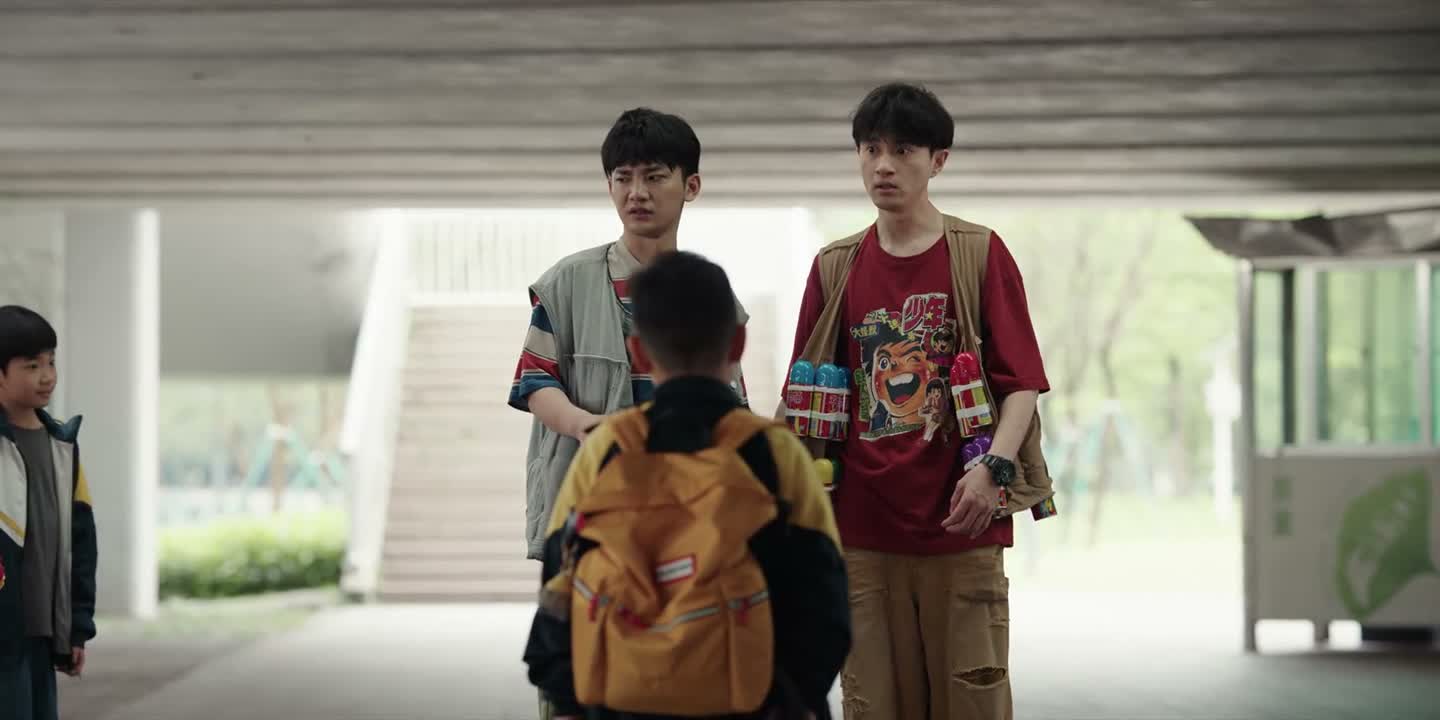
什 什么多少户啊 还装傻
“W-What households? Stop playing dumb?”
THE DIALOGUE REEL
一共有多少户
“How many households?”
什 什么 多少户啊 还装傻
“W-What households? Stop playing dumb?”
像杨小海家 这样困难的家庭 一共有多少户
“How many households are there in total like Yang Xiaohai's family?”
“Stop playing dumb, you know exactly what I'm asking about.”
In Chinese grassroots administration and community work, surveying 'kun nan hu' (households facing hardship) and implementing poverty alleviation and assistance policies are primary responsibilities of grassroots cadres, requiring precise knowledge of the number of households and their actual living conditions.
LEARNING CHUNKS & PARTICLES
to play dumb; to feign ignorance
A common colloquial chunk frequently paired with 'hai' or 'bie' (such as 'bie zhuang sha' or 'hai gen wo zhuang sha'), used to call someone out for intentionally pretending not to know or evading the truth.
Used at the end of an interrogative or rhetorical question to heighten questioning and impatience.
VOCABULARY & EXPRESSIONS
Parallel Spoken Cinema Scenes (语义近邻切片)

“Nine out of ten are broke.”

“in the village.”
“How many units are on your floor?”

“But we don't have that much money.”

“- Seven or eight. - That's not so many.”

“What's actually going on in our family?”