骗人的吧你 我为什么要骗方小姐嘞
“You must be lying. Why would I lie to you?”
THE DIALOGUE REEL
我是贾志怀的儿子啊
“Jia Zhihuai's son.”
骗人的吧 你 我 为什么要 骗方小姐嘞
“You must be lying. Why would I lie to you?”
方小姐
“Ms. Fang,”
“Are you kidding me? What possible reason would I have to lie to you?”
In specific contexts (especially in Hong Kong/Taiwan media, traditional etiquette, or formal social settings), this serves as a polite address for young women. Here, paired with a rhetorical question, it establishes a subtle social distance mixed with polite probing and playful maneuvering.
LEARNING CHUNKS & PARTICLES
You've got to be kidding / That's a lie, right? (expresses strong skepticism or disbelief toward what was said)
A very high-frequency colloquial expression, commonly used among acquaintances or in informal settings to show refutation, surprise, or doubt.
Why would I...? (rhetorical question pattern indicating one has no reason or motive to do something)
Used to assert one's innocence or defend oneself, carrying a stronger rhetorical force than a plain declarative sentence.
Indicates conjecture or tentative inference, carrying a probing and questioning tone.
A sentence-final particle with dialectal flavor (common in southern Chinese speech) that softens the rhetorical tone, adding a playful or helpless nuance.
VOCABULARY & EXPRESSIONS
Parallel Spoken Cinema Scenes (语义近邻切片)

“Tell me. Why did you lie to me?”

“Why would I lie to you? What did I lie about?”
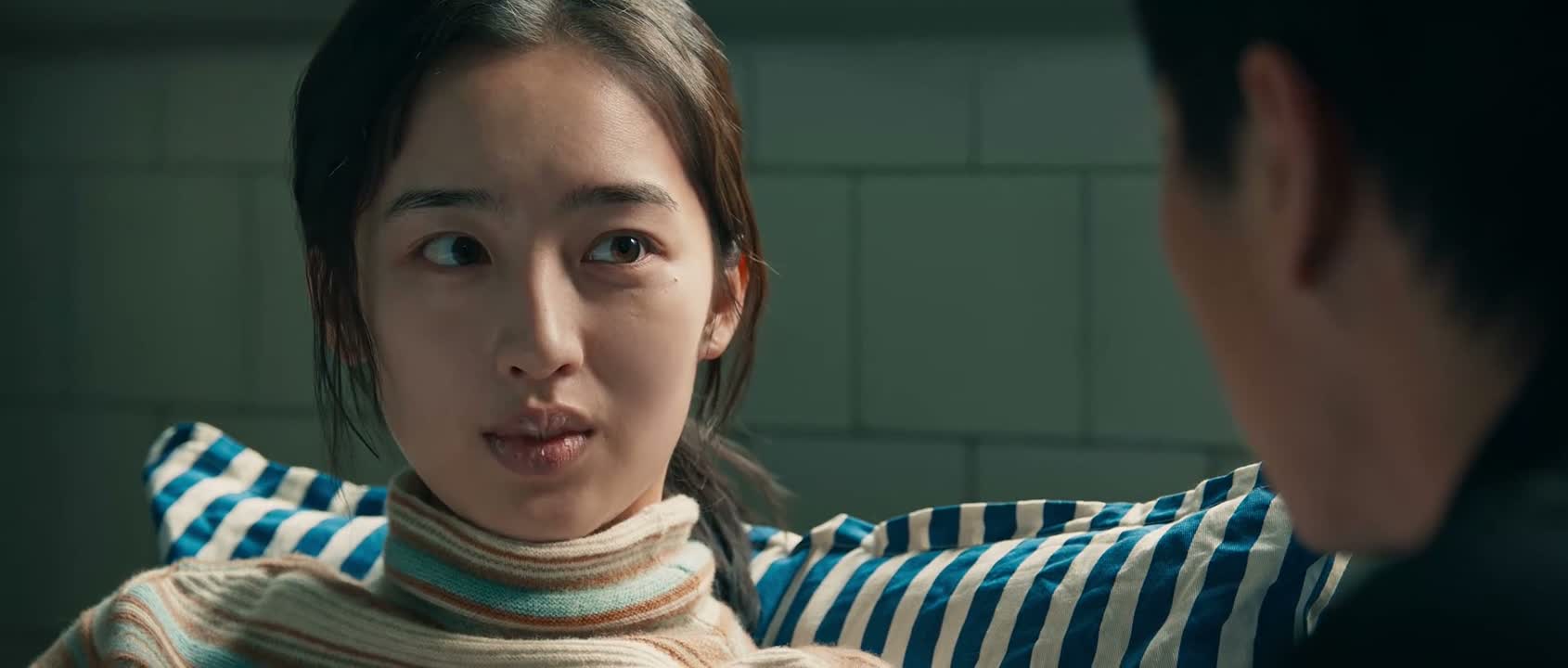
“You're not lying to me, are you?”

“Why did you lie to me? Lie about what? What do you mean?”