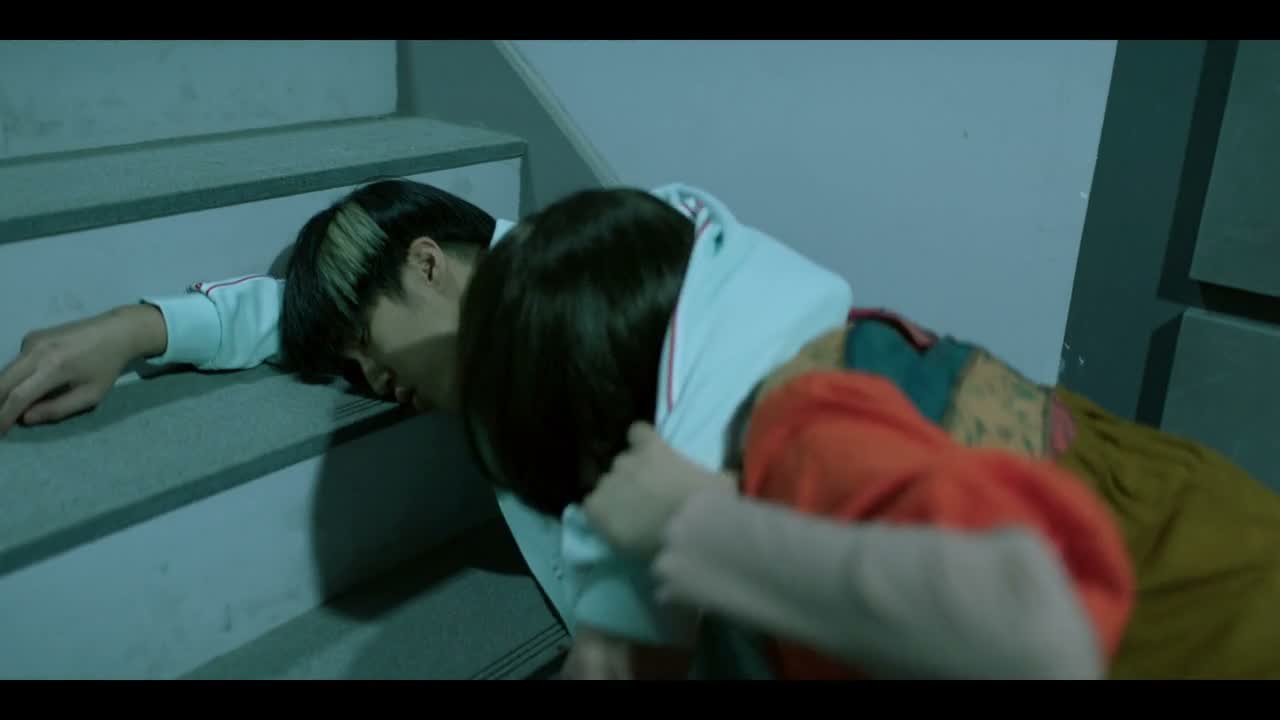
那 那怎么办啊现在 这儿的门锁死了
“T-Then what do we do now? The door here is locked.”
THE DIALOGUE REEL
所以伤口会崩开
“so our wounds split open.”
那 那怎么办 啊现在 这儿的门锁 死了
“T-Then what do we do now? The door here is locked.”
“Let's go back first. Okay, okay. Let's go.”
Direct spoken expression in this communicative setting.
In spoken Chinese, appending '死' (death) to verbs creates vivid imagery of an irreversible, absolute state, expressing trapped helplessness.
LEARNING CHUNKS & PARTICLES
what should we do?
An extremely common question used to express helplessness or urgently solicit advice.
locked shut; deadlocked
The complement '死' indicates that something is fixed firmly, completely shut, or impossible to open.
Heightens the sense of urgency and panic in asking what to do.
Signifies a change of state to being firmly locked, emphasizing the trap.
VOCABULARY & EXPRESSIONS
Parallel Spoken Cinema Scenes (语义近邻切片)

“W-What should we do then?”

“Then... then what should we do? Do something!”
“[A-Hua] And the door's locked now. I can't go after them. They went down.”

“Well... What else can be done?”

“Why did you lock the door?”

“Why is this door sealed?”