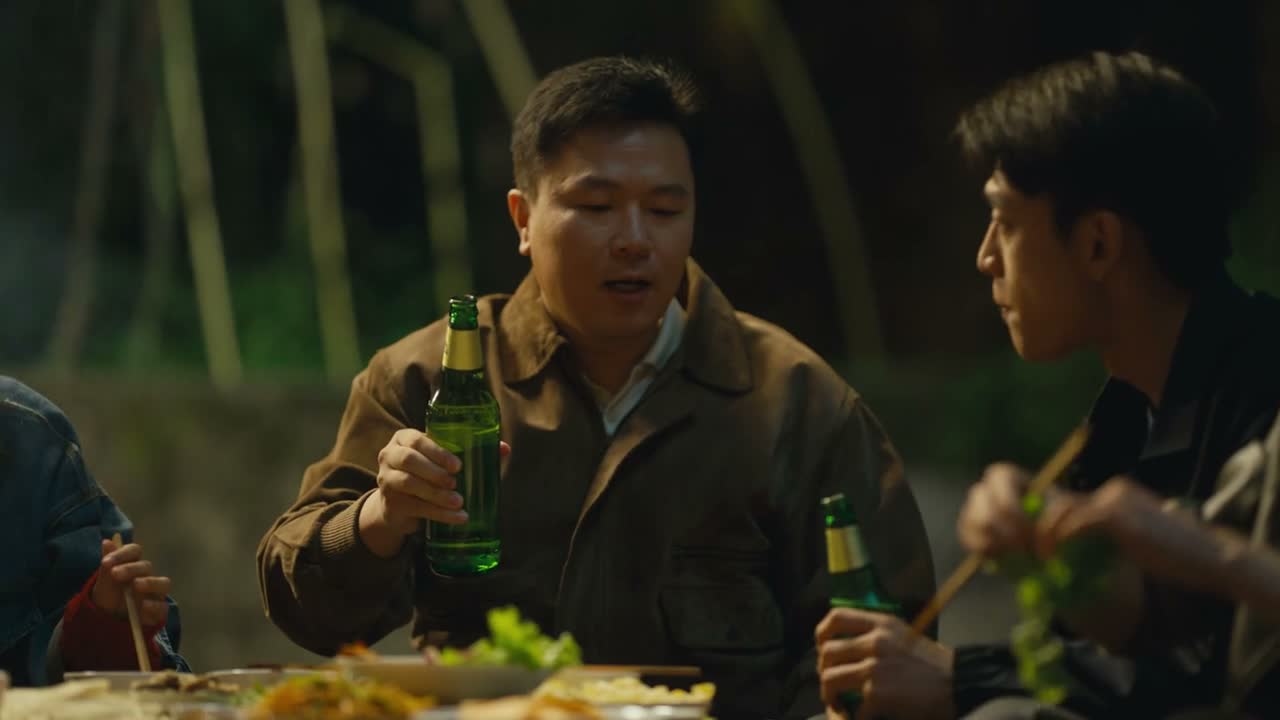
《The Knockout》 S1·E26 (36:46)
HSK 1
nà ge méi huà shuō le
那个 没话说了
“Well... You have nothing to say?”
《The Knockout》
S1·E26
TIMECODE: 36:46
·
1080P MASTER AUDIO
THE DIALOGUE REEL
[-1] PREVIOUS TURN
wǒ lǎo diē ne
我老爹呢
“Where's my dad?”
nà ge méi huà shuō le
CURRENT FOCUS
那个 没话说了
“Well... You have nothing to say?”
[+1] FOLLOW-UP TURN
nà wǒ shuō liǎng jù
那我说两句
“I have something to say.”
Subtitles synced to millisecond timecode
Browse Show Clips →
Scene:
Daily Life
Function:
ACKNOWLEDGING SILENCE
Tone:
CASUAL
Emotion:
AWKWARDNESS
WHAT THEY REALLY MEAN (PRAGMATIC SUBTEXT)
“We've run out of things to talk about, so someone say something.”
💡 Cultural Insight: Breaking Conversational Stagnation
Chinese speakers often use casual fillers like '那个' followed by explicitly stating the silence to comfortably reset or pass conversational turns.
INTENT TAGS:
#turn_passing
#filler
#easing_tension
#transition
🧩
2 CHUNKS · 1 PARTICLES
LEARNING CHUNKS & PARTICLES
那个
SPOKEN CHUNK
well; uhm (filler word)
Commonly used as a conversational hesitation filler to buy time or initiate a turn softly.
没话说了
SPOKEN CHUNK
nothing left to say; at a loss for words
Use this spoken phrase to acknowledge that a conversation has hit a dead end or fallen silent.
Modal Particle「了」 (le)
CHANGE OF STATE
Indicates a change of state, marking that the conversation has now reached a point of silence.
🏮
2 EXPR · 0 GRAMMAR
VOCABULARY & EXPRESSIONS
COLLOQUIAL EXPRESSIONS:
CROSS-CINEMA CORPUS BOARD · PARALLEL SCENES
EXPLORE BY SEMANTIC SIMILARITY
Parallel Spoken Cinema Scenes (语义近邻切片)
《The Knockout》 S1·E26 (36:46) · Authentic Cinema Dialogue Corpus