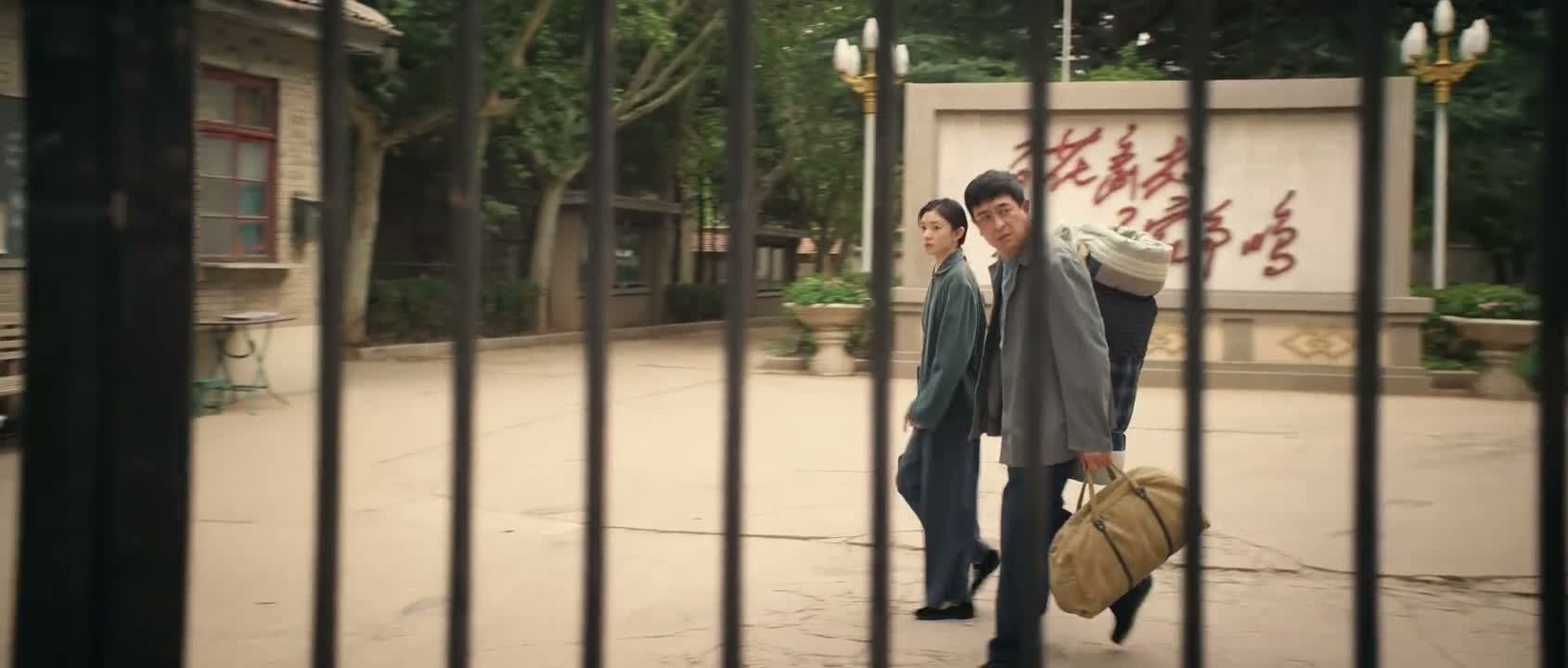
我赶不上车了 走了 你上哪儿去你
“I’m about to miss the bus. I’m leaving. Where are you going?”
THE DIALOGUE REEL
你拿着吧你啊
“Just take it.”
我 赶不上车 了 走了 你上哪儿去 你
“I’m about to miss the bus. I’m leaving. Where are you going?”
你快回去 回去
“Go back inside. Go.”
“I have to leave right now or I'll miss my ride, so stop following me and go back!”
Chinese departures often involve affectionate hesitation, where one party insists on seeing off or giving gifts while the departing traveler urgently pushes back out of concern.
LEARNING CHUNKS & PARTICLES
miss the bus/train, won't make the ride in time
An essential spoken formula for expressing that you are running late for scheduled transportation.
where are you going
A colloquial question used to ask where someone is heading, often with a tone of surprise or curiosity.
Signifies an imminent state change or immediate action that must take place now.
VOCABULARY & EXPRESSIONS
Parallel Spoken Cinema Scenes (语义近邻切片)

“My ride's here. I'm leaving.”

“Why aren't you getting on? If you walk back, you won't make it before dark.”

“Honestly, just get in your car and go, and…”

“The car has been waiting outside for a long time. Let's go.”

“It's time! Why haven't you gotten on the bus? The match is about to start!”
“Leaving already?”