你们给我放开她
“Let her go!”
THE DIALOGUE REEL
你们都疯了吧
“Have you all lost your minds?”
你们 给我放开 她
“Let her go!”
Direct spoken expression in this communicative setting.
Adding '给我' before action verbs transforms an ordinary request into a domineering, forceful command reflecting strong personal authority.
LEARNING CHUNKS & PARTICLES
do (something) for me; an emphatic imperative marker
Placed directly before a verb in spoken Chinese to convey authority, extreme irritation, or a strict warning.
to let go; to release
A common verb-complement structure indicating releasing one's grip on an object or person.
VOCABULARY & EXPRESSIONS
Parallel Spoken Cinema Scenes (语义近邻切片)
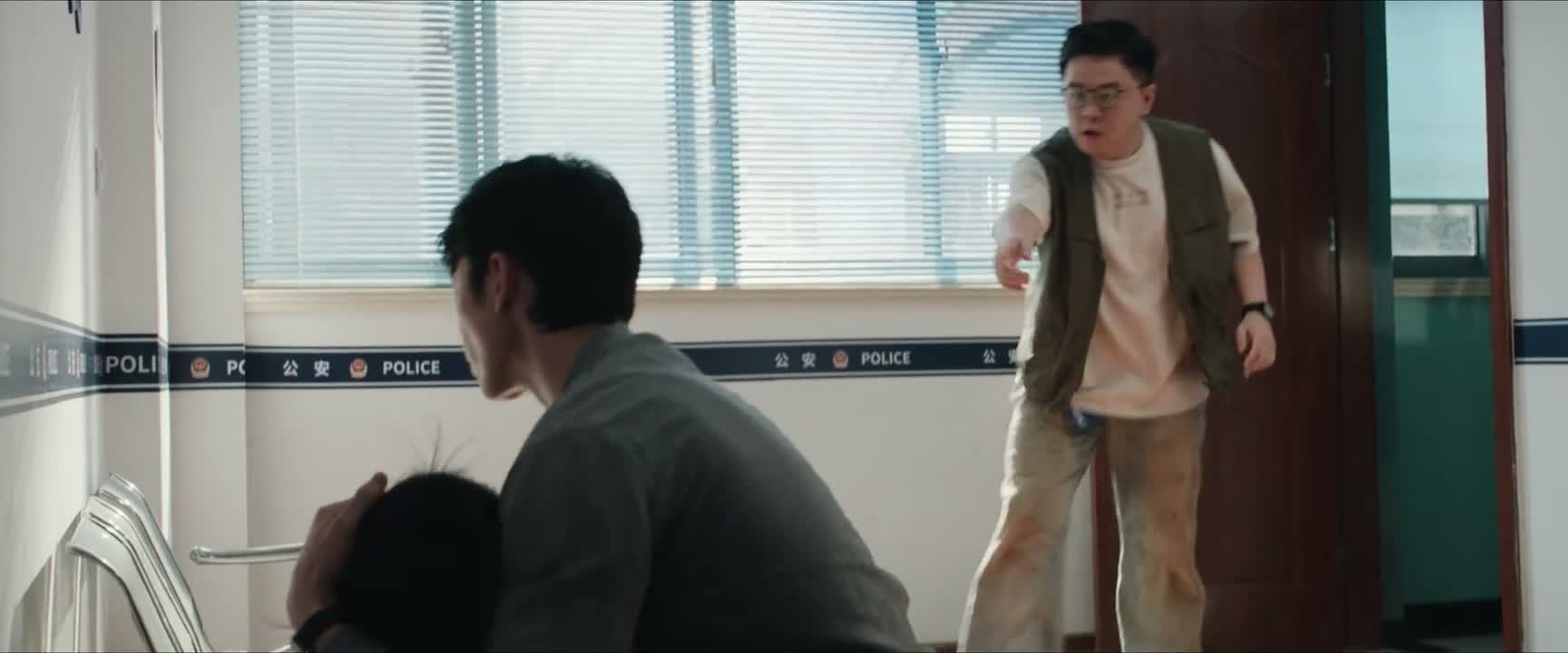
“[Police] Let go of her! Let go!”

“Let me go!”

“Let him go! - What are you doing? - Let Xiaofei go! - Stop! - Let Xiaofei go!”