妈 就我们两个人住要用多少东西啊
“Mom, it's just the two of us. We don't need much.”
THE DIALOGUE REEL
我就说去咱家把那个柜子拿来 死活不要
“I told you to bring that cabinet from our house, but you refused.”
妈 就我们两个人住 要用多少 东西 啊
“Mom, it's just the two of us. We don't need much.”
“Besides, didn't I already bring the sewing machine?”
“Please stop pushing furniture onto us; we want to manage our own space.”
Chinese parents often express care by giving household supplies to grown children; declining requires gentle rhetorical reasoning to avoid showing disrespect.
LEARNING CHUNKS & PARTICLES
just the two of us
Used to emphasize simplicity, small scale, or exclusivity of a living situation.
how many things could one possibly need?
A rhetorical question used to downplay material requirements or curb excessive preparation.
Softens the rhetorical question into an affectionate plea rather than a harsh rebuke.
VOCABULARY & EXPRESSIONS
Parallel Spoken Cinema Scenes (语义近邻切片)
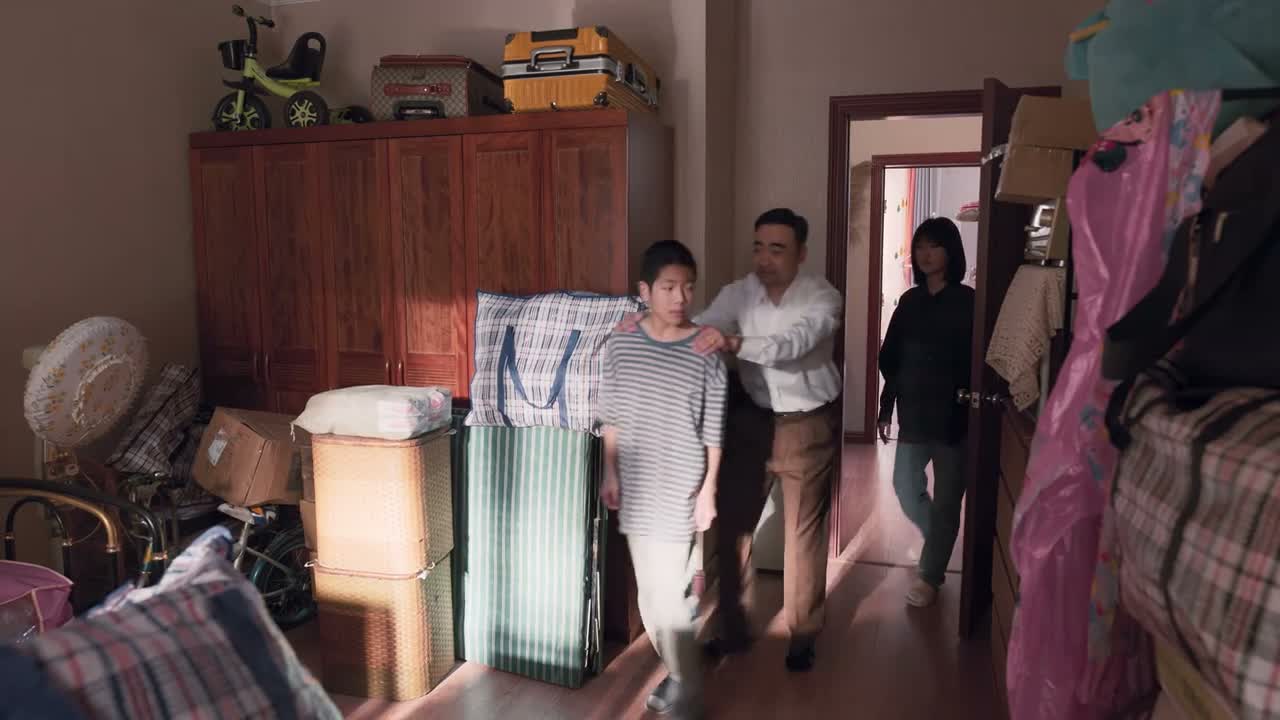
“Well? You'll have it to yourself. Big, huh?”

“You need the unit too. The unit will be split equally among us.”
“You live alone. How much space do you need?”

“There's no space for two single beds anyway.”

“But we don't have that much money.”

“I don't have any special requests. Just a small room will do.”