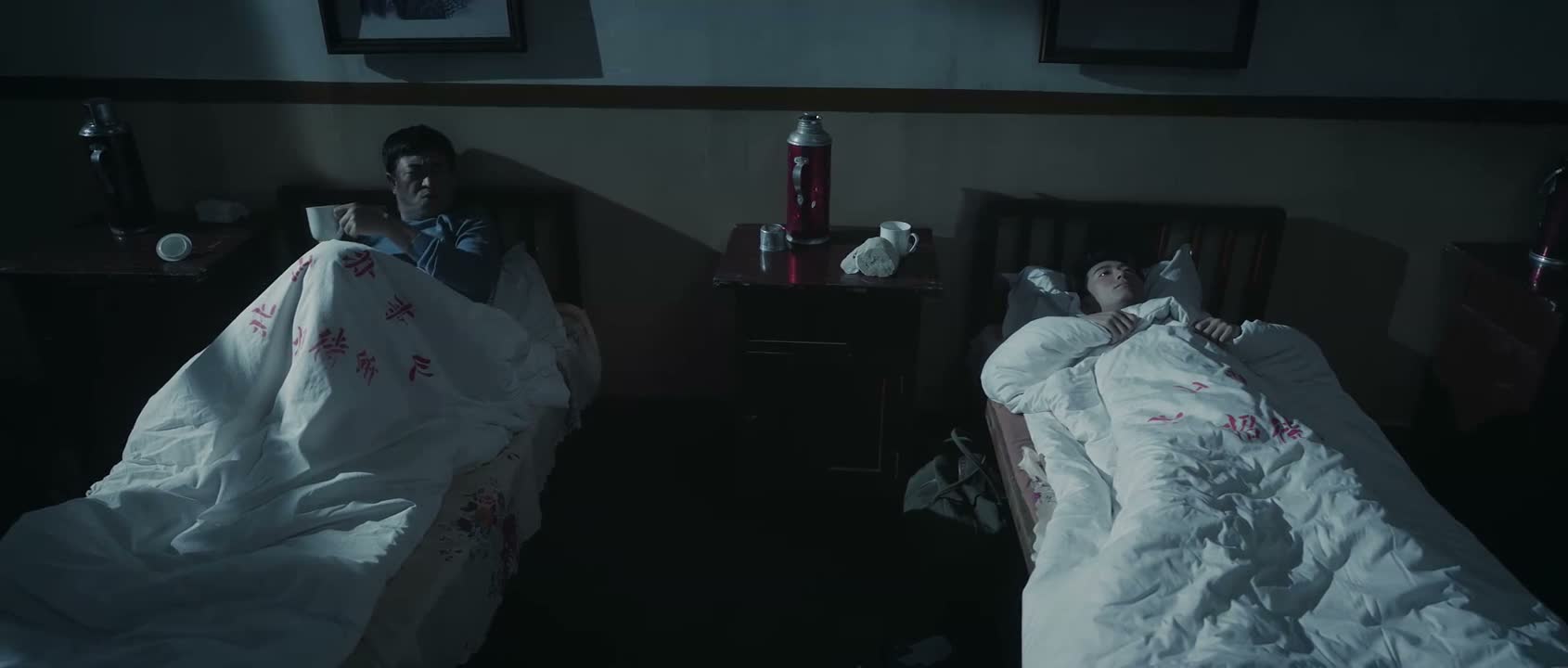
我连睡觉的时间都不够 哪有空孤单
“leaving scarce time for rest. No time for loneliness.”
THE DIALOGUE REEL
离山那么多人 每天醒来 光准备饭食就要准备好久
“So many people there. Once I wake up, I'll spend hours just on meals,”
我连睡觉的时间都 不够 哪有空 孤单
“leaving scarce time for rest. No time for loneliness.”
你干吗
“What are you doing?”
“I try to keep myself exhausted so I don't dwell on feeling alone.”
In Chinese interpersonal communication, individuals often deflect inquiries into emotional distress or loneliness by framing their lives purely around practical busyness.
LEARNING CHUNKS & PARTICLES
not even enough to...
A common emphatic construction used to emphasize an extreme lack of resources or time.
how could one have time to...
A rhetorical question pattern used to brush off suggestions that one has leisure or spare time.
VOCABULARY & EXPRESSIONS
Parallel Spoken Cinema Scenes (语义近邻切片)

“There's no one else here. Can you let me stay the night here?”

“because I've been sleep-deprived lately. I wanted to sleep here.”

“I haven't had a full night's sleep.”

“If you have trouble falling asleep, you could give it a try.”

“that I barely slept all night.”
“I'm a light sleeper.”