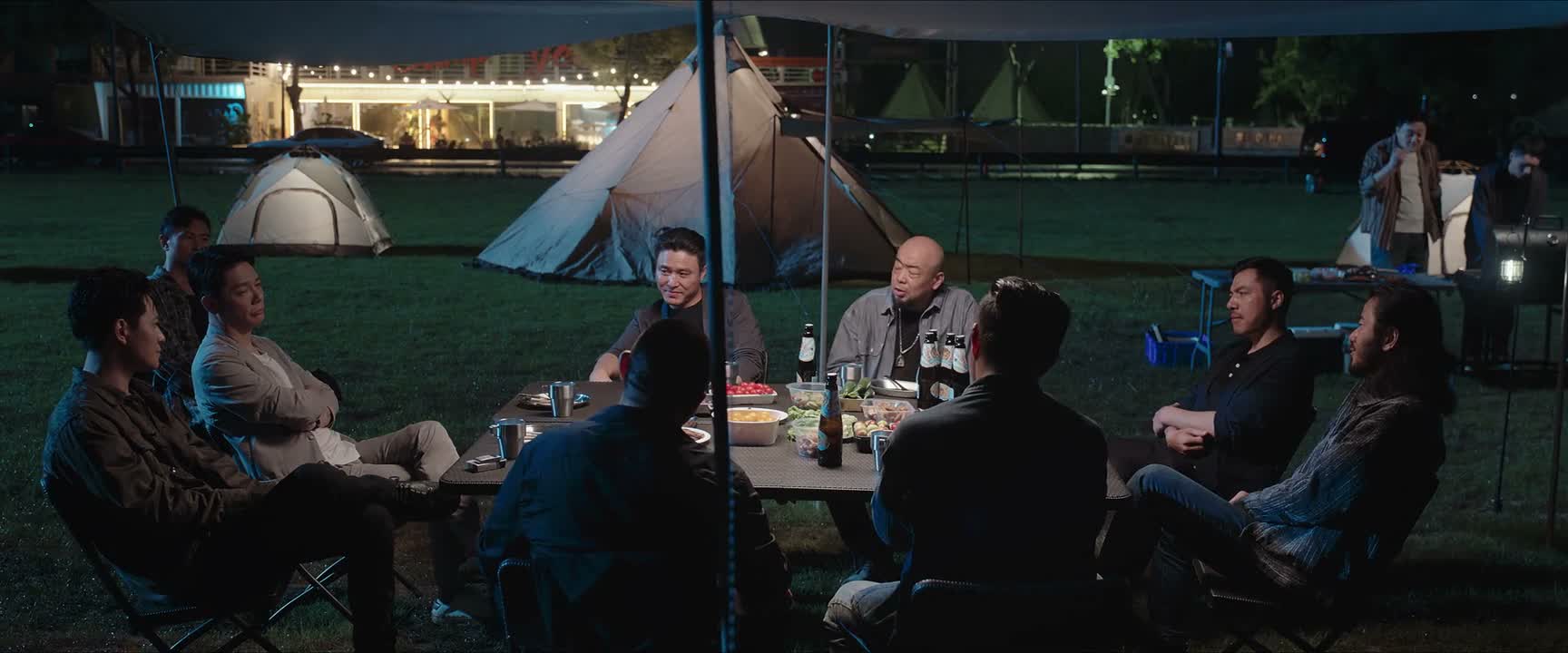
我要是不答应呢
“And if I refuse?”
THE DIALOGUE REEL
都别想从这儿出
“none of you are leaving.”
我要 是 不答应 呢
“And if I refuse?”
不是我
“It wasn't me.”
“I am not afraid of your threats, so make your move if you dare.”
Using an incomplete hypothetical question with 'ne' signals that the speaker is deliberately testing the boundaries of the opponent's threat rather than seeking information.
LEARNING CHUNKS & PARTICLES
if not / what if ... doesn't
A highly colloquial conditional structure commonly used to introduce hypothetical consequences or direct defiance.
to agree / to consent / to comply
Frequently used in spoken negotiation or dispute contexts to indicate giving in to demands.
Suspends the sentence in an open rhetorical question, intensifying the provocative and defiant tone.
VOCABULARY & EXPRESSIONS
Parallel Spoken Cinema Scenes (语义近邻切片)

“If you can't accept it,”
“What if someone refuses to obey?”

“If she can't accept them, she'll have to leave immediately.”

“If you disagree, there'd be no point in discussing it either.”

“If you agreed, I wouldn't need to discuss it with you.”

“If I say something you don't like,”

“If I don't want to, shouldn't they just give me”

“I can't agree to this.”