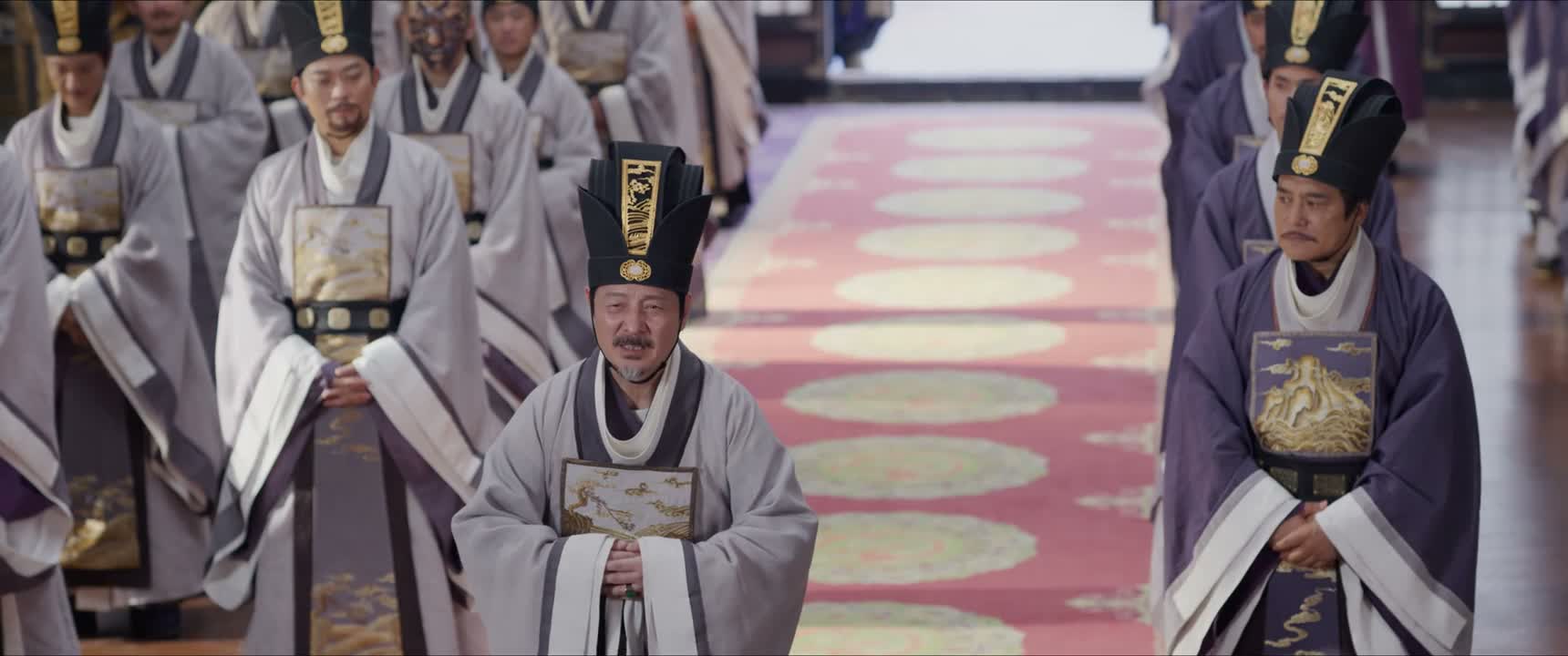
为什么不参加了呢
“Why are we not participating?”
THE DIALOGUE REEL
松场起了松瘟 咱们可以出去寻松啊
“despite the outbreak of pine wilt disease in the pine yard, we can go out to look for pines.”
为什么不参加了 呢
“Why are we not participating?”
爹 你知道为了这次竞选
“Father, do you know how much effort”
“We worked so hard; how can you just give up without a fight?”
Running for status, positions, or honors is often a collective family endeavor; unilateral withdrawal directly impacts the entire household's fortunes.
LEARNING CHUNKS & PARTICLES
why
The standard question word for asking reasons or causes in both formal and casual settings.
not participate anymore
The combination of negative '不' and change-of-state particle '了' indicates a sudden cancellation of plans.
Indicates a change of situation (deciding not to participate anymore).
Softens the interrogative sentence while underscoring genuine curiosity or gentle perplexity.
VOCABULARY & EXPRESSIONS
Parallel Spoken Cinema Scenes (语义近邻切片)

“Why do we have to quit the selection?”

“why wasn't it reported?”

“I also don't want to be involved.”
“and I no longer wish to be involved.”