我能亲你一下吗
“Can I kiss you?”
THE DIALOGUE REEL
走
“Go away.”
我 能 亲你一下 吗
“Can I kiss you?”
“I meant holding... I have an accent.”
Direct spoken expression in this communicative setting.
Asking directly for a kiss is relatively bold in traditional Chinese dating culture, often softened with a nervous, tentative phrasing to avoid causing embarrassment.
LEARNING CHUNKS & PARTICLES
May I...? / Can I...?
Standard polite pattern for asking permission in Chinese before initiating an action.
Give you a kiss
The verbal classifier '一下' softens the action, making the physical advance sound gentle, brief, and tentative.
Turns the tentative statement into an interrogative asking for the listener's explicit consent.
VOCABULARY & EXPRESSIONS
Parallel Spoken Cinema Scenes (语义近邻切片)

“I really want to kiss you right now.”
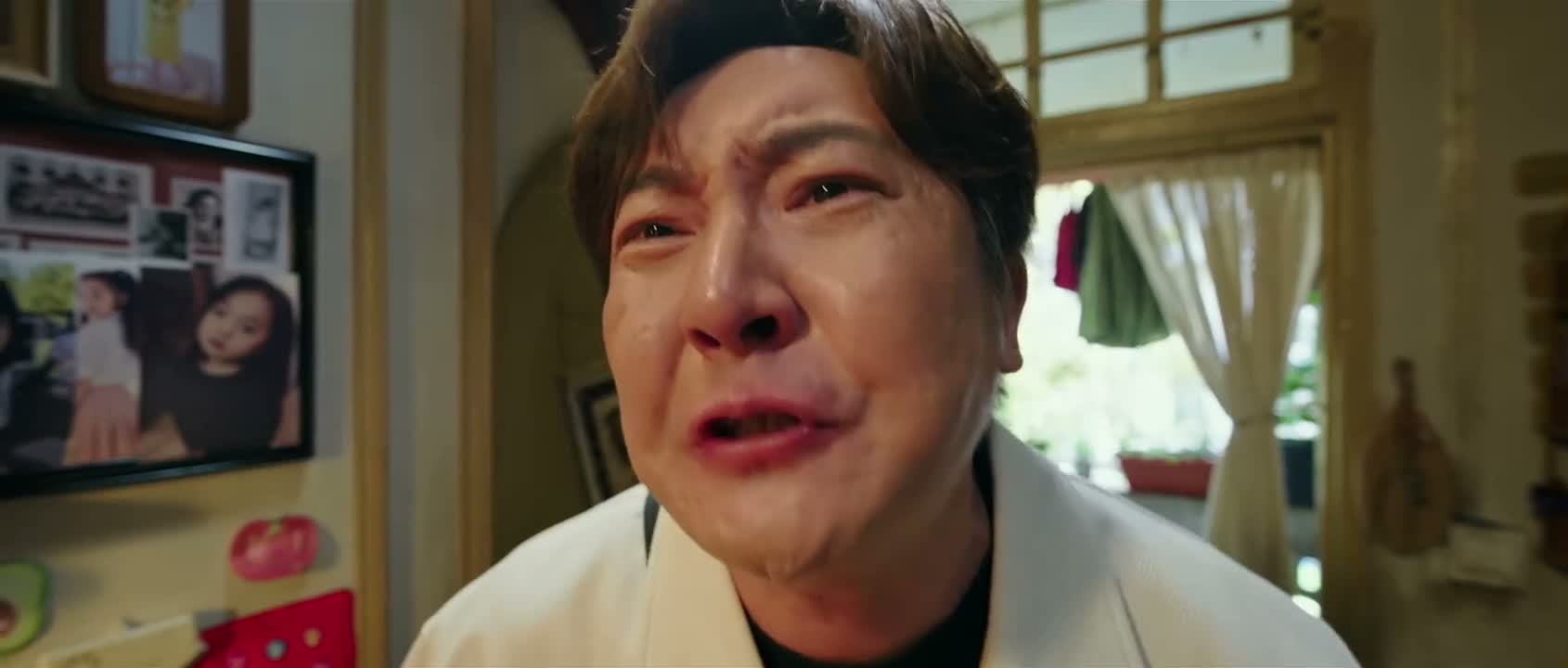
“Am I not your biological son?”

“We'll be doubly related.”

“- Kiss! - Kiss!”

“- Or did you do it yourself? - How could that be?”

“I'll treat you as my own”