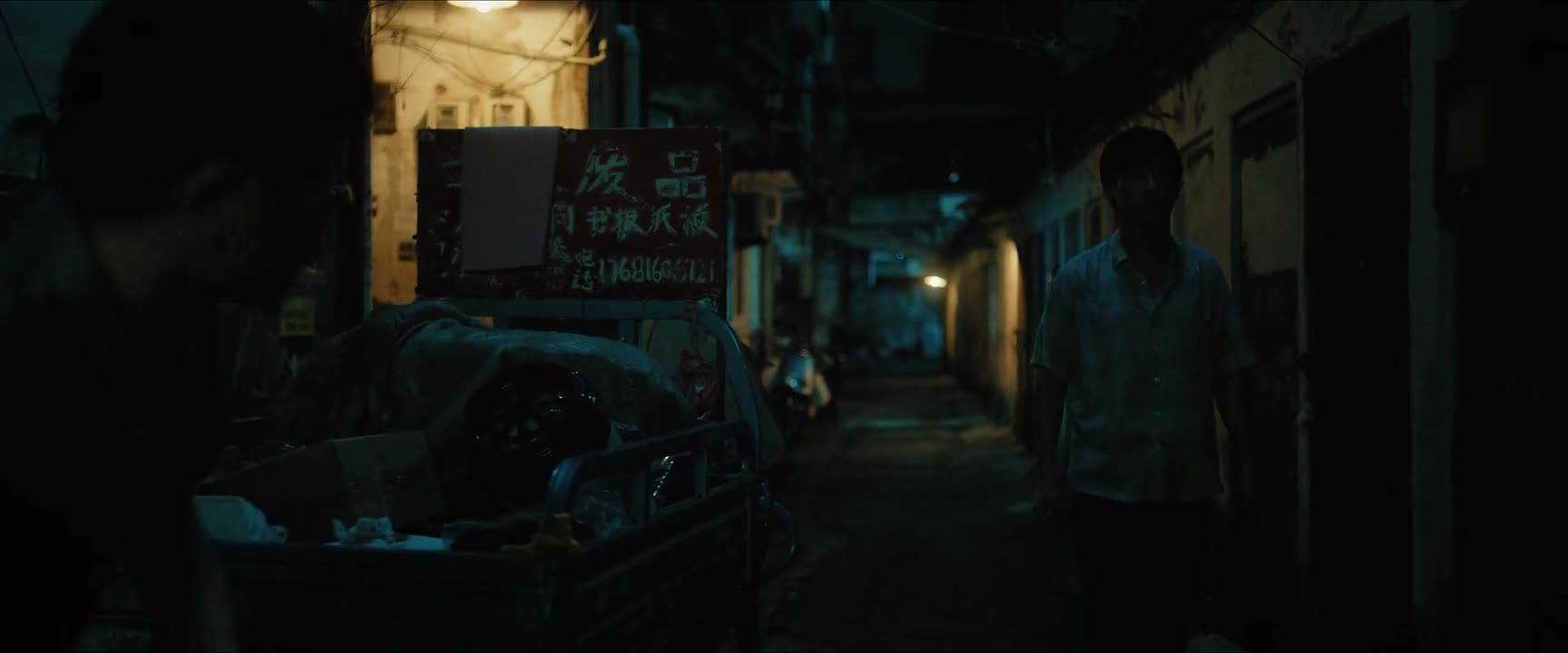
出来散散心 溜达溜达
“so I came out to clear my head and wander around.”
THE DIALOGUE REEL
今天在公司忙得稍微有点累
“I was a bit tired from a busy day at the company,”
出来 散散心 溜达溜达
“so I came out to clear my head and wander around.”
你那边怎么那么黑啊
“Why is it so dark on your side?”
Direct spoken expression in this communicative setting.
In spoken Chinese, repeating verbs (like 'san-san xin' or 'liuda-liuda') softens the tone and indicates that the action is brief, informal, and done for leisure.
LEARNING CHUNKS & PARTICLES
to clear one's head; to relieve boredom or stress
Verb reduplication makes the action sound light and casual. Use it when going out specifically to improve a bad or tired mood.
to take a casual stroll; to wander around aimlessly
Colloquial Northern Chinese expression for walking slowly without a specific destination, purely for relaxation.
VOCABULARY & EXPRESSIONS
Parallel Spoken Cinema Scenes (语义近邻切片)

“Go out, get some fresh air, and talk things through.”

“Isn't it nice to get out for a walk?”
“Ken. Going out? Just taking a walk.”