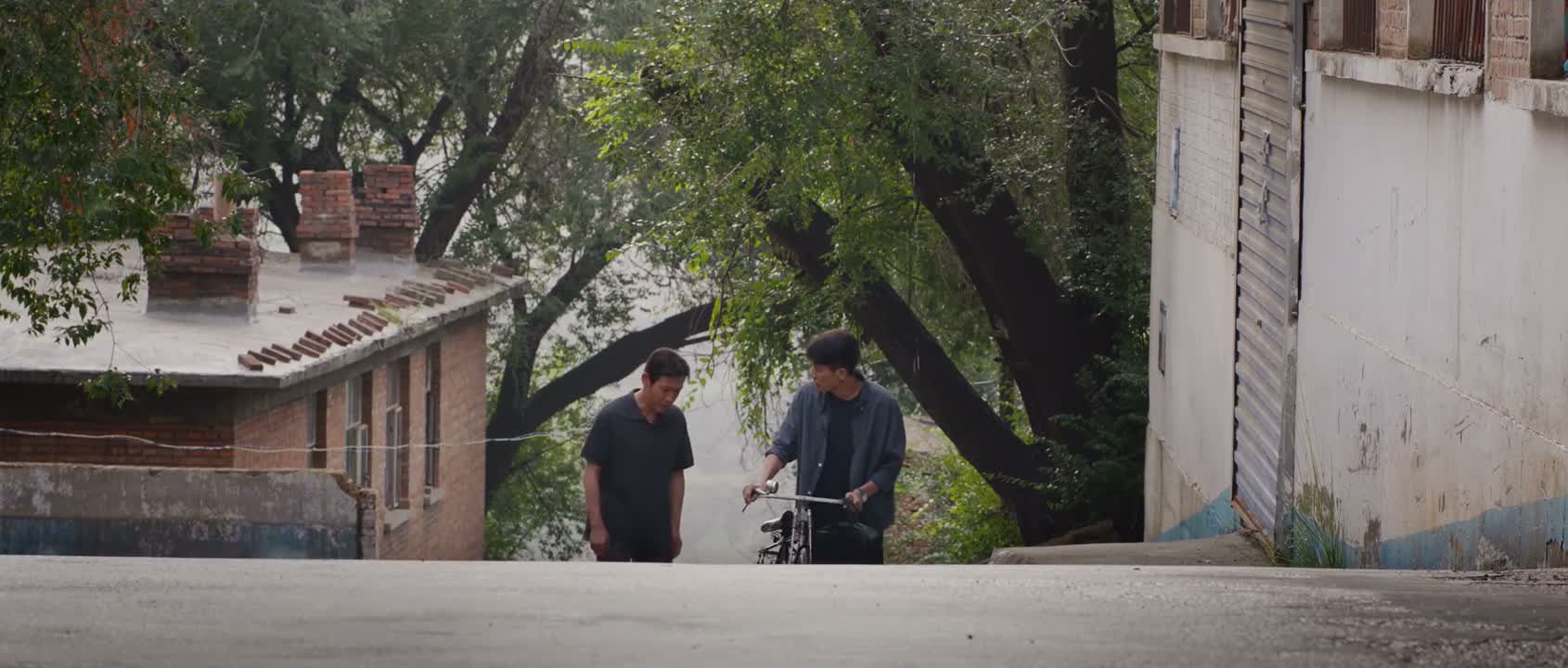
我犯法了吗 我骑摩托怎么了
“Did I break the law? What's wrong with me riding a motorcycle?”
THE DIALOGUE REEL
跟他说一说
“Tell him.”
我 犯法了吗 我骑摩托 怎么了
“Did I break the law? What's wrong with me riding a motorcycle?”
我酒驾了 我肇事逃逸
“Was I drunk driving? Was I a hit-and-run driver?”
“Back off, I haven't done anything illegal so stop treating me like a criminal.”
Invoking 'breaking the law' (犯法) is a common defensive posture in Chinese street disputes to reject informal moralizing or low-level authority.
LEARNING CHUNKS & PARTICLES
did (I) break the law?
A rhetorical question used aggressively when challenged or reprimanded, asserting one's legal innocence.
what of it? what is wrong with that?
In a defensive context, it functions as a defiant challenge meaning 'so what?' rather than 'what happened?'.
Marks the rhetorical question, sharpening the aggressive and defensive challenge.
Combined in '怎么了' to form a punchy rhetorical pushback asserting normalcy.
VOCABULARY & EXPRESSIONS
Parallel Spoken Cinema Scenes (语义近邻切片)

“What law did I break? You brought me here just like that?”
“I know it's illegal.”

“I didn't break the law. What should I say?”