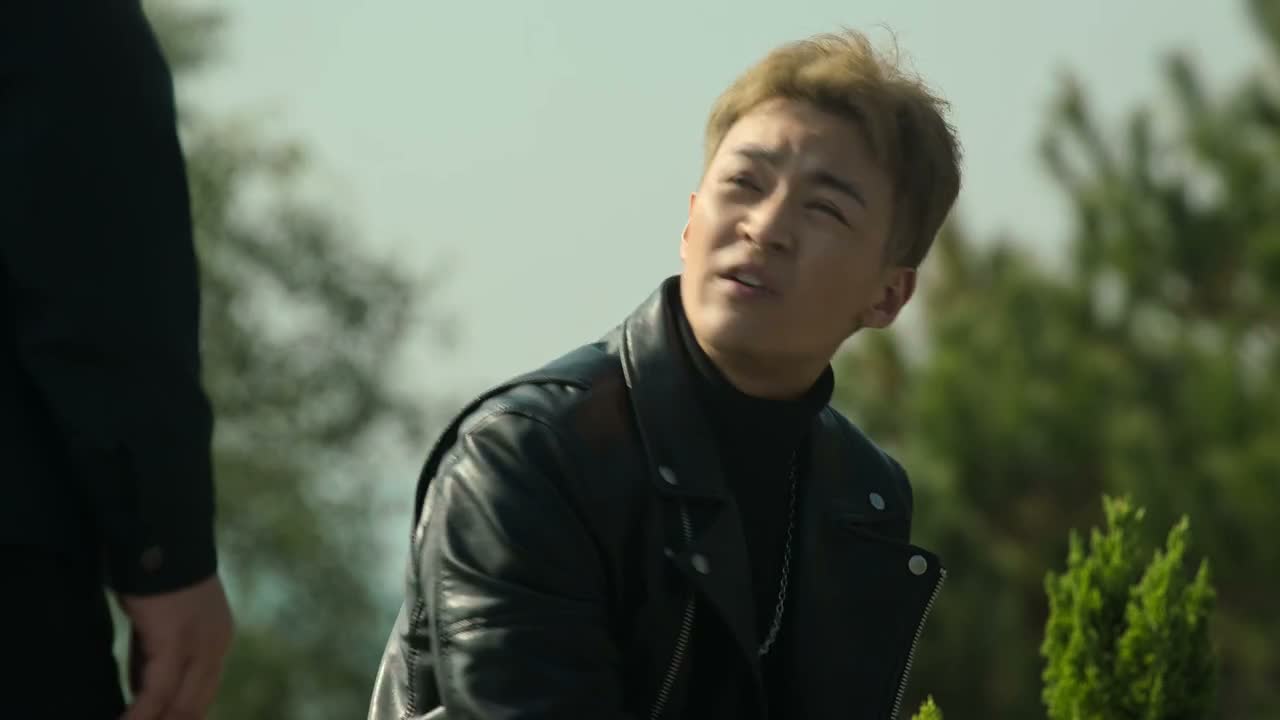
我又没犯法 我说什么呀
“I didn't break the law. What should I say?”
THE DIALOGUE REEL
我说什么呀
“What am I supposed to say?”
我又没 犯法 我说 什么呀
“I didn't break the law. What should I say?”
我听说你喜欢研究风水和民俗 对吧 对啊
“I hear you're into feng shui and folk customs. Right? Yes.”
“I did nothing wrong, so stop interrogating me like a criminal.”
Invoking the fact that one has not broken the law is a standard defensive reflex when ordinary citizens face unexpected official questioning.
LEARNING CHUNKS & PARTICLES
it's not like I; I haven't even
Used at the beginning of a sentence to justify oneself or protest an accusation.
to break the law; commit a crime
Commonly used in spoken arguments to strongly claim innocence.
Softens the rhetorical question while adding a tone of exasperation.
VOCABULARY & EXPRESSIONS
Parallel Spoken Cinema Scenes (语义近邻切片)

“I didn't do something illegal either.”
“Did I break the law? What's wrong with me riding a motorcycle?”

“But I did nothing wrong. It took me all afternoon.”

“teaches pickup techniques. It's not illegal.”