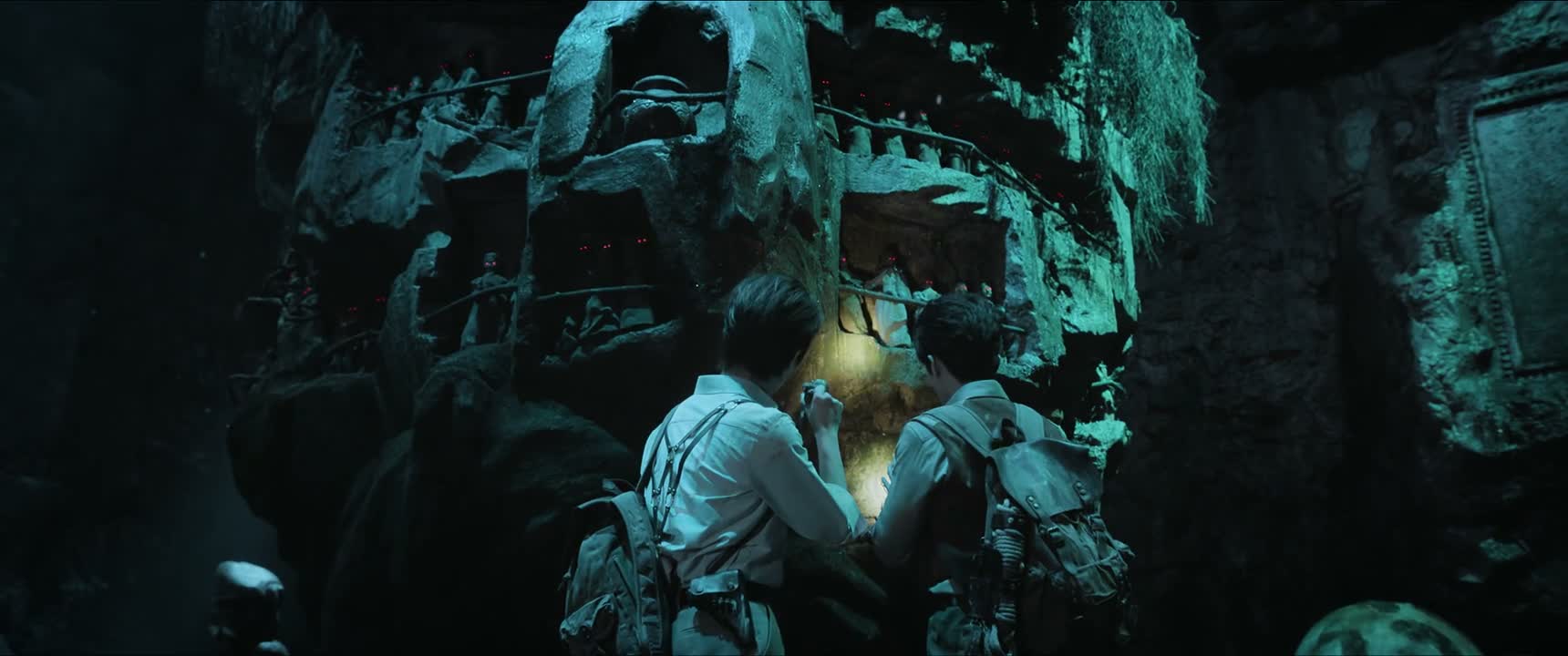
刚刚那个邪神像是不是在动 动了 我看到了
“Did that Evil God statue move just now? It moved. I saw it.”
THE DIALOGUE REEL
我觉得可能
“I think maybe...”
刚刚 那个 邪神像 是不是在动 动了 我看到了
“Did that Evil God statue move just now? It moved. I saw it.”
“It seems the crisis hasn't been resolved yet.”
Direct spoken expression in this communicative setting.
In traditional Chinese folklore, statues of deities coming to life or shifting position signifies imminent danger, misfortune, or ominous spiritual disturbance.
LEARNING CHUNKS & PARTICLES
statue of an evil deity / idol of a dark god
Typically seen in supernatural, mythological, or fantasy genres referring to pagan or dark deities.
is / was it currently...
Used in spoken Chinese to query an ongoing action, often with an anxious or confirming nuance.
Used after '动' to mark the completion/occurrence of the sudden movement.
VOCABULARY & EXPRESSIONS
Parallel Spoken Cinema Scenes (语义近邻切片)
“exactly the same as that Evil God?”

“Could this be the thing the Evil God lured people here to dig up?”

“Why leave before the Evil God statue was fully burned?”

“I assumed there was something wrong with this Evil God statue,”

“If I didn't use the Evil God as a hammer, ♪ Hey there, hey there, sweet hey there ♪ should I have used you instead?”

“So the Evil God of Nanyang was something you guys were orchestrating behind the scenes.”