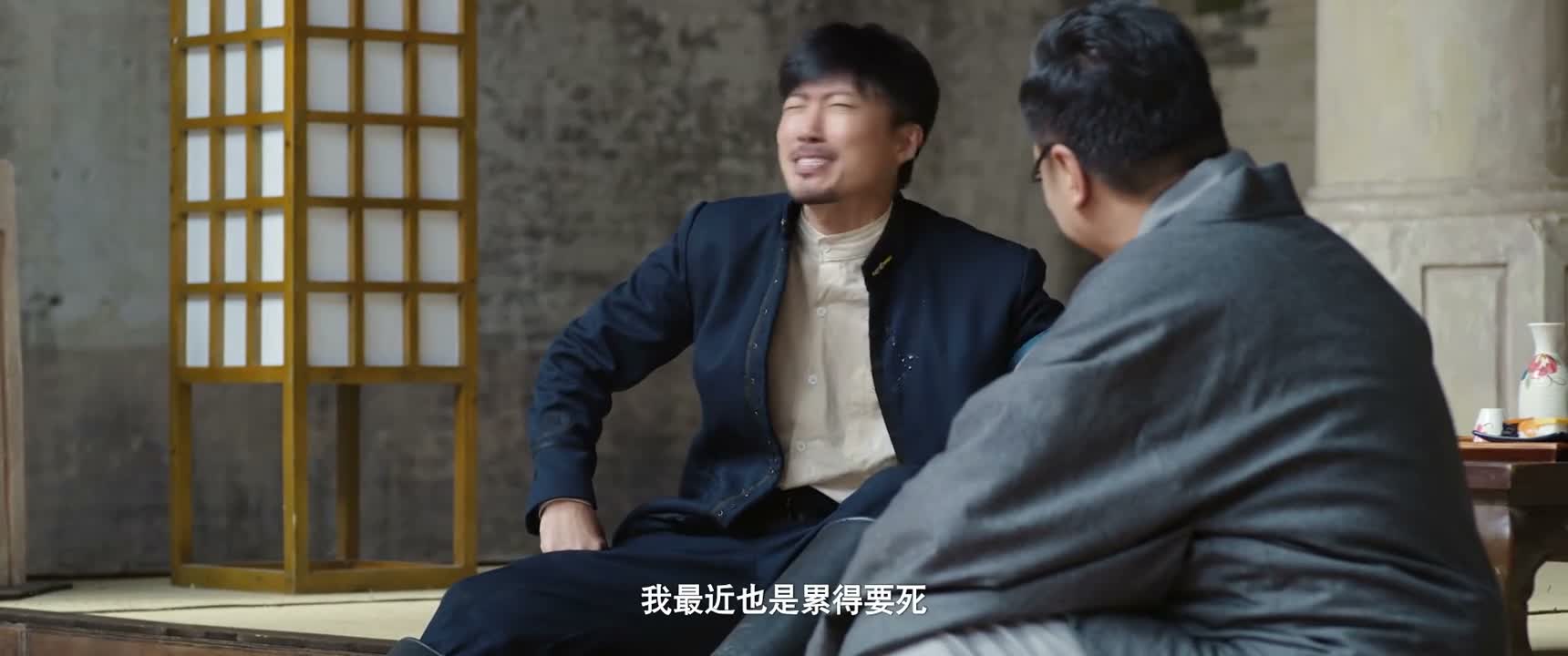
《Go Ahead》 S1·E2 (09:55)
HSK 1
wǒ lèi sǐ le
我累死了
“I'm exhausted.”
《Go Ahead》
S1·E2
TIMECODE: 09:55
·
1080P MASTER AUDIO
THE DIALOGUE REEL
[-1] PREVIOUS TURN
wǒ qiú nǐ le
我求你了
“I beg you.”
wǒ lèi sǐ le
CURRENT FOCUS
我 累死了
“I'm exhausted.”
[+1] FOLLOW-UP TURN
xíng
行
“All right.”
Subtitles synced to millisecond timecode
Browse Show Clips →
Scene:
Crisis & Conflict
Function:
TERMINATING INTERACTION
Tone:
DISMISSIVE
Emotion:
EXHAUSTION
WHAT THEY REALLY MEAN (PRAGMATIC SUBTEXT)
“Leave me alone, I cannot take any more of this drama.”
💡 Cultural Insight: Emotional Burnout Shutdown
In close relationships, explicitly declaring total exhaustion ('累') is often used as a defensive conversational full-stop to prevent further escalation without resolving the underlying conflict.
INTENT TAGS:
#withdrawal
#boundary_setting
#exhaustion
#conflict_avoidance
🧩
1 CHUNKS · 1 PARTICLES
LEARNING CHUNKS & PARTICLES
累死了
SPOKEN CHUNK
exhausted to death; extremely tired
A highly frequent hyperbolic pattern using adjective + 死了 to express extreme physical tiredness or emotional overwhelm.
Modal Particle「了」 (le)
CHANGE OF STATE
Functions as a change-of-state and intensifying completion marker in the dead-end hyperbolic construction '...死了'.
🏮
1 EXPR · 0 GRAMMAR
VOCABULARY & EXPRESSIONS
COLLOQUIAL EXPRESSIONS:
CROSS-CINEMA CORPUS BOARD · PARALLEL SCENES
EXPLORE BY SEMANTIC SIMILARITY
Parallel Spoken Cinema Scenes (语义近邻切片)

《Go Ahead》 S1·E2 (09:55) · Authentic Cinema Dialogue Corpus