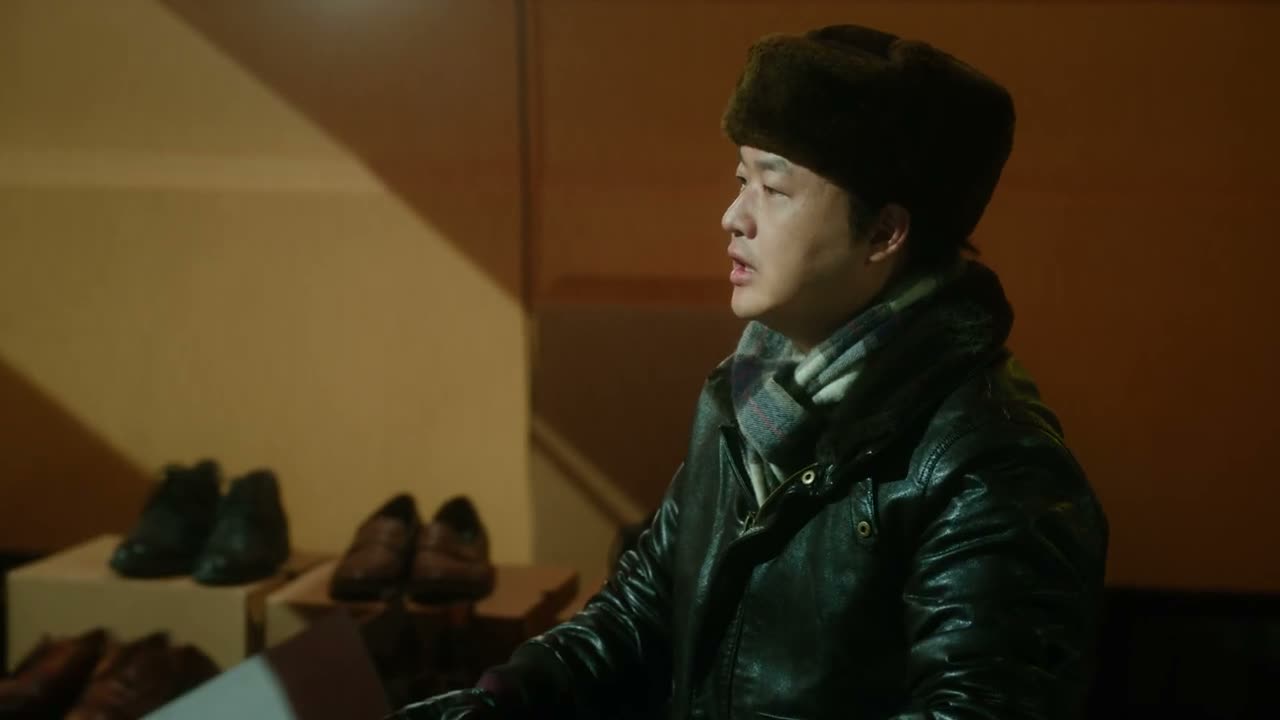
你进什么货去了 我 进什么货去了 我错了
“What supplies? I... What did you get? I was wrong.”
THE DIALOGUE REEL
“You said you went to Nanzhou for supplies.”
你 进什么货 去了 我 进什么货 去了 我错了
“What supplies? I... What did you get? I was wrong.”
你错哪儿了
“To be specific!”
“Fine, you caught me lying, so let us just drop it before it gets worse.”
In Chinese domestic arguments, admitting fault hastily is often an evasion tactic rather than genuine remorse, usually prompting the retort 'Where exactly were you wrong?'.
LEARNING CHUNKS & PARTICLES
I was wrong / my bad
A very common spoken admission of fault, often used quickly to appease an angry partner or friend.
to purchase inventory / restock goods
A standard commercial term commonly used as an excuse for being away on business.
Indicates a newly realized state of affairs and marks the finality of the speaker's admission of fault.
VOCABULARY & EXPRESSIONS
Parallel Spoken Cinema Scenes (语义近邻切片)

“Wow, looks like he's loaded now.”

“Come inside and pay me. Pay up! Pay up!”

“Let me in, and I won't hold this against you.”

“Then why did you go in? Can't I watch from here?”
“I have goods. I'll swap them for you.”

“Where did you go? To buy drinks.”