你鞋带开了不知道系一下呀
“Don't you know how to tie back your untied shoelaces?”
THE DIALOGUE REEL
我缝了 但缝不好 针扎手
“I did, but I was terrible at it. I pricked my finger.”
你鞋带开了 不知道 系一下 呀
“Don't you know how to tie back your untied shoelaces?”
你这样多危险呀
“It's dangerous, you know?”
“Tie your shoelaces before you trip and hurt yourself!”
In Chinese relationships, affection and protectiveness are frequently expressed through nagging, teasing, or scolding rather than direct praise.
LEARNING CHUNKS & PARTICLES
shoelace came untied
Standard daily expression used when shoelaces become loose.
don't you know to... / couldn't you...
A rhetorical pattern used to gently scold someone for overlooking an obvious or sensible action.
Softens the rhetorical reprimand, conveying warm familiarity and genuine concern rather than harsh judgment.
VOCABULARY & EXPRESSIONS
Parallel Spoken Cinema Scenes (语义近邻切片)

“I just can't quite tie my laces.”

“You're an adult, but you can't even tie your own shoelaces. Come here.”

“♪ A wisp of softness tints your brow each day ♪ The strap is too tight. I'll loosen it for you. ♪ Walk side by side with moon and sun ♪”

“Do you want to wear it now? I can take the tags off for you.”

“Do you want to wear it now? I'll take the tag off.”
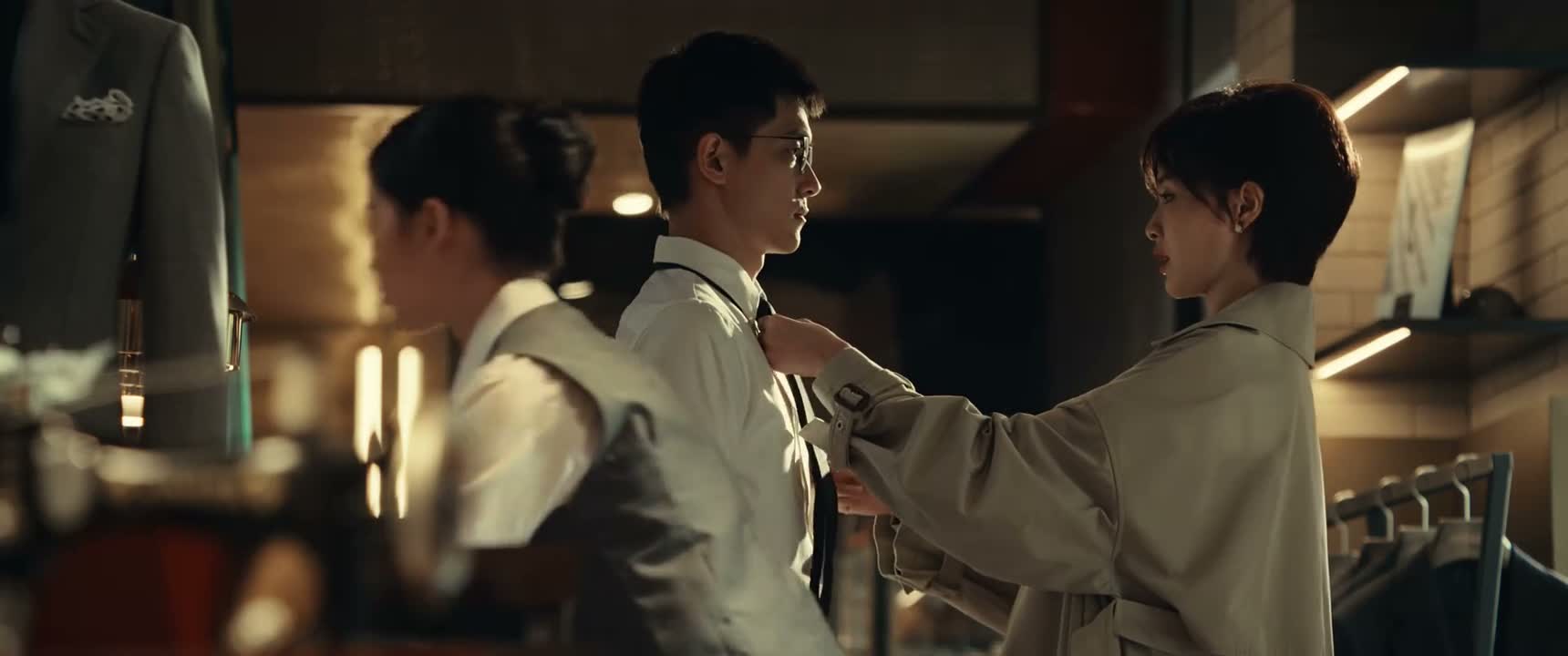
“This tie feels a bit off.”