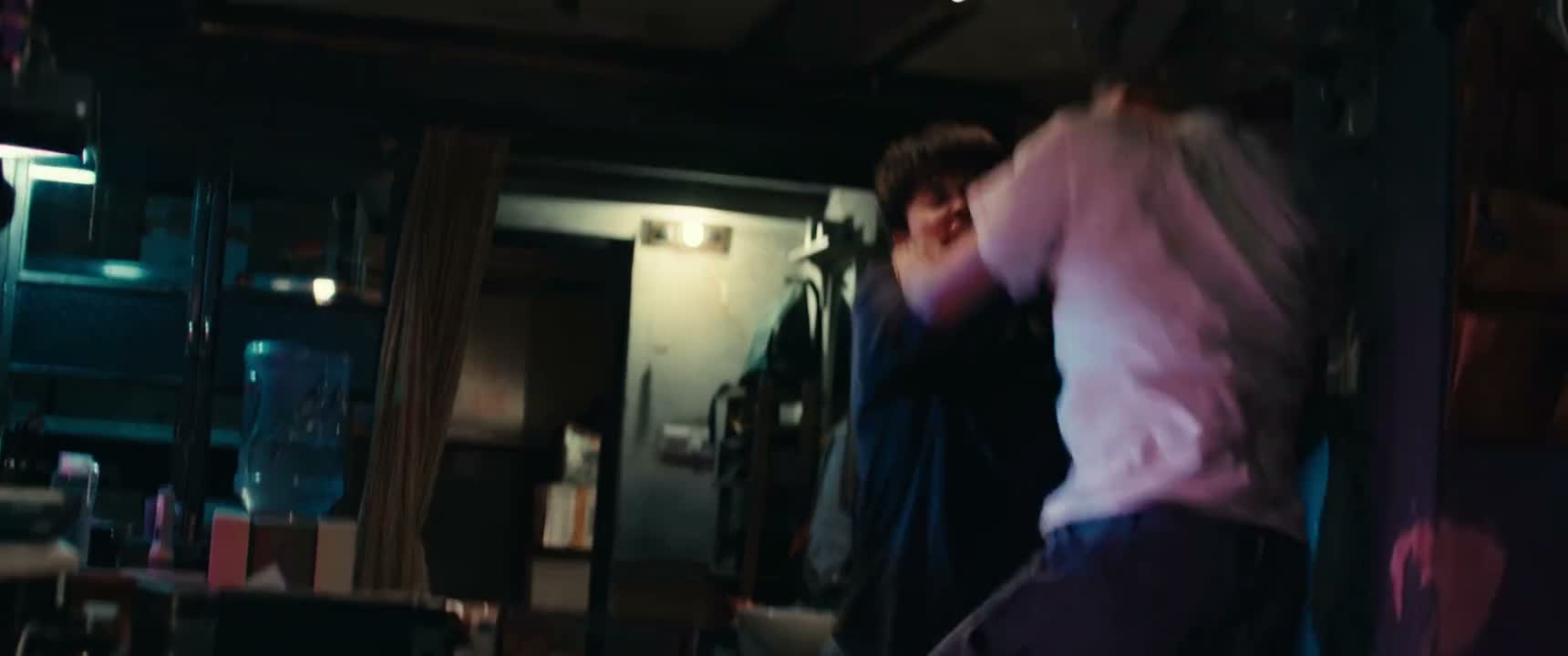
干吗呀你们俩 我报警了
“What are you two doing? I'll call the police.”
THE DIALOGUE REEL
孤烟
“Gu Yan!”
干吗呀你 们俩 我报警了
“What are you two doing? I'll call the police.”
报警
“Go ahead.”
Direct spoken expression in this communicative setting.
Threatening to call the police ('报警') is considered an ultimate escalation in Chinese interpersonal disputes, used when private mediation fails to stop immediate physical violence.
LEARNING CHUNKS & PARTICLES
I'm calling the police; I will call the cops
Literally past tense in structure, but commonly used in spoken Chinese as an immediate deterrent threat meaning 'Stop now or I will contact the police right this second.'
Adds emotional intensity and distress to the exclamation.
Emphasizes the imminent certainty and finality of the threatened action.
VOCABULARY & EXPRESSIONS
Parallel Spoken Cinema Scenes (语义近邻切片)
“What are you two doing? Stop it! What are you doing?”

“What's the matter? You're not quite yourself today.”

“What is it? You're so noisy.”

“What are you doing? I'm here to pay you back.”

“Honey, I called the police.”

“What's wrong? What are you doing? Just relax. This is?”