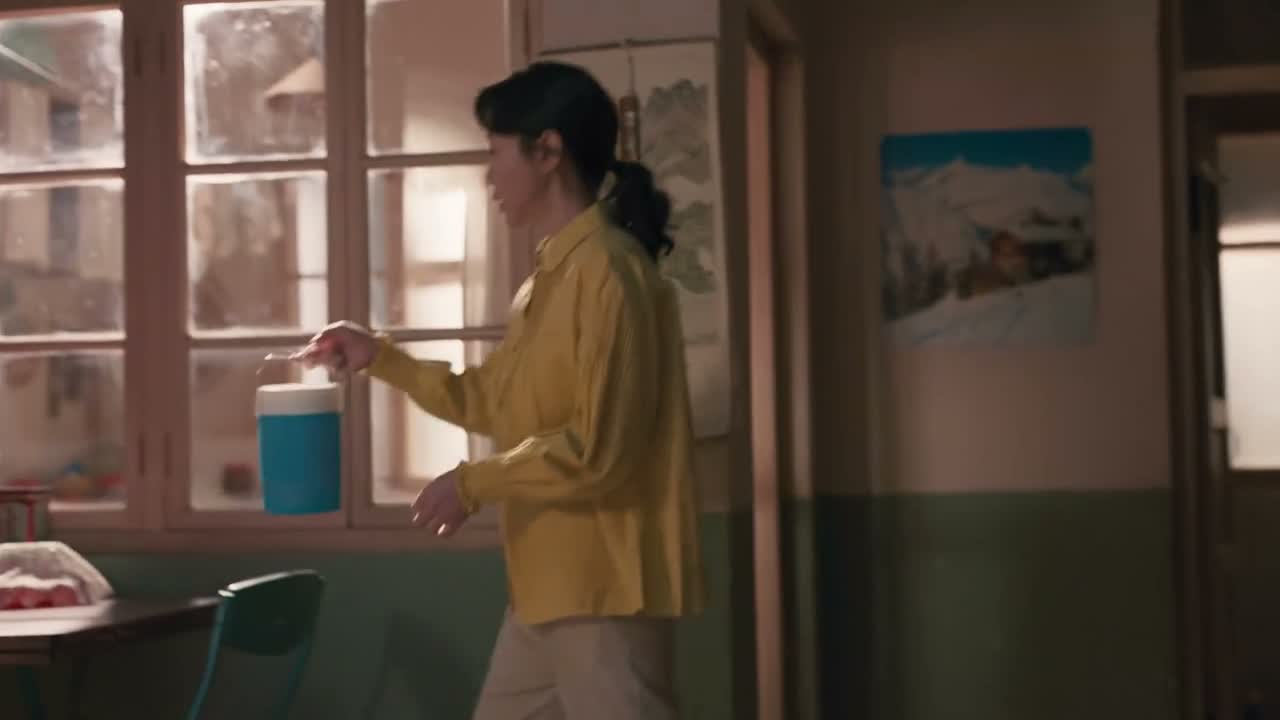
给磊哥送饭啊 是 忙呢啊 我去忙了
“Bringing food for Lei? Yes. Busy, huh? I need to go.”
THE DIALOGUE REEL
嫂子
“Jing.”
给磊哥 送饭 啊 是 忙呢啊 我去忙了
“Bringing food for Lei? Yes. Busy, huh? I need to go.”
你怎么来了
“What brings you here?”
Direct spoken expression in this communicative setting.
Referring to a coworker's wife as 'Saozi' (sister-in-law) and the male colleague as 'Lei Ge' creates an extended pseudo-family bond within close work units.
LEARNING CHUNKS & PARTICLES
to deliver food / to bring a meal
Refers to the widespread practice of bringing homemade meals to a loved one's workplace or hospital.
getting back to work / leaving to handle tasks
A very standard Chinese workplace exit line used to politely disengage from casual banter.
Used at the end of statements or rhetorical questions to soften greetings and create a casual, neighborly vibe.
VOCABULARY & EXPRESSIONS
Parallel Spoken Cinema Scenes (语义近邻切片)
“Ren Xiaoming, take food to your brother.”

“If you had told me someone was bringing you food,”

“You went to buy food? How about this? To thank you,”

“You went to bring me food?”
“You take the car back to Lei.”

“Since you're here, stay for a meal. I'm working.”