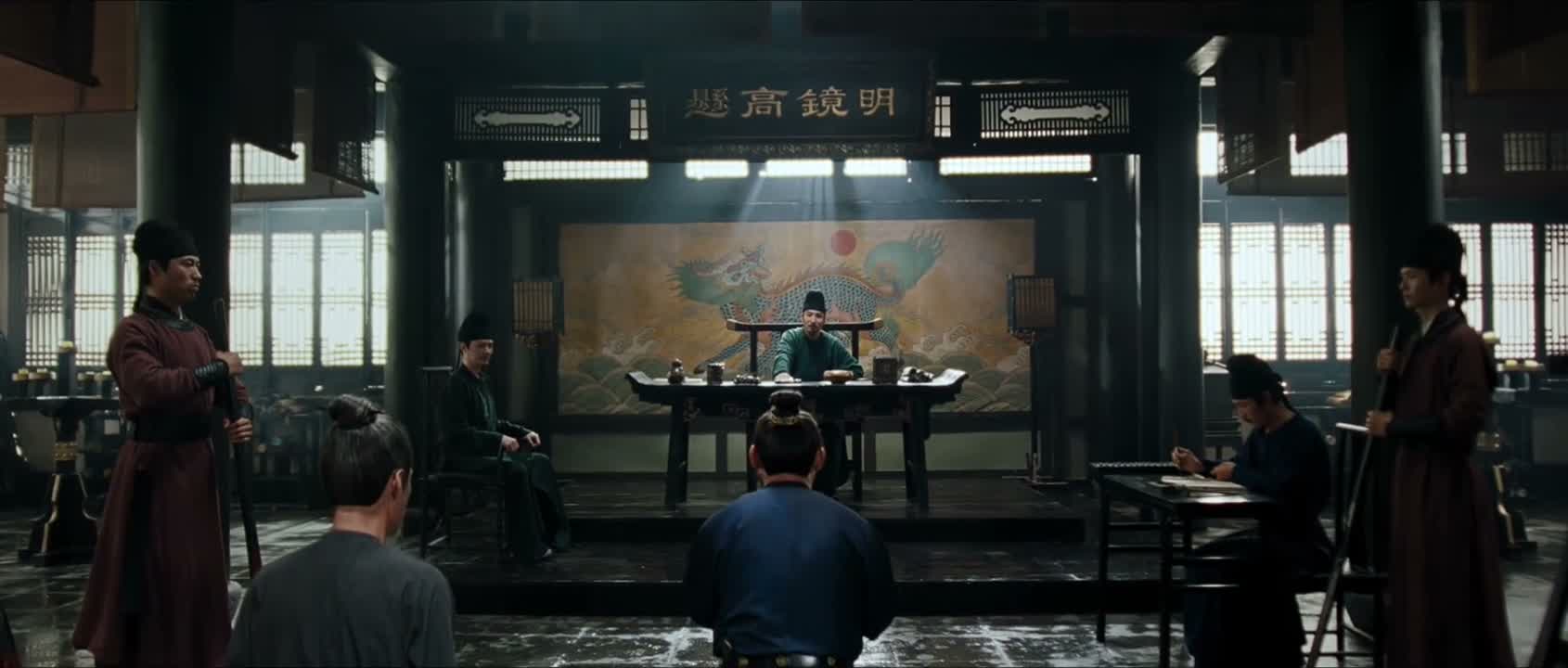
大人 草民也有冤要诉
“Your Excellency, I also have a grievance to voice.”
THE DIALOGUE REEL
就被他田家强征松材 构陷通番等多次暗算
“has suffered repeated schemes at the Tian family's hands— forced requisition of pine timber, false accusations of illicit trade, and other schemes.”
大人 草民 也有 冤要诉
“Your Excellency, I also have a grievance to voice.”
矿徒暴乱之时 田家肆意兼并墨坊 逼死家父
“When the mines were in chaos, the Tian family recklessly annexed ink workshops and forced my father to his death.”
Direct spoken expression in this communicative setting.
In traditional China, ordinary subjects had to debase themselves linguistically before magistrates to seek justice, relying heavily on the official's moral righteousness as a parent-official (fumuzhi guan).
LEARNING CHUNKS & PARTICLES
I, the humble commoner
A humble self-referential term used exclusively by ordinary male subjects when addressing imperial magistrates or royalty in historical dramas.
to have a grievance to air / to appeal an injustice
A standard historical legal formulation used when petitioning a magistrate for justice.