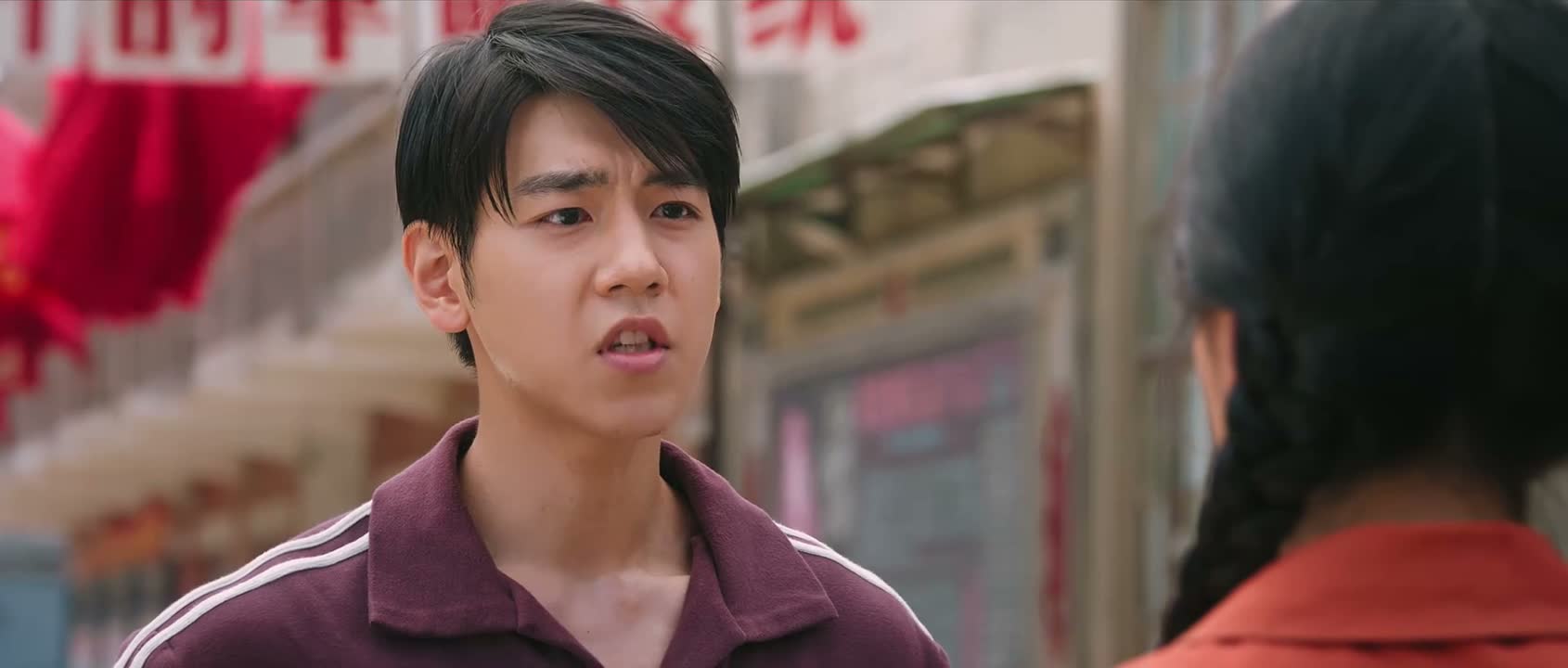
费霓来了 费霓 方穆扬 你来了
“Fei Ni's here. Fei Ni. - Fang Muyang. - You're here.”
THE DIALOGUE REEL
费霓 来了 费霓 方穆扬 你来了
“Fei Ni's here. Fei Ni. - Fang Muyang. - You're here.”
“You made me look too old. How is that old? Fix it.”
Direct spoken expression in this communicative setting.
Chinese greetings often state an obvious action or arrival (such as 'you have arrived') to establish rapport rather than using abstract pleasantries.
LEARNING CHUNKS & PARTICLES
you're here; you've arrived
A standard, friendly conversational greeting used when welcoming someone arriving at a gathering or home.
Marks the change of state or arrival of the person being greeted.
VOCABULARY & EXPRESSIONS
Parallel Spoken Cinema Scenes (语义近邻切片)

“If you had come, Fei Ni wouldn't have.”

“of Fei Ni and Fang Muyang together. I was confused.”

“Fei Ni, I suspect you and Fang Muyang are in a fake marriage.”
“Fei Ni, that's enough of you.”

“Fei Ni, say goodbye to my money.”

“Fei Ni. Let's see how you'll keep this facade up.”