李响见到他了 他是队长 还能不见见
“Li Xiang met him? He's the Chief. Why can't he meet him?”
THE DIALOGUE REEL
登完记就交给队长了 然后我跟小陆审的他
“I handed it over to the Chief after registering. Lu and I interrogated him.”
李响见到他了 他是队长 还能不见见
“Li Xiang met him? He's the Chief. Why can't he meet him?”
他们谈了多长时间 谈了什么 不知道
“How long did they talk? What did they talk about? I don't know.”
“It is totally normal for him to meet the suspect as team leader, stop being overly suspicious.”
Rhetorical questions starting with '还能不' are frequently used in Chinese workplaces to deflect suspicion by framing an action as an unavoidable professional obligation.
LEARNING CHUNKS & PARTICLES
how could one not / of course one must
A rhetorical pattern used to assert that an action is an obvious duty or inevitability.
Marks the completion of the action of meeting.
VOCABULARY & EXPRESSIONS
Parallel Spoken Cinema Scenes (语义近邻切片)

“Li Xiang has been very reluctant to work for us.”

“Xiang is the chief here. Just think of it as your home.”

“Gao Qiqiang, I warn you not to harm Li Xiang. If you kill Li Xiang,”
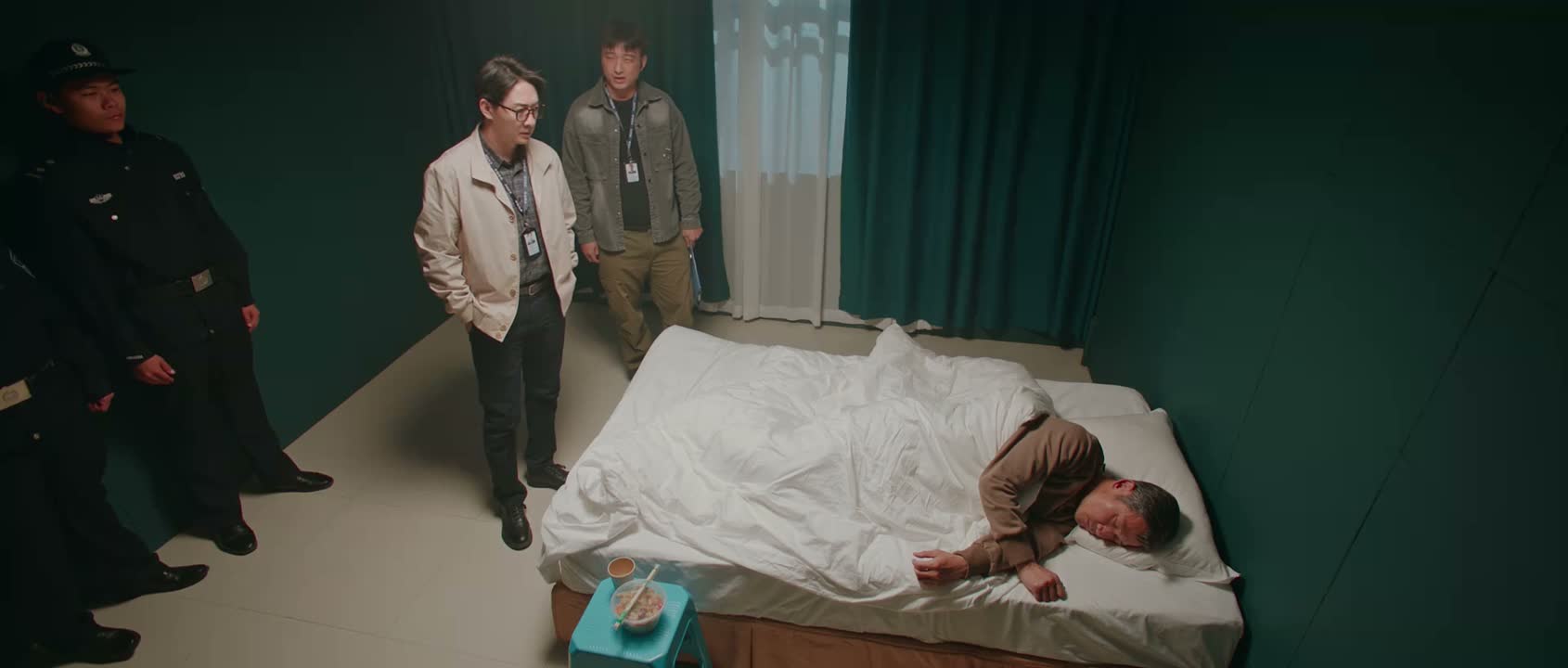
“Captain Li, this could turn bad.”

“I lost the Captain back then.”

“Captain. He's burning up.”