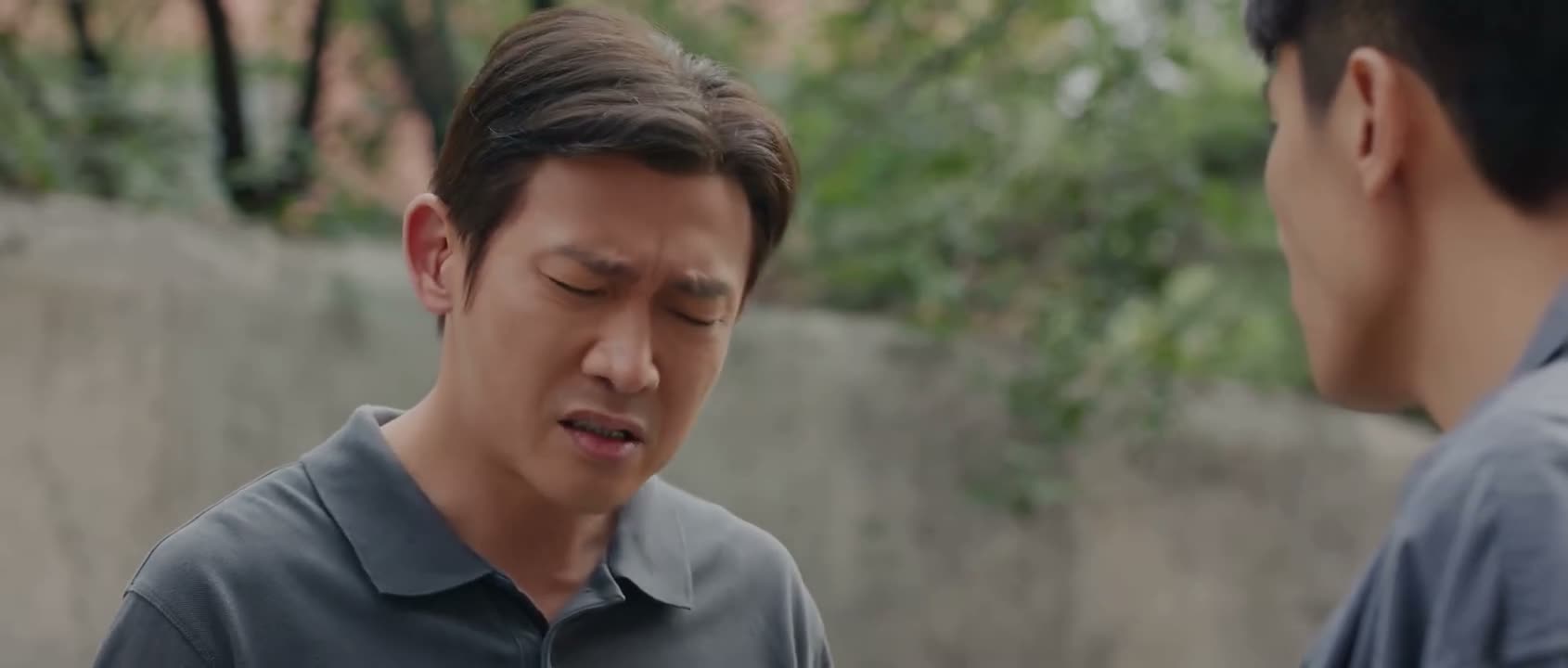
胳 胳膊快断了 你轻点 带走
“my arm's about to break. Easy. Take him away.”
THE DIALOGUE REEL
“Freeze! Why did you run? Wait. Officer,”
胳 胳膊快断了 你轻点 带走
“my arm's about to break. Easy. Take him away.”
“Easy. Arrest her. She drove into me.”
“Ow, my arm is breaking! Go easy on me! / Take him away!”
In modern Chinese policing contexts, 'dai zou' (take away) is a typical spoken law enforcement command used by police after restraining a suspect to escort them to the public security bureau for further investigation.
LEARNING CHUNKS & PARTICLES
indicates that a state is about to happen or has reached an extreme degree (used here to exaggerate the intensity of pain)
Frequently used in spoken Chinese to express urgency or the threshold of physical tolerance, such as 'kuai teng si le' (almost dying of pain) or 'kuai duan le' (about to break).
ease up, be gentler, reduce physical force
A common colloquial imperative used to plead for someone to lighten their grip or ease pressure when feeling pain or being restrained.
take away, escort off the scene
A high-frequency operational command in law enforcement, usually issued by the commanding officer at the scene of an arrest.
VOCABULARY & EXPRESSIONS
Parallel Spoken Cinema Scenes (语义近邻切片)
“Yonghui's arm is still useless.”

“he has lost a right-hand man.”

“Wait... Why is she carrying severed arms?”

“Your right-hand men have already been taken out by him.”

“I'd break my other arm and give it to him.”

“They broke his leg like it was nothing.”