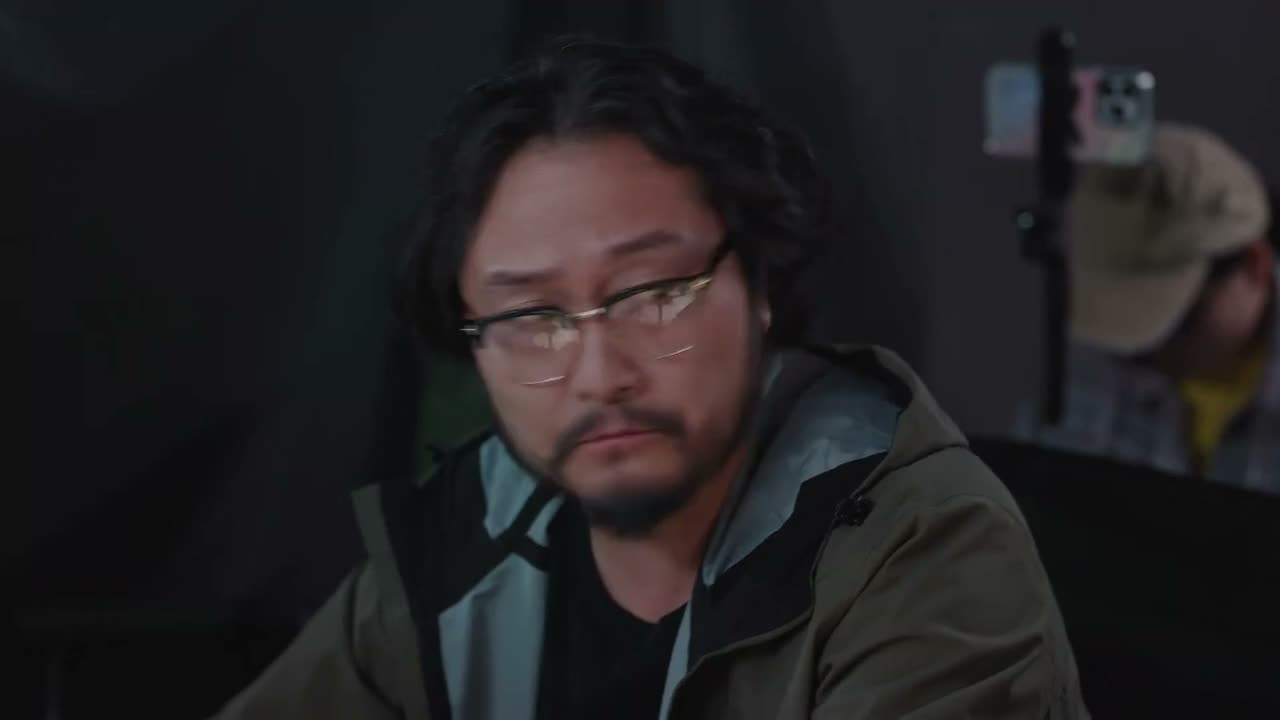
我去趟卫生间 啊
“I'm gonna hit the restroom.”
THE DIALOGUE REEL
你唱得比我好
“You sing better than me.”
我去 趟卫生间 啊
“I'm gonna hit the restroom.”
好
“Alright.”
Direct spoken expression in this communicative setting.
In Chinese social gatherings (such as karaoke or dining together), briefly letting companions know before temporarily stepping away (e.g., 'going to the restroom') is expected etiquette to show politeness and keep others informed.
LEARNING CHUNKS & PARTICLES
to take a quick trip to...; to make a brief run to somewhere
A high-frequency colloquial pattern where the verbal measure word 'tang' denotes a round trip. It is commonly used when temporarily stepping away or running errands, such as 'qu tang chao shi' (run to the supermarket) or 'qu tang wei sheng jian' (head to the restroom).
restroom; bathroom
A polite and discreet term widely preferred over 'ce suo' (toilet) in daily social situations.
Placed at the end of the sentence to soften the tone, notify the listener, and seek subtle acknowledgment so the departure does not seem abrupt.