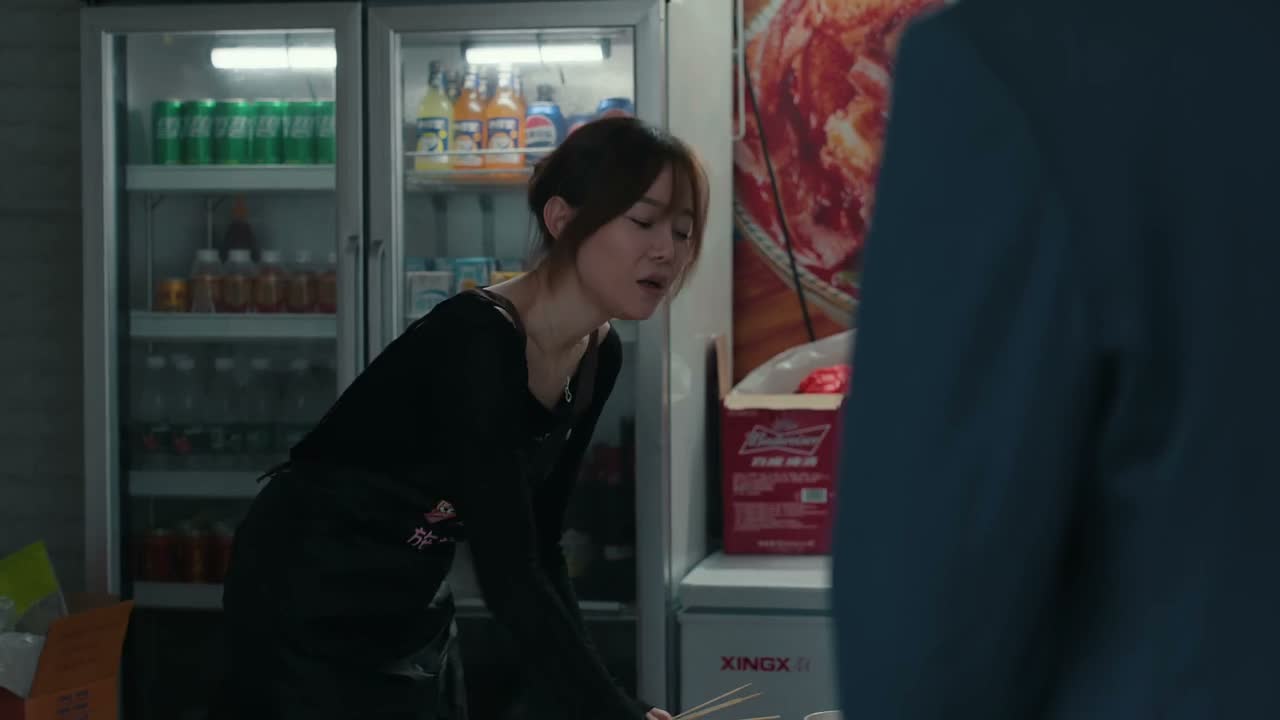
跟你们做邻居真倒霉 又跑了你
“- Awful neighbors. - Stop running.”
THE DIALOGUE REEL
昨天晚上去哪儿了你
“where you were last night.”
跟你们做邻居 真倒霉 又 跑了 你
“- Awful neighbors. - Stop running.”
柏庶
“Bai Shu.”
“It sucks living next to you guys—hey, where do you think you're sneaking off to again?”
In Chinese close-knit communities, neighbors often share intimate ties and frequently use half-joking complaints (like 'What bad luck to be your neighbor') to build rapport or express affectionate scolding, rather than genuine hostility.
LEARNING CHUNKS & PARTICLES
really unlucky; what rotten luck
Used colloquially to vent frustration or complain about trouble, often in casual complaints or half-joking contexts.
you slipped away again (inverted sentence structure)
A common colloquial inverted structure (predicate + object + subject) used to emphasize scolding or teasing someone for their actions.
VOCABULARY & EXPRESSIONS
Parallel Spoken Cinema Scenes (语义近邻切片)

“That case about neighborhood disputes was finally closed. Okay, I got it.”

“[As your neighbor,]”
“The whole neighborhood knew.”

“Grandma, we are all familiar neighbors here.”