这本身就是一种违法行为 您知道吗
“preventing her from taking the exam is an illegal act. Understand?”
THE DIALOGUE REEL
您作为柏庶的监护人 阻止她参加升学考试
“As Bai Shu's guardian, preventing her from taking the exam is an illegal act.”
这 本身就是 一种违法行为 您 知道吗
“preventing her from taking the exam is an illegal act. Understand?”
“Why wouldn't I let her take the high school entrance exam?”
“You are breaking the law by doing this, and you need to stop right now.”
During compulsory education and the high school entrance examination ('zhongkao') period, Chinese law explicitly stipulates that guardians are legally obligated to ensure minors receive compulsory education. Depriving a child of the right to take the examination can lead to condemnation and intervention from schools, community organizations, and legal authorities.
LEARNING CHUNKS & PARTICLES
in itself is...
Commonly used to emphasize the inherent nature of something, carrying a tone of strong affirmation or rebuttal.
illegal act / unlawful behavior
Frequently used in formal dissuasion, legal warnings, or serious reproaches regarding illegal conduct.
do you know (formal/polite)
Used at the end of a sentence as a rhetorical question or to draw the listener's attention, conveying emphasis, confrontation, or a warning.
Placed at the end of a sentence to form a rhetorical question, intensifying the serious tone of interrogation and warning.
VOCABULARY & EXPRESSIONS
Parallel Spoken Cinema Scenes (语义近邻切片)

“You broke the law, understand?”

“what you're doing now counts as a crime. Get down here.”

“You reap what you sow. The law will get you.”

“You're deliberately breaking the law.”
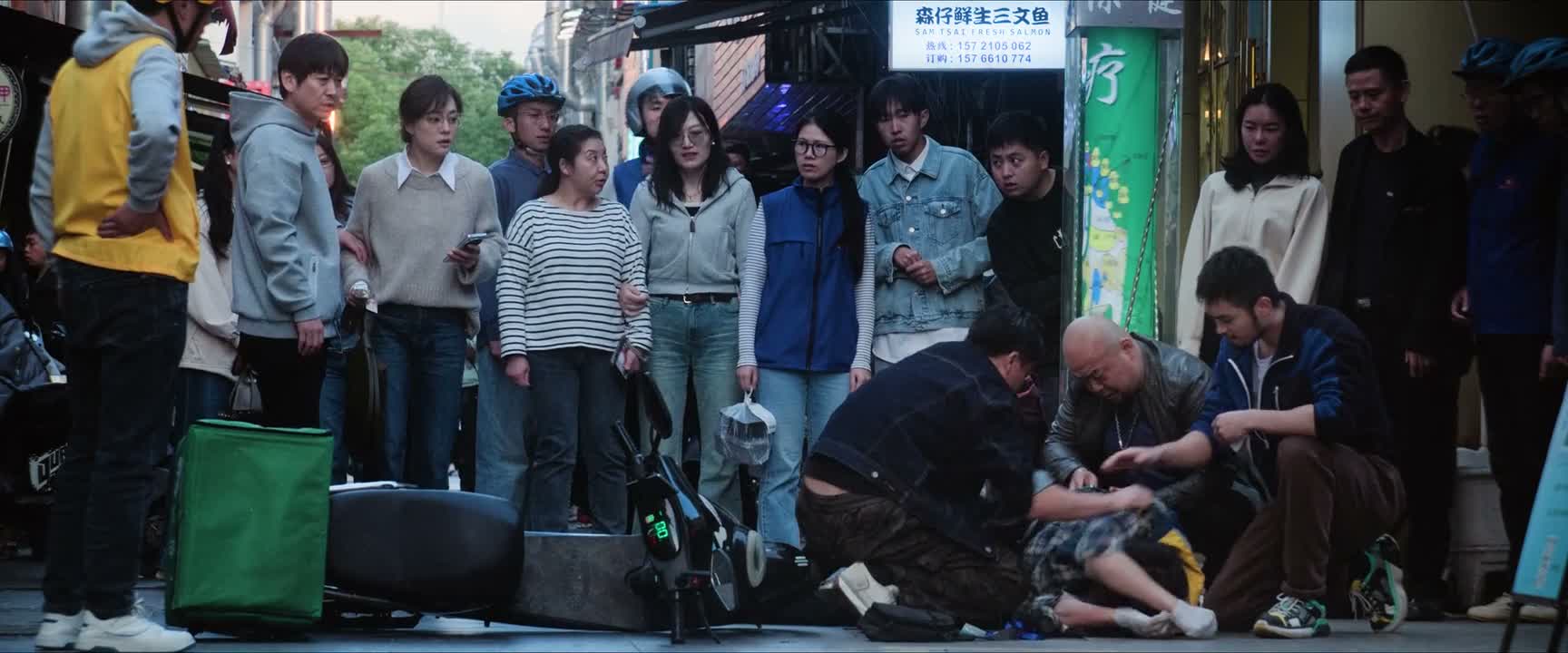
“This is robbery. It's illegal.”