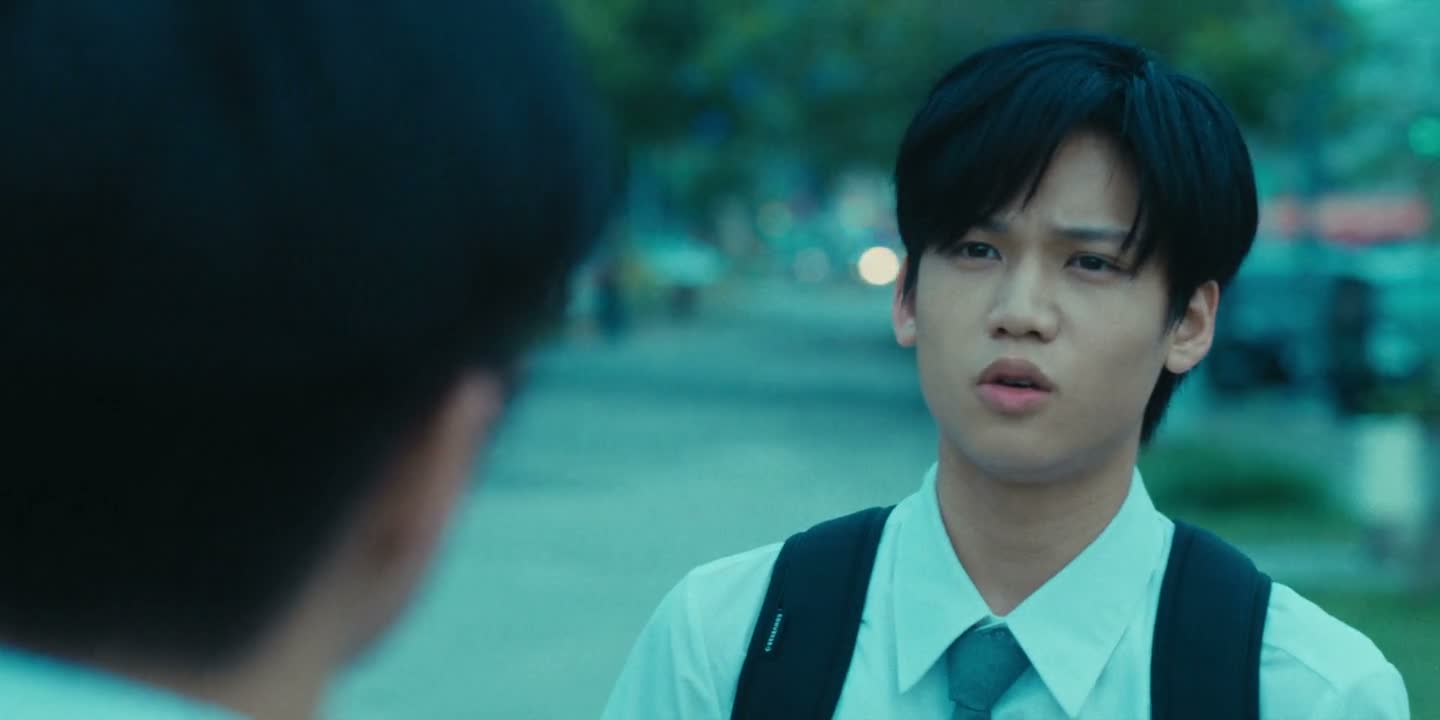
我小的时候 就总被一个人扔在家里
“When I was little, I was always left home alone.”
THE DIALOGUE REEL
怎么会有这样的想法
“Why would you think that?”
我小的时候 就总 被一个人扔在家里
“When I was little, I was always left home alone.”
所以 在学校住宿舍的时候 我就觉得
“So, when I stayed in dorms at school, I felt like”
Direct spoken expression in this communicative setting.
Being left unattended at home due to busy working parents is a common childhood memory among many Chinese urban youths, often shaping their desire for community or companionship.
LEARNING CHUNKS & PARTICLES
when (I) was little / in childhood
A very natural spoken opening used to introduce childhood anecdotes or background memories.
dumped/left behind at home
Uses the verb '扔' (to throw/dump) figuratively to vividly convey a feeling of neglect or abandonment.
VOCABULARY & EXPRESSIONS
Parallel Spoken Cinema Scenes (语义近邻切片)

“When I was little, I used to sneak here to play.”

“you've been in this family since you were little.”
“I grew up on an island.”

“When I was little, we had a dog.”

“(When you were little,)”

“When I was little, my mom was their nanny.”