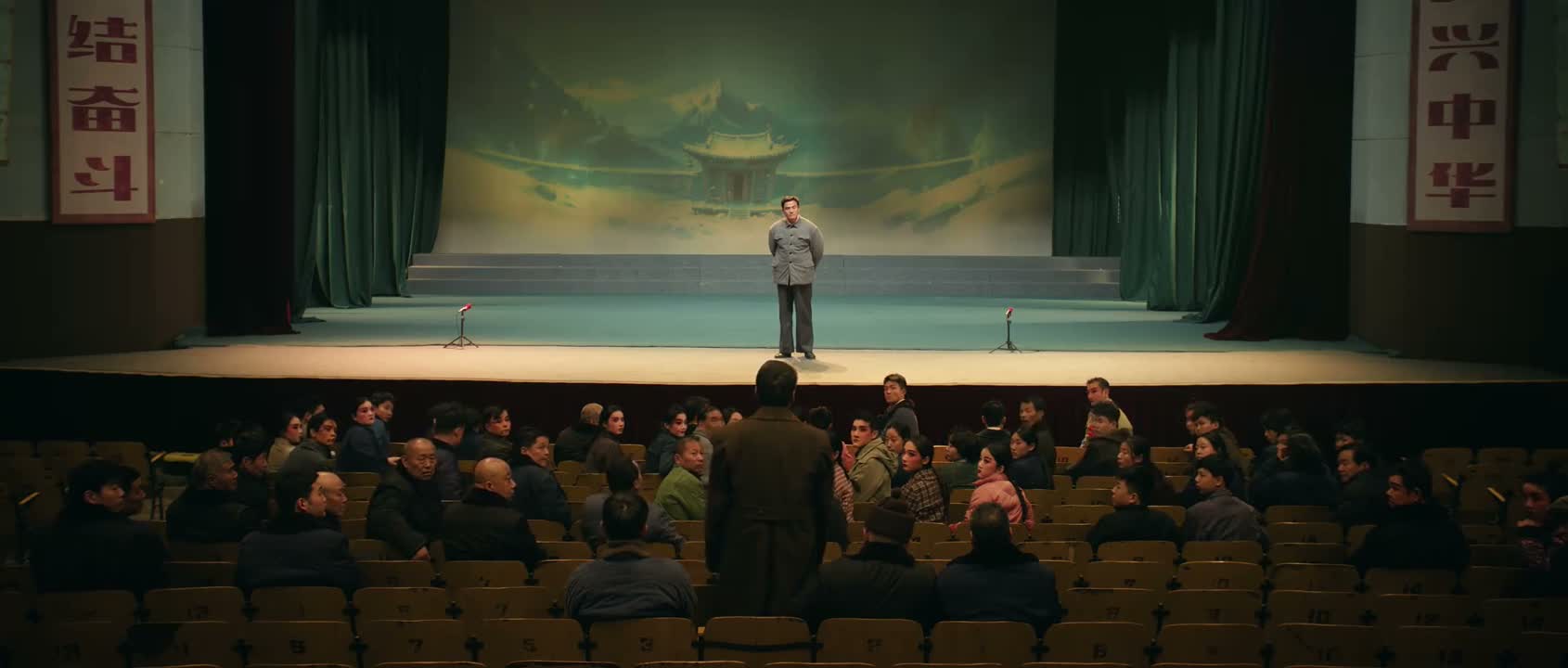
演完戏人都不见了
“He vanished right after the show.”
THE DIALOGUE REEL
“You're asking me? I was asking you.”
演完戏 人都不见了
“He vanished right after the show.”
那能去哪儿了呀 这是他老家 肯定偷会老相好去了
“Where could he have gone? This is his hometown. He must've slipped off to an old flame.”
Direct spoken expression in this communicative setting.
In traditional Chinese touring drama troupes, performers lived and traveled together closely, making unexplained personal absences immediately noticeable and subject to gossip.
LEARNING CHUNKS & PARTICLES
finish performing a play/show
A common verb-object collocation combined with the resultative complement 完 to denote completing a performance.
the person has disappeared / is nowhere to be seen
A colloquial way to express sudden, unexpected absence of someone.
Indicates a new situation or change of state, highlighting that the person is now missing.
VOCABULARY & EXPRESSIONS
Parallel Spoken Cinema Scenes (语义近邻切片)

“some of them backed out.”
“For it to end up like this,”
“She was already dead when we arrived.”

“Audiences are tired of it.”

“extra shows. After the extra shows, rest all you want.”

“When the play ends and the crowd disperses,”