裴总怎么了 高兴了 你看看
“What's wrong with Mr. Pei? He's happy. Just look at him.”
THE DIALOGUE REEL
直接就花两千万加盟了
“He signed a 20-million-yuan contract with us right away.”
裴总 怎么了 高兴了 你看看
“What's wrong with Mr. Pei? He's happy. Just look at him.”
又在这喜形不于色 这出 是不是 裴总乐了 裴总
“He's trying to pretend that he's not happy again. You see? Mr. Pei is so happy.”
“You don't need to play it cool; we all know you are thrilled about this win.”
In Chinese workplaces, subordinates constantly scrutinize their leader's subtle expressions to gauge mood and company fortunes, often teasing gently when the mood is celebratory.
LEARNING CHUNKS & PARTICLES
what's the matter; what happened
A common conversational prompt used to ask about someone's sudden mood shift or situation.
look at that; see for yourself
Used in spoken Chinese to draw attention to someone's obvious behavior or a clear outcome.
Indicates a newly emerged state of happiness or change in facial expression.
VOCABULARY & EXPRESSIONS
Parallel Spoken Cinema Scenes (语义近邻切片)

“Mr. Pei, you seem like you're in a good mood.”
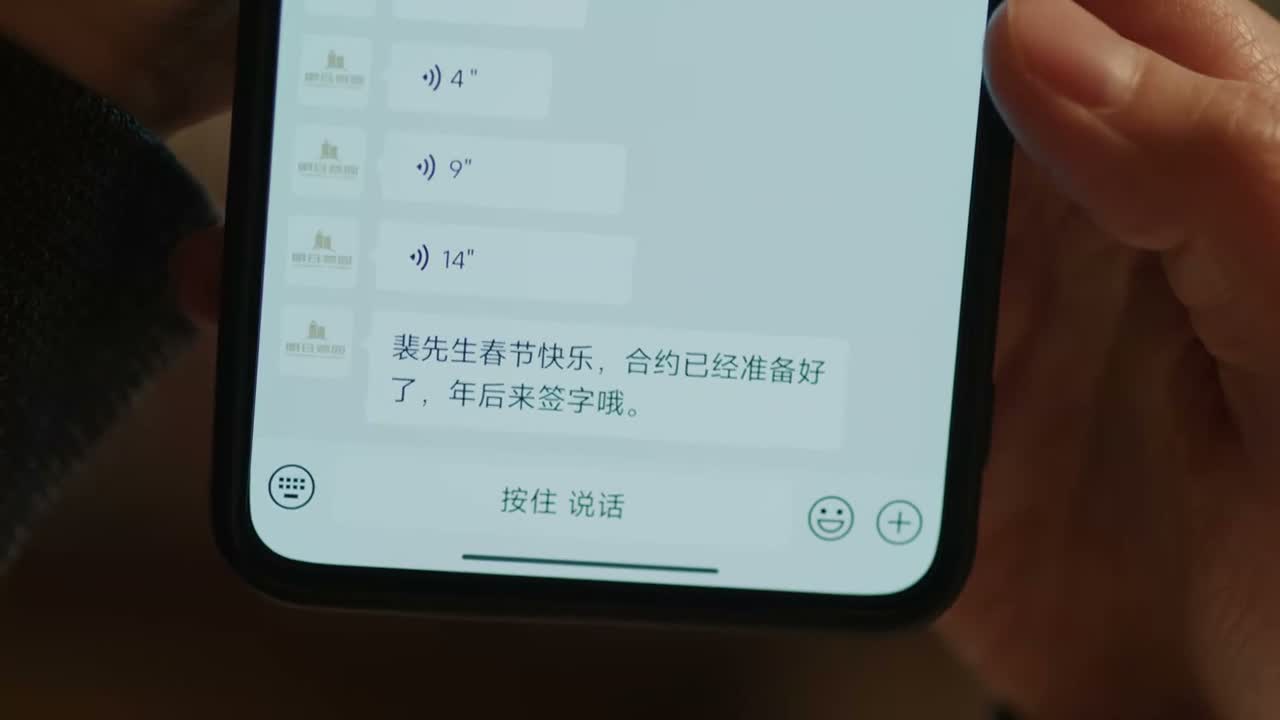
“(Happy Chinese New Year, Mr. Pei.) (The contract is ready.)”
“Why did Mr. Pei make me a project manager?”
“She also looks more cheerful now. Mr. Pei.”