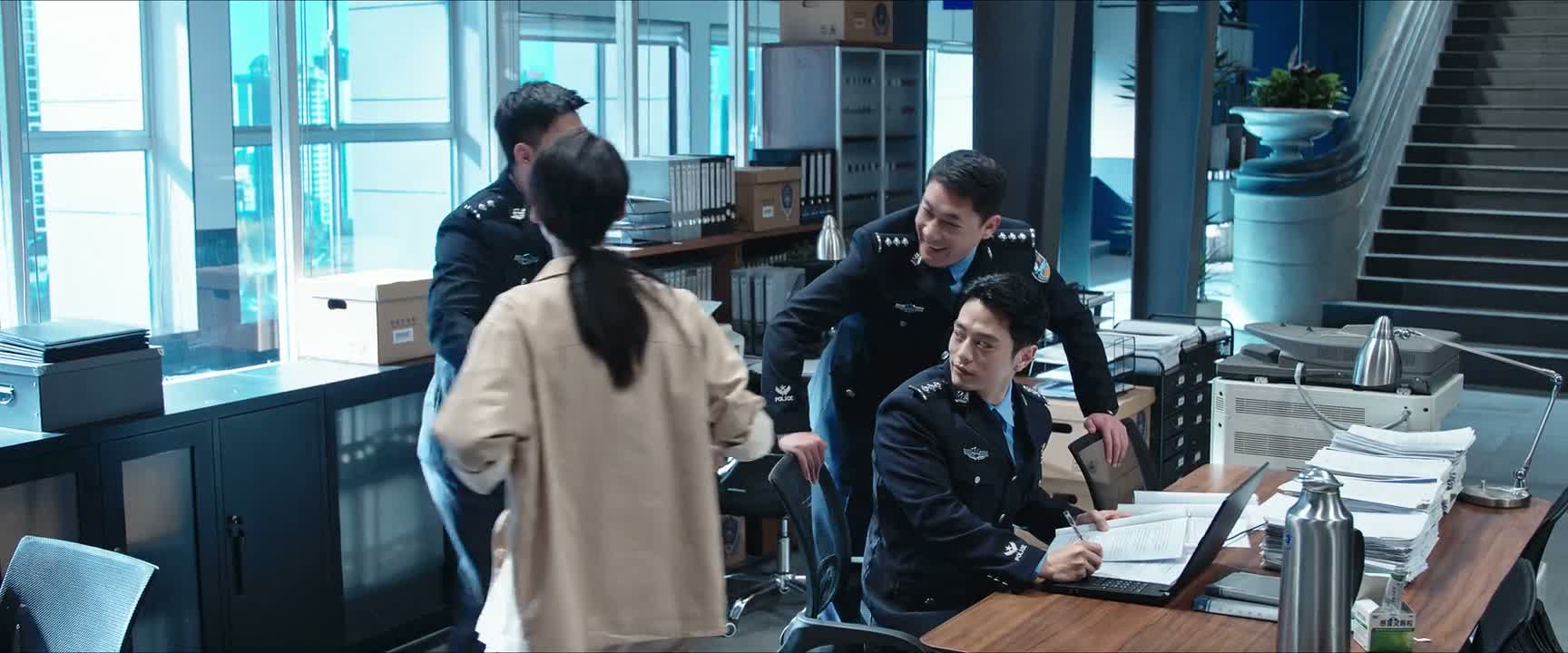
我碰没碰她 有些人可是看在眼里的
“Someone knows perfectly well whether I touched her or not.”
THE DIALOGUE REEL
你笑什么
“Why are you laughing?”
我碰 没 碰她 有 些人 可是 看在眼里 的
“Someone knows perfectly well whether I touched her or not.”
我说呢
“I was wondering”
“Do not even try to frame me; people saw the truth.”
Invoking onlookers ('有些人') serves as an indirect way to establish innocence without directly confronting the accuser head-on.
LEARNING CHUNKS & PARTICLES
to witness clearly; to see and keep in mind
Use this idiom when emphasizing that an action did not go unnoticed by onlookers.
whether (someone) touched or not
A classic affirmative-negative structure used to frame an inquiry or refute a disputed action.
Used at the end of the sentence to assert certainty and emphasize factual reality.
VOCABULARY & EXPRESSIONS
Parallel Spoken Cinema Scenes (语义近邻切片)
“I-I'll go. I didn't touch her. I-I didn't.”

“I never touched her! I've been sleeping on the floor in the study for 2 months.”