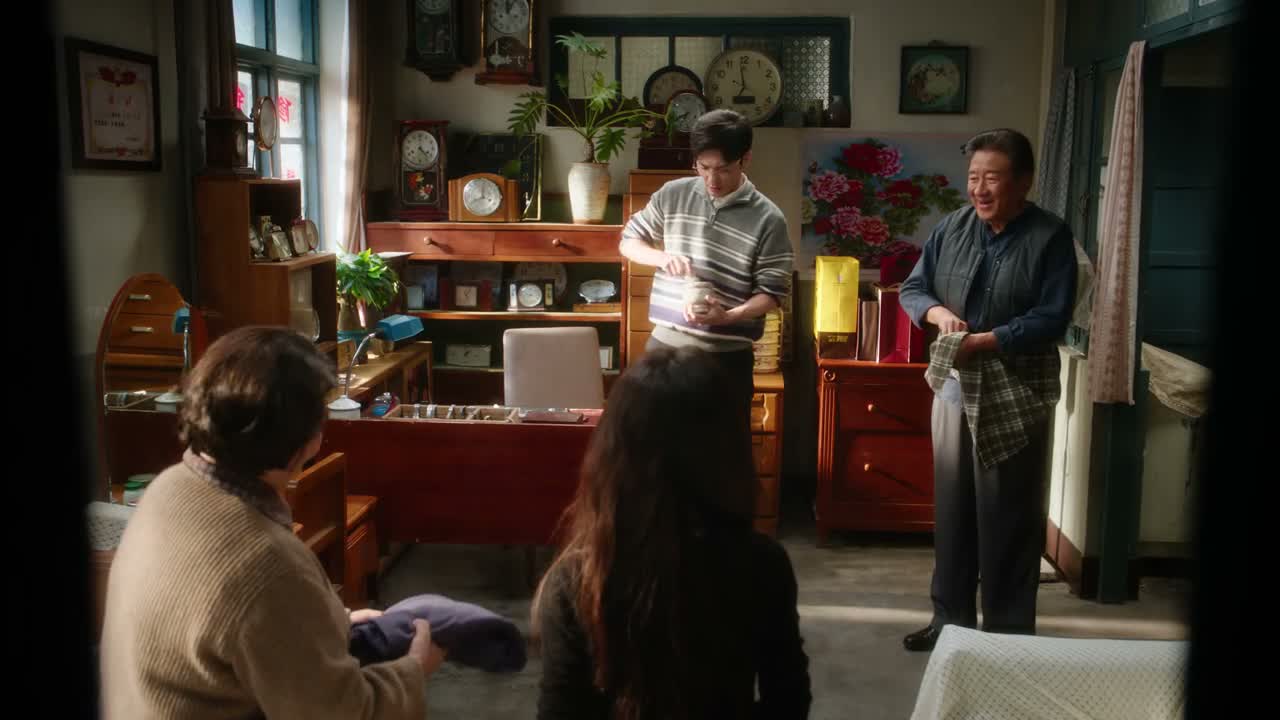
我老去要吃的 他都不给我了 还是你面子大
“I always go to ask for food. He's not giving me any. You have more sway.”
THE DIALOGUE REEL
你自己怎么不去 你多拿点
“Why don't you go yourself? Take more!”
我 老去 要吃的 他都不 给我 了 还是你 面子大
“I always go to ask for food. He's not giving me any. You have more sway.”
快走吧 快走吧
“Let's go, let's go.”
“I have worn out my welcome, so you go use your influence to get us food.”
In Chinese culture, having 'big face' means possessing enough social capital and respect that others feel obligated to grant requests.
LEARNING CHUNKS & PARTICLES
having substantial social standing, prestige, or influence
Commonly used in spoken Chinese to compliment someone's ability to get favors done based on personal connections.
constantly going; going all the time
In northern Mandarin, '老' acts as an adverb meaning 'always' or 'frequently'.
Marks a change of state, indicating the person used to give food but has now stopped doing so.
VOCABULARY & EXPRESSIONS
Parallel Spoken Cinema Scenes (语义近邻切片)

“I've already eaten, too. If you don't mind, you can have it back.”

“Does he have regulars who frequent his stall?”

“Fu treated him so well, and he just left like that.”

“Great-grandfather hasn't eaten anything at all.”
“Then I'll just have my usual 3 dishes.”

“I shouldn't keep using these things as compensation.”