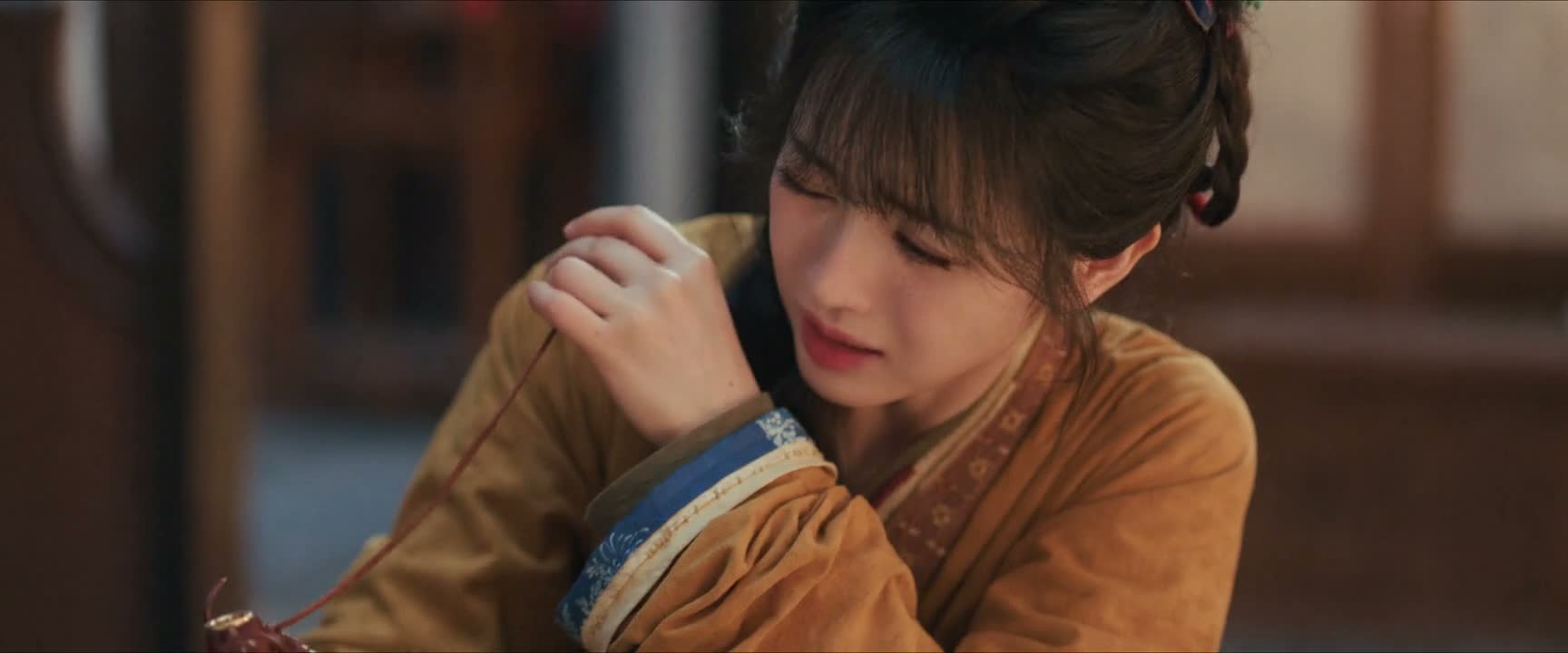
我这东 我这些东西都还没买呢 费霆
“I haven't even finished buying my stuff! Fei Ting!”
THE DIALOGUE REEL
“I'm here to shop. Why are you dragging me?”
我这东 我这些 东西 都 还没买呢 费霆
“I haven't even finished buying my stuff! Fei Ting!”
你别跟我耍这些心眼子
“Don't try to play games with me.”
“Let go of me, I am trying to avoid leaving with you and need an excuse to stay.”
Using a mundane daily errand as a pretext is a common Chinese face-saving tactic to resist an unwanted escort or confrontation.
LEARNING CHUNKS & PARTICLES
haven't even bought yet
The particle '呢' combined with '还没' highlights an ongoing state or an unfinished task contrary to current expectations.
these things / items
Standard demonstrative noun phrase used when pointing to physical merchandise or personal belongings.
Emphasizes the ongoing or pending nature of the shopping to substantiate the objection.
VOCABULARY & EXPRESSIONS
Parallel Spoken Cinema Scenes (语义近邻切片)

“I told you all along Fei Ting had the ability. You didn't believe me.”

“You're making things hard for Fei Ting. You're doing all these”

“can you accept the real Fei Ting?”

“Fei Ting, you don't even have a job yet. How could you spend money like this?”

“I can barely handle my parents as it is. If Fei Ting gets involved too...”
“What is this?”