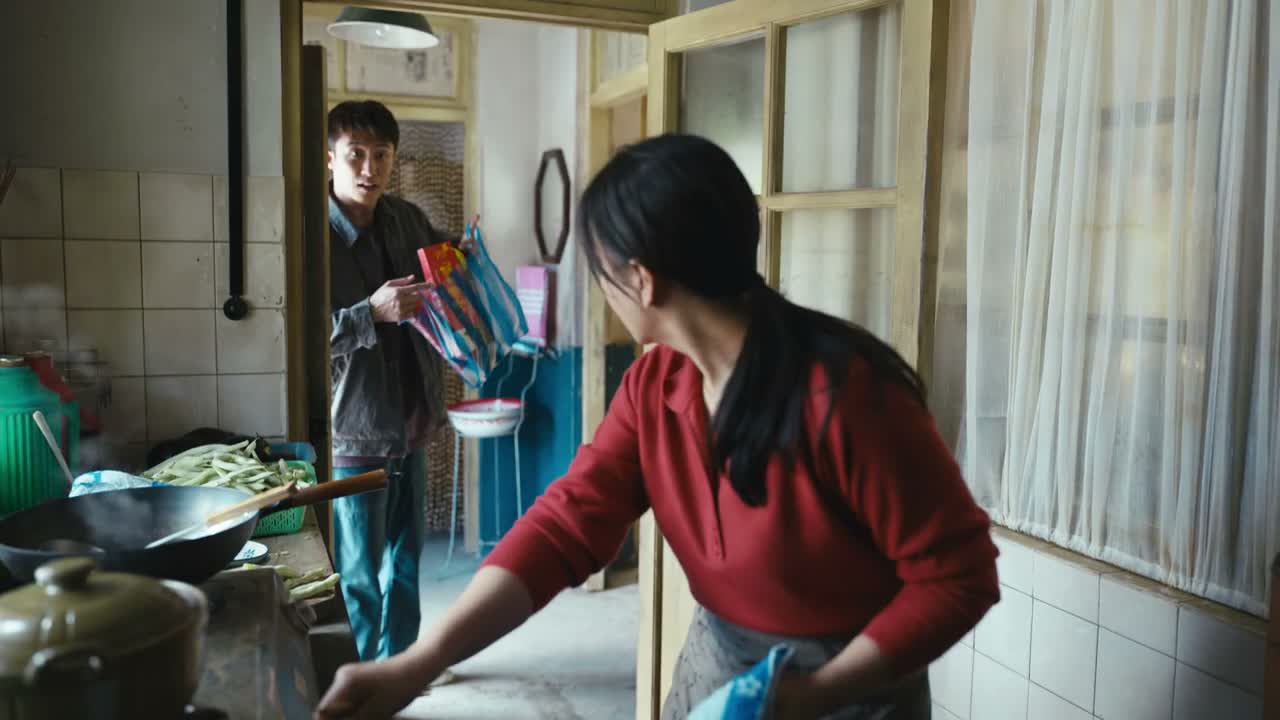
你这 你看你 我让你拿个可乐 你这拿哪去了
“Well, look at you. I asked you to grab me a cola. It took you so long.”
THE DIALOGUE REEL
干什么
“Don't be like that.”
你这 你看你 我让你拿个可乐 你这 拿哪去了
“Well, look at you. I asked you to grab me a cola. It took you so long.”
这 我 我喝 没事
“This... I... I want to drink it. It's fine.”
“How could you mess up something as simple as grabbing a can of soda?”
Spoken Chinese everyday discourse often uses disjointed pauses and repetitive phrases like '你这 你看你' to convey mundane dissatisfaction without causing serious offense.
LEARNING CHUNKS & PARTICLES
look at you
Used colloquially to express mild blame, dissatisfaction, or dismay over someone's actions.
where did you take it to?
A rhetorical question highlighting that an object was placed in the wrong spot or has gone missing.
Indicates the realized, baffling result of the action that the speaker is reacting to.
VOCABULARY & EXPRESSIONS
Parallel Spoken Cinema Scenes (语义近邻切片)

“I'll teach you a lesson!”

“Look. Look. Even Ling Xiao is laughing at you.”

“I-I was just... Look,”

“Look how unconfident you are! I'm unconfident,”

“Let me check for you. Wait a moment.”
“I brought it for you. It's really good.”