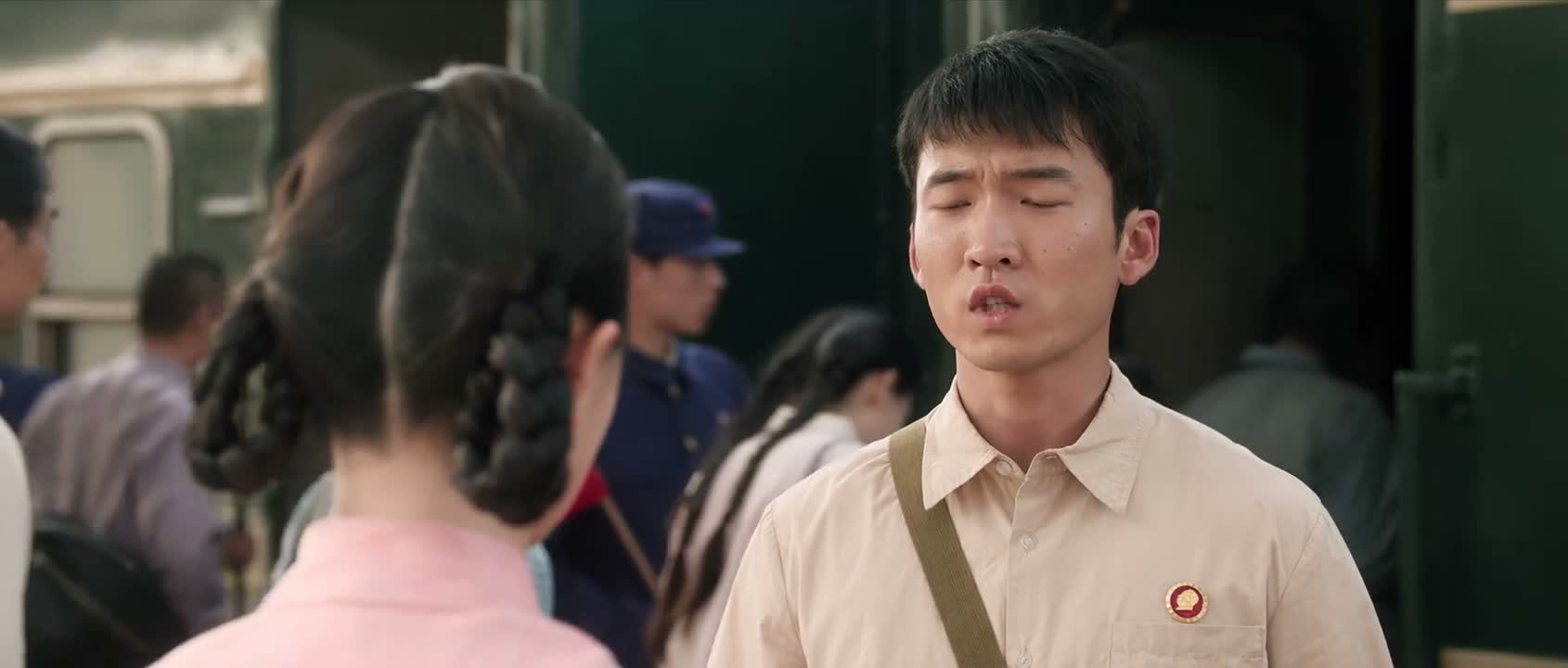
是我之前迁怒你了
“I just got mad at you when it wasn't your fault.”
THE DIALOGUE REEL
是我之前
“I just...”
是我 之前 迁怒你 了
“I just got mad at you when it wasn't your fault.”
那你继续迁怒我
“Then continue to be mad at me for that.”
Direct spoken expression in this communicative setting.
Directly admitting to displacing anger onto an intimate partner reflects a mature, self-reflective apology aimed at restoring relational balance.
LEARNING CHUNKS & PARTICLES
to vent one's anger on an innocent bystander
A formal yet commonly used verb in spoken Chinese when acknowledging or addressing displaced anger onto someone else.
Marks the completion of an action or indicates a realized past state.
VOCABULARY & EXPRESSIONS
Parallel Spoken Cinema Scenes (语义近邻切片)

“I did find you annoying before.”

“that's why she's blindly taking her anger out on me.”

“I used to hate you so much.”

“I don't want you to compromise just to accommodate me.”

“I'm the one who compromised for her.”
“I was wrong before.”