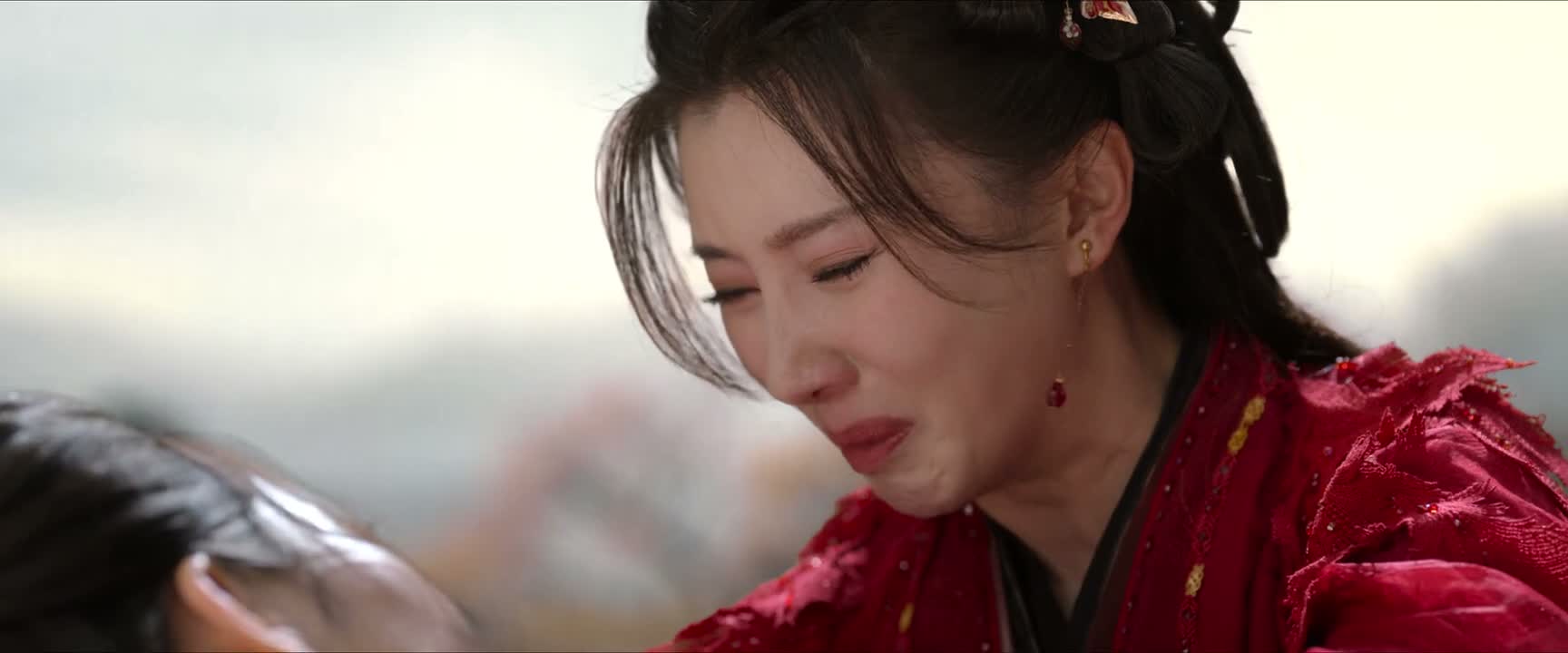
为什么独独救不了我的挚爱之人
“♪ Memories feel just like the songs I once sang for you ♪ Why is it that it can't save the one I love most?”
THE DIALOGUE REEL
救活了这么多条人命 为什么
“♪ Or for the years lost to time ♪ has saved so many lives. ♪ Memories feel just like the songs I once sang for you ♪ Why?”
为什么 独独 救不了 我 的 挚爱之人
“♪ Memories feel just like the songs I once sang for you ♪ Why is it that it can't save the one I love most?”
上天啊
“♪ Memories feel just like the songs I once sang for you ♪ Oh heavens, ♪ I sigh for this deep love and the broken dreams ♪”
Direct spoken expression in this communicative setting.
In classical Chinese narrative tradition, when heroes face tragic irony, they directly question Heaven (上天) to highlight fate's cruelty against their virtuous deeds.
LEARNING CHUNKS & PARTICLES
only; solely; uniquely
Use this literary adverb to emphasize a cruel or ironic exception where only one person or thing is singled out.
the love of one's life; one's most cherished person
A highly romantic and profound expression referring to one's ultimate soulmate.
VOCABULARY & EXPRESSIONS
Parallel Spoken Cinema Scenes (语义近邻切片)

“have saved you with all their hearts?”
“I can't save you.”

“why didn't you save me?”

“Only I can help you now.”

“I know I can't save you.”

“that only the male lead can save me?”