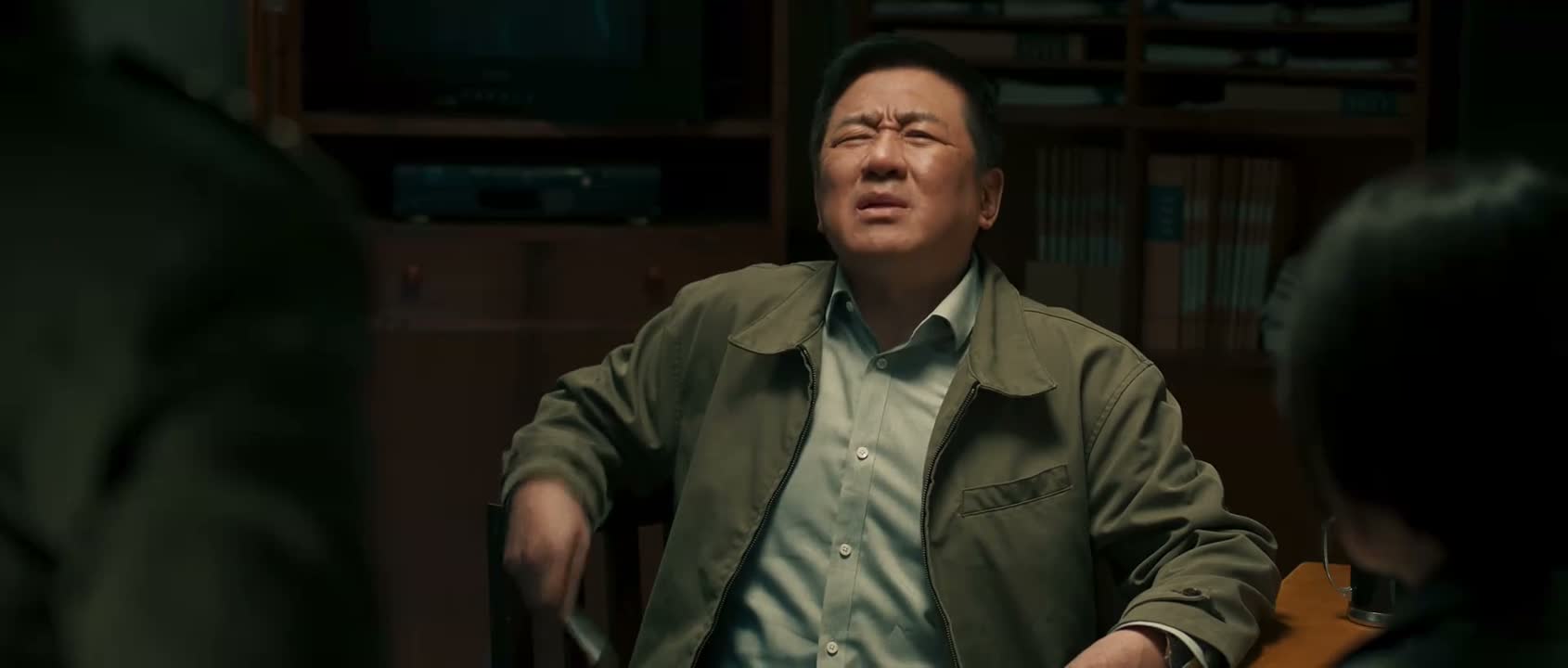
不对 他应该只有脑袋能动了
“No, he'll only be able to move his head.”
THE DIALOGUE REEL
他除了脑袋能动
“other than his head...”
不对 他应该 只有脑袋能动了
“No, he'll only be able to move his head.”
Direct spoken expression in this communicative setting.
In Chinese narrative dialogue, opening with '不对' often serves as a dramatic pivot alerting the audience to foul play or a trap.
LEARNING CHUNKS & PARTICLES
that's not right / wait a second
A common conversational interjection to abruptly signal a realization or disagreement.
only ... can move
A restrictive pattern emphasizing that movement is limited to a single body part.
Indicates a new state or a concluded deduction about his current physical state.
VOCABULARY & EXPRESSIONS
Parallel Spoken Cinema Scenes (语义近邻切片)

“You couldn't move his head?”

“will cost you your head.”

“He can't touch me,”

“In the end, those you want removed might stay,”
“Can you use your brain?”

“You'd literally have to get a new brain.”