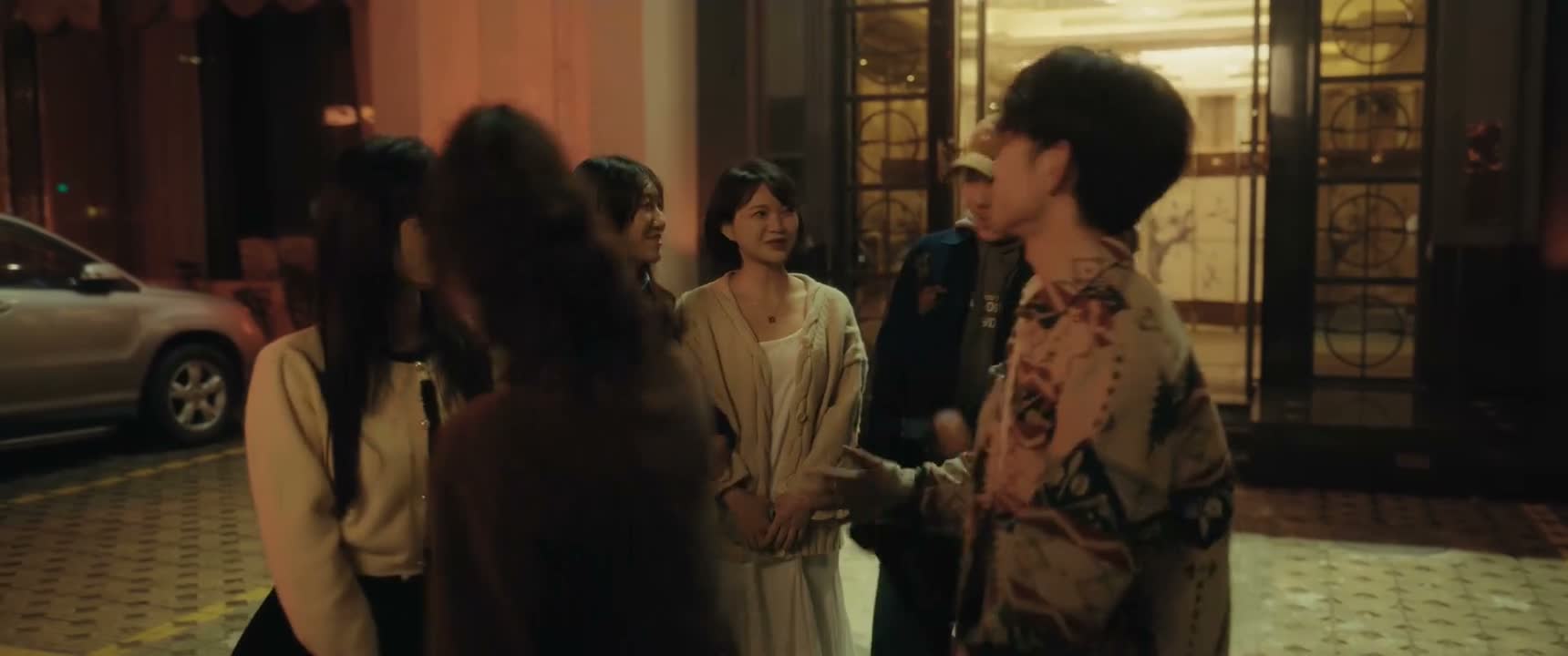
走吧走吧 好 走 走
“Come on. Let's go. Go.”
THE DIALOGUE REEL
裴总还重金装修了呢 我们到处看一看 转一转吧
“Mr. Pei spent a lot renovating this place. Let's take a look around.”
走吧走吧 好 走 走
“Come on. Let's go. Go.”
这 这风格 怎么感觉 跟我想象的私厨不太一样啊
“This place... It's not what I'd expect from a private restaurant.”
Direct spoken expression in this communicative setting.
In spoken Chinese, repeating short verbs like '走吧走吧' creates an approachable, brisk rhythm that avoids sounding like an aggressive command.
LEARNING CHUNKS & PARTICLES
let's go / come along
A highly frequent colloquial repetition used to urge others forward in an upbeat, casual manner.
Softens the imperative into an inviting, encouraging suggestion.
VOCABULARY & EXPRESSIONS
Parallel Spoken Cinema Scenes (语义近邻切片)

“Okay, let us go. Let us go.”

“Get out of here. Just go.”
“Alright. Let's go. - Let's go, Cocoon it is! - Come on!”

“What a good poem! Let's go.”