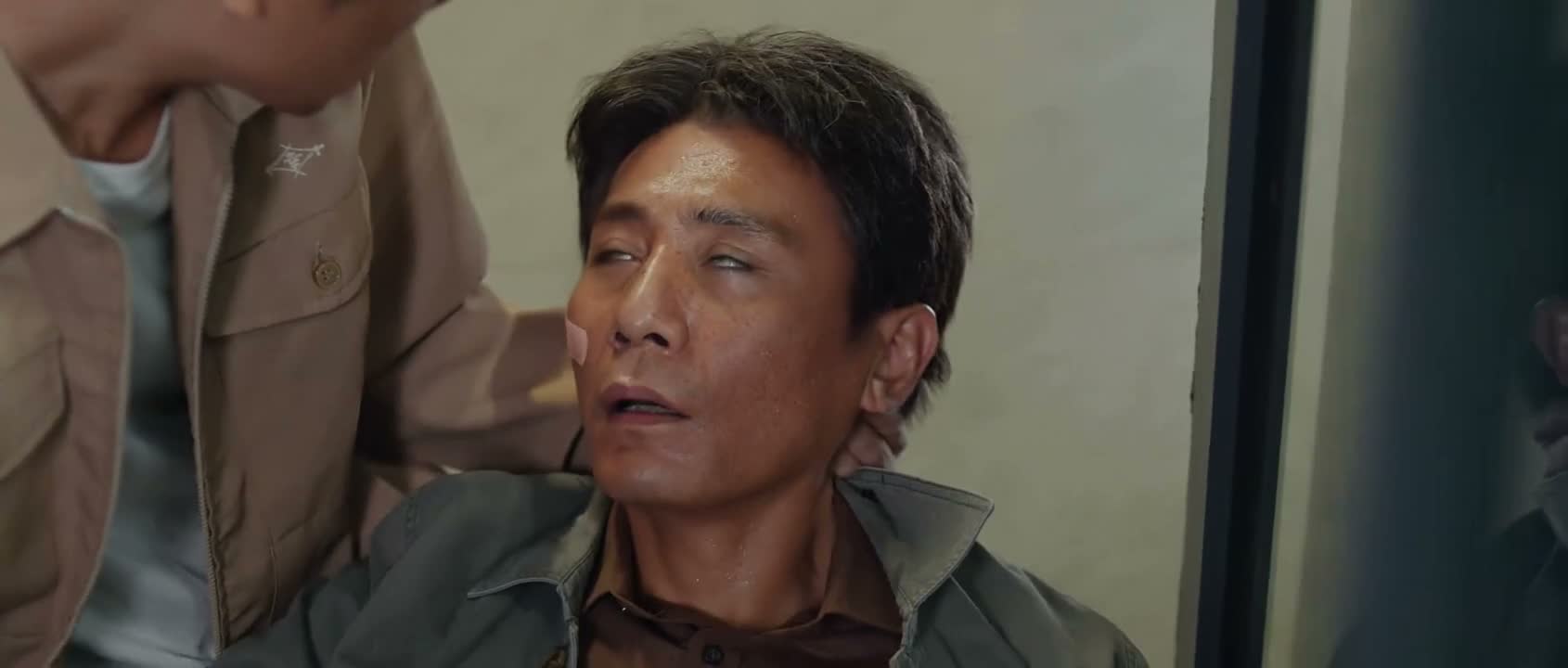
《Veil of Shadows》 S1·E24 (12:10)
HSK 2
nǐ tīng de jiàn wǒ shuō huà ma ?
你听得见我说话吗?
“can you hear me?”
《Veil of Shadows》
S1·E24
TIMECODE: 12:10
·
1080P MASTER AUDIO
THE DIALOGUE REEL
[-1] PREVIOUS TURN
jì líng
寄灵
“Ji Ling,”
nǐ tīng de jiàn wǒ shuō huà ma ?
CURRENT FOCUS
你 听得见我说话 吗?
“can you hear me?”
Subtitles synced to millisecond timecode
Browse Show Clips →
Scene:
Crisis & Conflict
Function:
CHECKING RESPONSIVENESS
Tone:
URGENT
Emotion:
ANXIETY
WHAT THEY REALLY MEAN (PRAGMATIC SUBTEXT)
Direct spoken expression in this communicative setting.
💡 Cultural Insight: Emergency Verbal Prompting
In high-stress emergency moments, repeated sensory questions serve as urgent instinctive prompts to pull someone back to consciousness.
INTENT TAGS:
#checking
#emergency
#urgency
#awakening
🧩
2 CHUNKS · 1 PARTICLES
LEARNING CHUNKS & PARTICLES
听得见
SPOKEN CHUNK
able to hear
A potential complement structure used to confirm whether auditory perception is physically possible.
我说话
SPOKEN CHUNK
me speaking
A common object clause used alongside perception verbs to indicate listening to someone talk.
Modal Particle「吗」 (ma)
CHANGE OF STATE
Transforms the declarative statement into a direct yes-or-no question seeking immediate verification.
🏮
1 EXPR · 1 GRAMMAR
VOCABULARY & EXPRESSIONS
COLLOQUIAL EXPRESSIONS:
GRAMMAR BLUEPRINTS:
CROSS-CINEMA CORPUS BOARD · PARALLEL SCENES
EXPLORE BY SEMANTIC SIMILARITY
Parallel Spoken Cinema Scenes (语义近邻切片)

《Veil of Shadows》 S1·E24 (12:10) · Authentic Cinema Dialogue Corpus