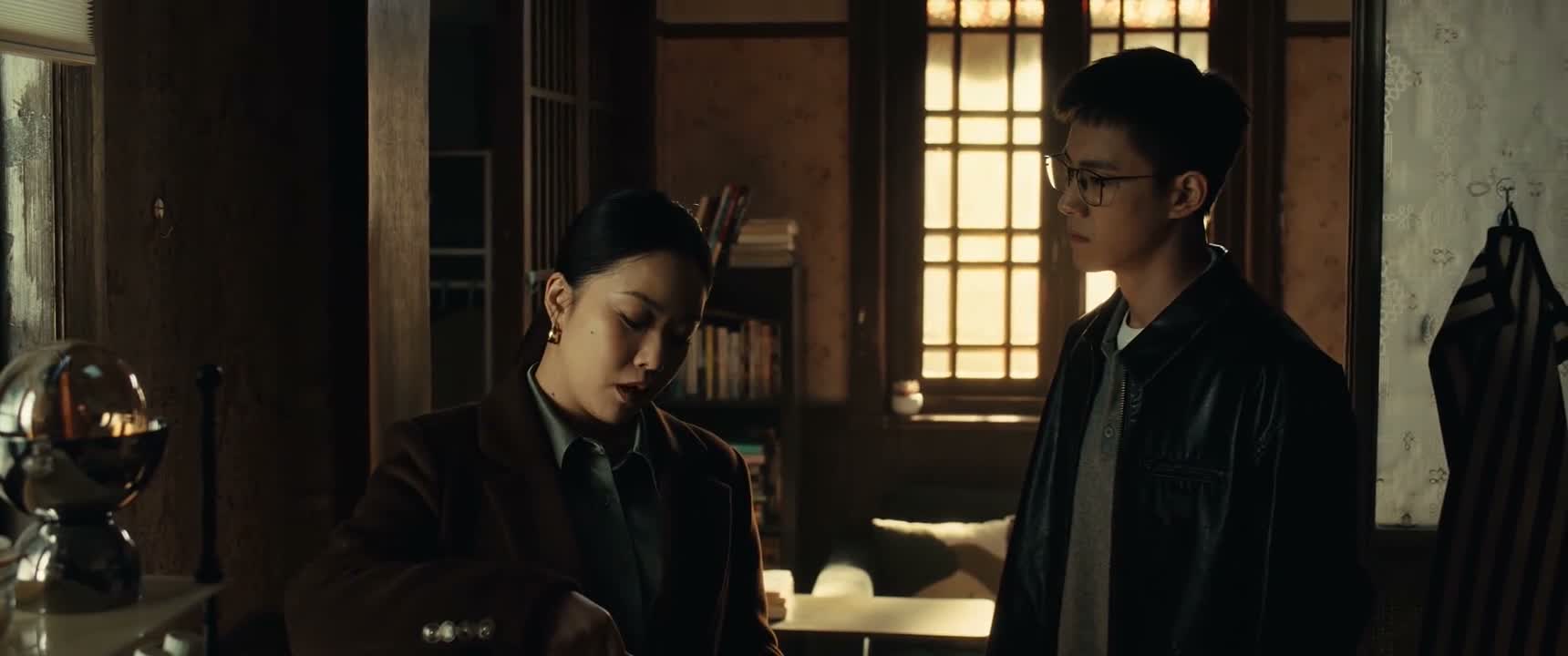
本来也没想告诉你的 谁让你不走
“I didn't want you to know. You should have left.”
THE DIALOGUE REEL
十万
“A hundred grand!”
本来也没想 告诉你 的 谁让你 不走
“I didn't want you to know. You should have left.”
你个女娃
“Oh, you silly girl!”
“Don't blame me for hearing this; it's your own fault for sticking your nose where it doesn't belong.”
In Chinese conflict discourse, using rhetorical structures like 'who told you to...' is a common strategy to absolve oneself of guilt by highlighting the other party's foolishness or lack of discretion.
LEARNING CHUNKS & PARTICLES
wasn't originally going to / had no intention of in the first place
Use this to emphasize that an outcome was entirely unintentional or not part of the original plan.
who told you to / it's your own fault that
A rhetorical device used in spoken Chinese to deflect blame directly onto the interlocutor.
Functions as part of the emphatic structure confirming the speaker's original state of mind.
VOCABULARY & EXPRESSIONS
Parallel Spoken Cinema Scenes (语义近邻切片)

“Come on. I've told you clearly. Why are you still here?”

“No, he doesn't. I've never told anyone.”
“She was afraid of causing you trouble.”

“Stop trying to fool me. I'm not leaving. I already told you.”

“Who did you tell about this? No one. That's impossible.”

“I thought she had already left. So you don't know”